Showing posts with label Du Fu. Show all posts

Wednesday, January 3, 2018

On The Highest Tower In White Emperor Castle


On The Highest Tower In White Emperor Castle


on the walls the way’s sharp, narrow: in waning sun, pennants
signal mourning—
one stands alone on the misty tower’s soaring heights—

in the gorge cleft: cloud and fog where dragon and tiger sleep—
the sun-drenched Yangzi enfolds roaming turtles and alligators

western limbs of the Fusang Tree meet this severed stone;
eastern shadow of the Ruo River accompanies its long current

what son of man leans on his gooesfoot cane sighing for this
generation?
he weeps blood into thin air, turns his white head away


translation © Jack Hayes 2018
based on Du Fu: 白帝城最高樓
báidìchéng zuì gāo lóu


Note: This is a much more conventional reading of a poem Sheila Graham-Smith & I worked on (& posted) earlier.


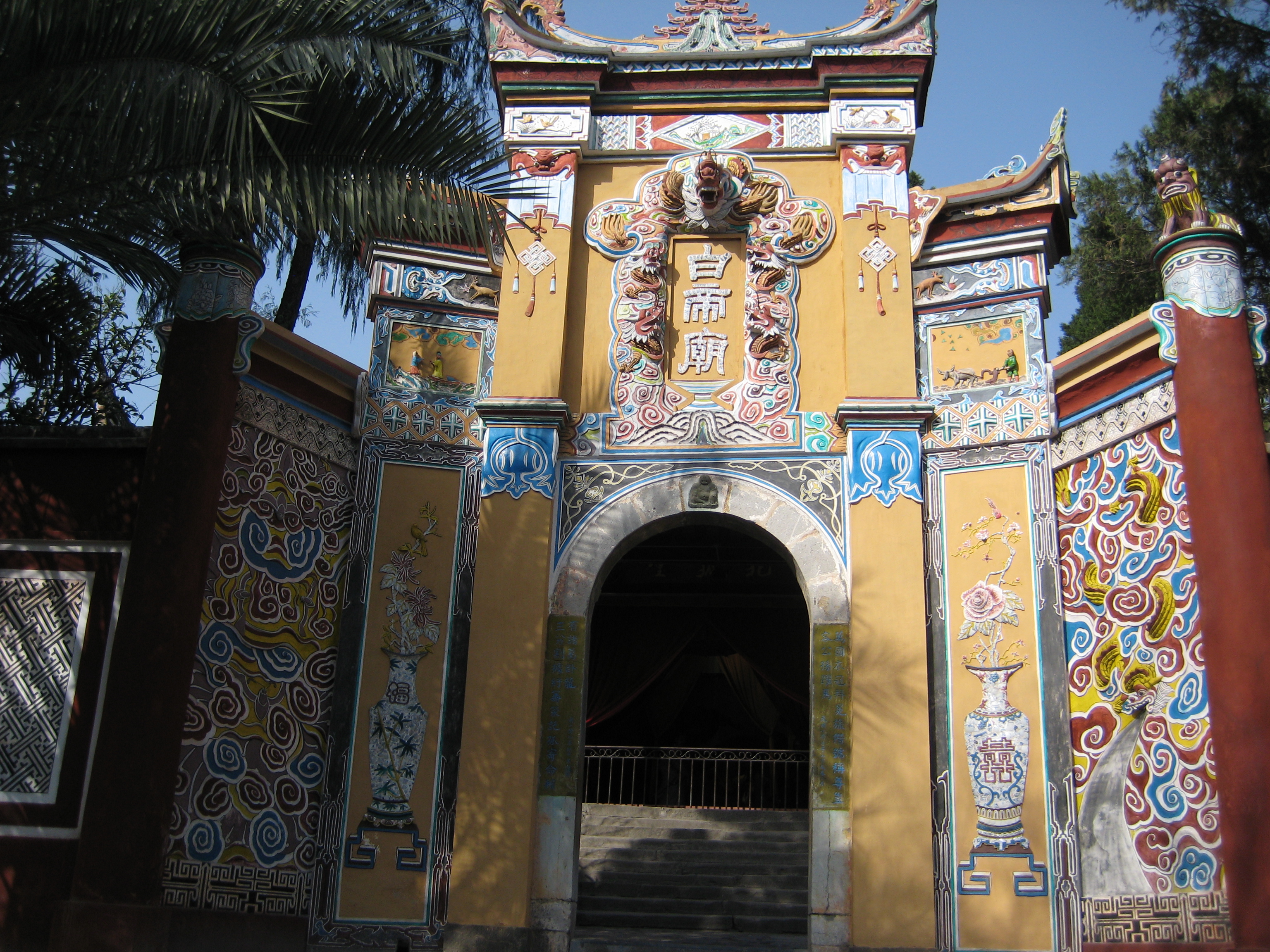
Image links to its source on Wiki Commons:
Temple of the White Emperor, Baidicheng: photo by Wiki user Tomasz Dunn, [https://www.flickr.com/people/63651050@N00] who makes it available under the Creative Commons Attribution 2.0 Generic license. [https://creativecommons.org/licenses/by/2.0/deed.en]


Friday, December 15, 2017

Moon


Moon


in the fourth watch the mountains spew up the moon,
in night’s remains, waters illuminate the tower—

in essence, a dusty case revealing a mirror,
curtains raising themselves in gusts to the topmost hook—

the Rabbit ought to ponder my crane-white hair,
but the Toad only longs for my sable coat—

I mull over the Widow Lady Chang-E,
how she bears the chill of the ninth month


translation © Jack Hayes 2017
based on Du Fu:
yuè


Note:
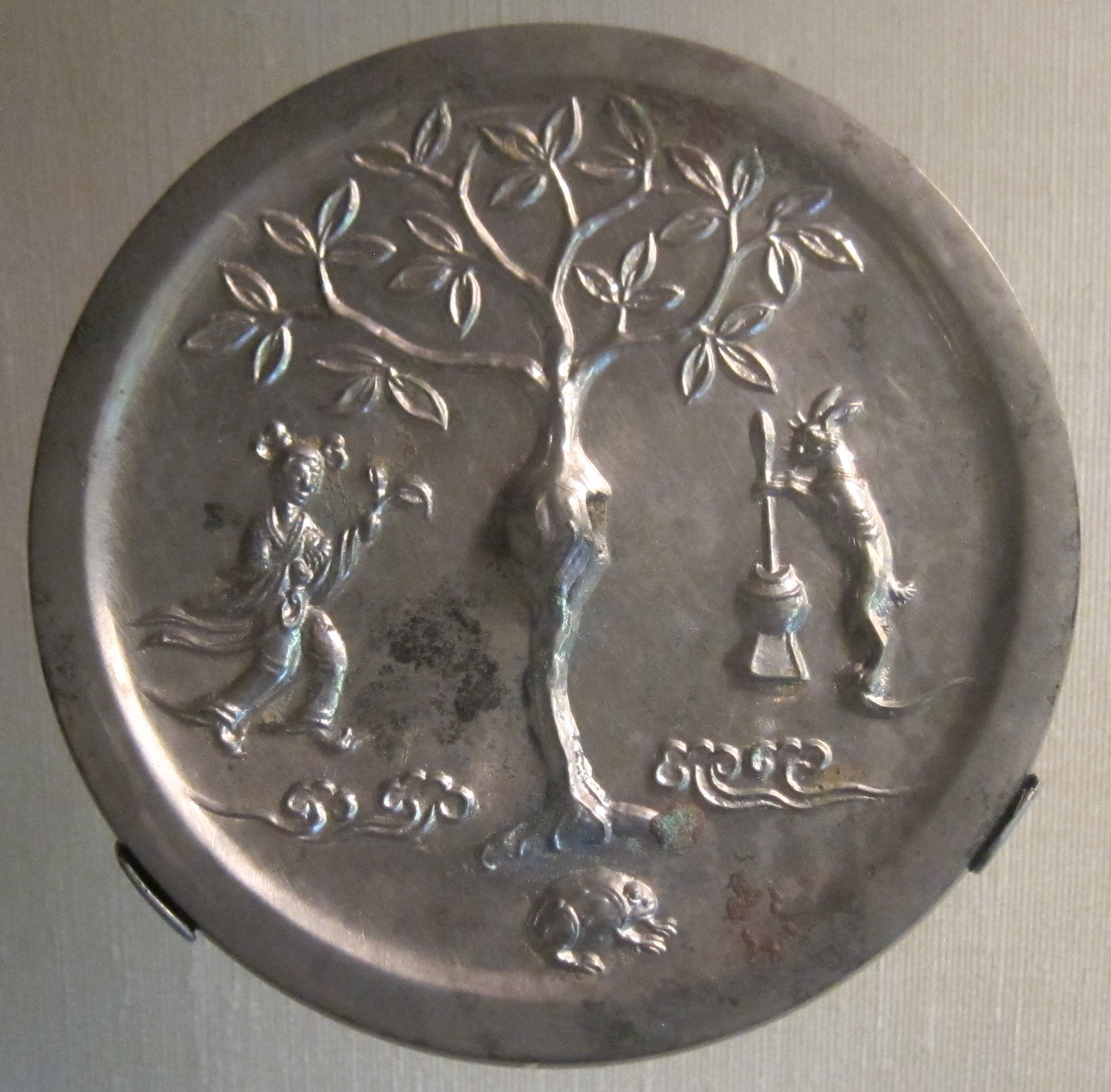
Chang-E is the Moon Goddess, & her companions are the Jade Rabbit (or Hare), who pounds herbs into the elixir of immortality, as well as a Toad, often depicted with three legs. Chang-E pilfered the herbs of immortality from her husband, the mythical archer Yi, & flew to the moon. In poetry, she is often a figure for loneliness.


Image links to its source on Wiki Commons:
Tang dynasty (618-906) bronze mirror with moon goddess and rabbit design. Photo by Wiki user Hiart [link provided on Common is empty], who publishes it under the following license: This file is made available under the Creative Commons CC0 1.0 Universal Public Domain Dedication.


Wednesday, November 8, 2017

Taking Down A Trellis


Taking Down A Trellis


the bound sticks already wither & fall;
the gourd’s leaves turn wilted & sparse—

since its white flowers managed to bear fruit
how can green vines not accept this dismantling—

autumn insects’ voices haven’t gone away;
sparrows at dusk: what can they be thinking—

in the cold, things now fall to waste;
human life also has its beginnings


based on Du Fu: 除架
chú jià


Image links to its source on Wiki Commons:
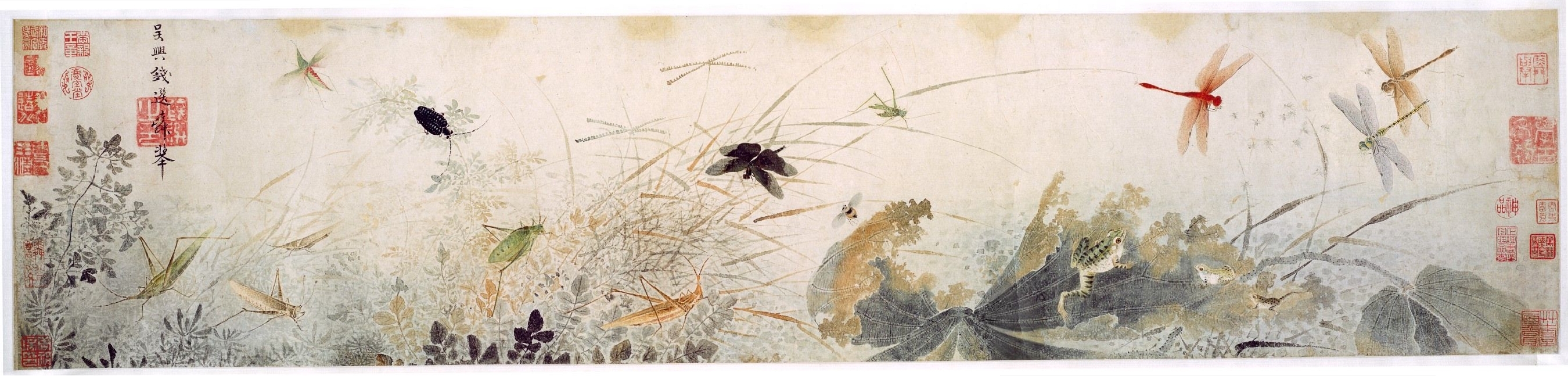
“Early Autumn”: Qian Wuan. 13th Century; ink & colors on paper scroll.
Public domain


Wednesday, June 7, 2017

Sleepless


Sleepless


Qutang in the night: its waters black;
within the city, the watch changes—

shaded, shaded, the moon sinks in fog;
shining, shining, stars near the tower—

life faltering, accepting less sleep;
mind fragile, hating to know sorrow—

ramparts spreading in mountain valleys;
Peach Blossom Spring existing nowhere


Translation by Jack Hayes
© 2017
based on Du Fu: 不寐
bù mèi


Image links to its source on Wiki Commons:
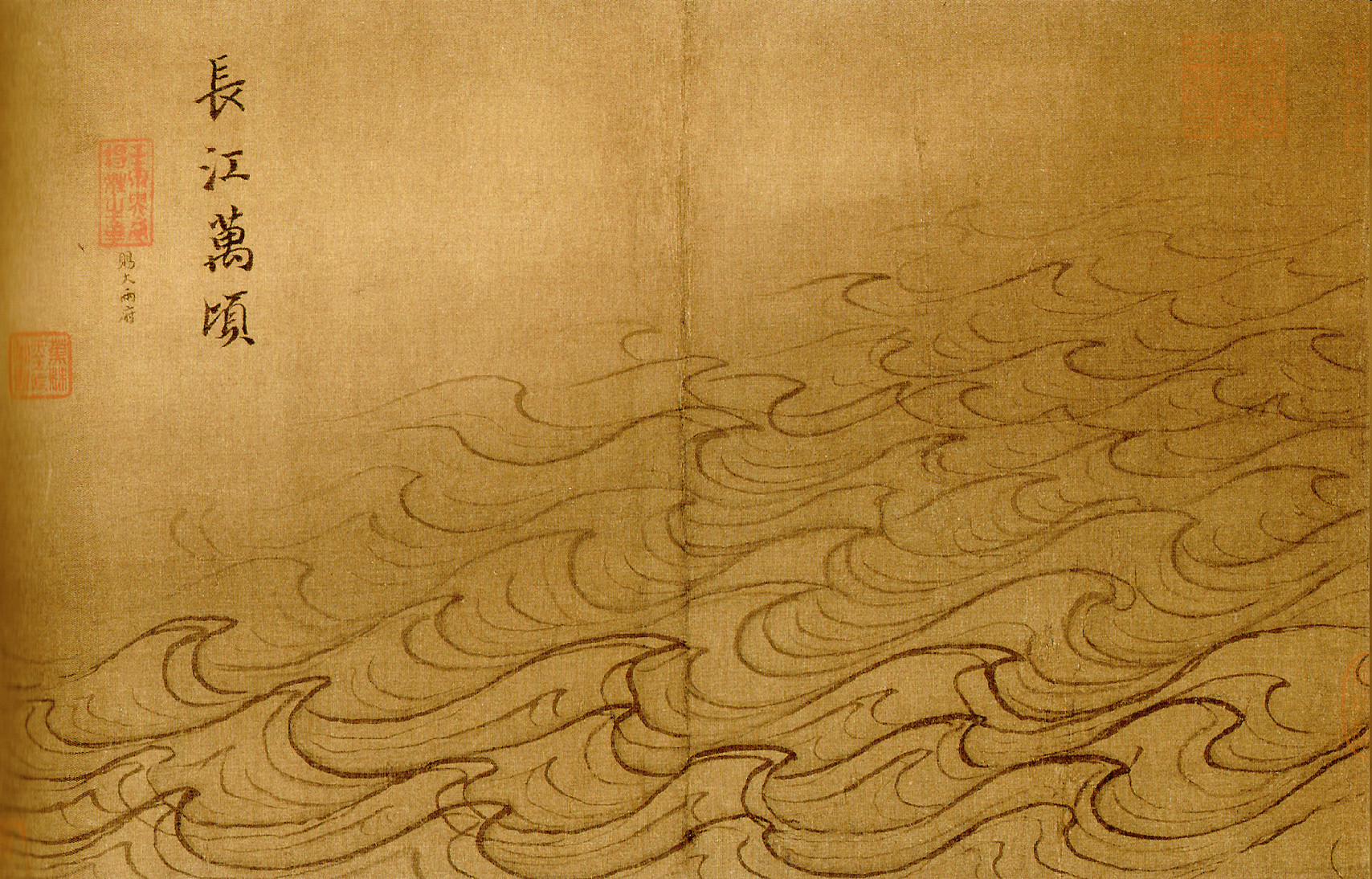
“Clouds Rising from the Green Sea”, from a series of paintings of water: Ma Yuan, circa 1225 CE. ink on silk.
Public domain

Tuesday, May 30, 2017

Lone Wild Goose


Lone Wild Goose


the lone wild goose does not drink or peck;
it flies crying out, missing its flock—

who will pity this fragment of shadow?
lost from its mates in ten thousand layers of cloud—

gazing to the distance, seeming to catch a glimpse;
so much grief, as if to hear them again—

in the field, crows without a thought for it,
call out & caw as always in confusion


Translation by Jack Hayes
© 2017
based on Du Fu:  孤雁
gū yàn


Image links to its source on Wiki Commons:
“The Hundred Geese”, traditionally attributed to Ma Fen, China, Northern Song dynasty, probably late 13th or early 14th century, handscroll, ink on paper.
Public domain


Monday, February 6, 2017

double interstate ave octet


(1/28/17)

if I knew where that aluminum rowboat
might sail, I’d tell you; for now it’s tipped over

on concrete back of a fence while a MAX train
slows for Killingsworth Station, electronic bell

clanging adamant 6/8 time; some sun, sure,
but diffused through frozen multiplicity

of clouds by the ton, spilling out ring-tailed gulls:
all this life, a heart set on rivers & seas


ambulance lights bloom no more crimson than
camellia blossoms over that heap of

shattered concrete blocks in the lawn’s corner; if
you look south through washed-out pampas grass tufts

there’s light spreading through broken stratus: whitecaps
thronging this corner of infinite ocean—

another MAX train sails past through traffic’s tide:
it is hard to stay long in an empty house


Jack Hayes
© 2017


Note: The italicized lines are taken from my translation of Du Fu’s 破船
pò chuán, that is “Broken Boat” (the second is slightly altered for syllable count & emphasis). You can read my translation, along with notes compiled by Sheila Graham-Smith & myself at this link.

Tuesday, November 1, 2016

autumn meditation #4

 
autumn meditation #4

I’ve heard it said Chang’an is like a weiqi board;
the events of the past hundred years: grief beyond bearing—

the mansions of princes and nobles all have new masters;
civilian and soldiers’ attire: different than in the past—

due north in border passes, gongs and drums resound;
westward, carts and horses speed feathered dispatches—

fish and dragons are silent: the autumn river runs cold;
the homeland at peace: alive in my reflections


Jack Hayes
© 2016
based on Du Fu:
秋興八首 (四)
qiū xìng bā shŏu (sì)


Notes:
Line 1: Every English translation I’ve seen insists on translating 弈棋yìqí as “chess.” But he clearly means what is now known in China as 圍棋 wéiqí, which is better known in the west by the romanized version of its Japanese name, Go. Per Wikipedia: “The first reference to chess, called Xiang Qi, in China comes in the xuán guaì lù (玄怪录, record of the mysterious and strange) dating to about 800.” Du Fu’s poem dates to 766. On the other hand, again per Wikipedia, “The game [go] originated and was invented in ancient China more than 5,500 years ago, and is still the oldest board game continuously played today. It was considered one of the four essential arts of the cultured aristocratic Chinese scholar caste in antiquity.” Benn’s China’s Golden Age makes a point of how popular go/weiqi was during the Tang dynasty.

As always, grateful acknowledgement to Sheila Graham-Smith for her research & editing, as well as to such major Du Fu translators as Stephen Owen, Burton Watson, William Hung, & David Hinton for their scholarship.

Image links to its source on Wiki Commons:
“Woman Playing Go”: Anonymous - Color on silk. Tang Dynasty.
Unearthed at the Astana Graves in 1972 from the tomb number 187.
Public domain.


Monday, October 24, 2016

autumn meditation #3


autumn meditation #3


a thousand houses, mountain-walled, in gentle morning light;
day after day sitting in the river tower in blue haze—

out for two nights straight the fishermen drifting, drifting;
in clear autumn, swallows young and old, darting, darting—

Kuang Heng’s remonstrance to the emperor: fame and honor slight;
Liu Xiang passing on the classics: vocation gone astray—

schoolmates from youth: many of them are not poor;
at Five Tombs their robes are light and their horses stout


Jack Hayes
© 2016
based on Du Fu:
秋興八首 (三)
qiū xìng bā shŏu (sān)


Notes:
  • Kuang Heng & Liu Xiang: Two figures from the Han Dynasty. Kuang Heng rose to prominence as a statesman based on his memorials (policy proposals) to the Emperor, while Liu Xiang was a renowned scholar. Du Fu is contrasting his failed career to their success.
  • Line 8: This refers to two passages from The Analects, both of which are given here in James Legge’s translation. I use Legge’s translation because it’s in the public domain, but I also cross-reference Waley’s:


Yan Yuan and Ji Lu being by his side, the Master said to them, "Come, let each of you tell his wishes." Zi Lu said, "I should like, having chariots and horses, and light fur clothes, to share them with my friends, and though they should spoil them, I would not be displeased." Yan Yuan said, "I should like not to boast of my excellence, nor to make a display of my meritorious deeds." Zi Lu then said, "I should like, sir, to hear your wishes." The Master said, "They are, in regard to the aged, to give them rest; in regard to friends, to show them sincerity; in regard to the young, to treat them tenderly." Analects V.26 in Legge; [V.25 in Waley]

Zi Hua being employed on a mission to Qi, the disciple Ran requested grain for his mother. The Master said, "Give her a fu." Ran requested more. "Give her an yu," said the Master. Ran gave her five bing. The Master said, "When Chi was proceeding to Qi, he had fat horses to his carriage, and wore light furs. I have heard that a superior man helps the distressed, but does not add to the wealth of the rich." Analects VI.4, James Legge translation [VI.3 in Waley translation]


A few points of note. In the first passage (which Owen stresses in his reading of the poem), Ji Lu (who is also called Zi Lu—that’s not a typo, as well as Zhong You) was considered a paragon of filial piety & was one of Confucius’ most highly regarded disciples.

In the second passage (which Watson stresses in his reading; since Du Fu’s audience would essentially know The Analects by heart, I expect Du Fu intended both passages to resonate), Chi is shown as an example of someone who shirks filial obligations, as he has valued luxury over devotion. His horses literally are “fat”, which suggests how well he feeds them, while others are needy; Sheila & I debated the translation of the 肥 féi ("fat") character quite a bit, & finally settled on "stout". The passage looks on Chi pejoratively, & this certainly has resonance in Du Fu’s poem. 


As always, deep gratitude to Sheila Graham-Smith, & also to the scholars & translators who have done so much to elucidate this great poetry.


Image links to its source on Wiki Commons:“Pleasures of the Tang court”: Tang Dynasty, 8th century.
Public domain.

Thursday, October 20, 2016

autumn meditation #2


autumn meditation #2


on Kuizhou’s lonely walls the slant evening light;
I rely on the Dipper when looking for the exalted capital—

it's true: three cries from the gibbons bring on tears;
false that my mission can follow the eighth-month raft—

the ministry’s portrait hall censer intrudes on my rest;
the tower’s white-washed battlements hide a sad reed flute—

look! above wisteria laden stones, the moon;
it shines already on the island’s reed blossoms


Jack Hayes
© 2016
based on Du Fu:
秋興八首 (二)
qiū xìng bā shŏu (èr)


Notes: 

  • Kuizhou is the name of the prefecture; Du Fu is actually in Baidicheng.
  • Three cries from the gibbons: this refers to an old song that says three cries from the gibbons in the Yangzi's Three Gorges will move one to tears.
  • The eighth-month raft: this refers both to the explorer Zhang Qian who followed the Yellow River to its source on a mission from Emperor Wu of Han, & also to story about a man who boarded a raft that appeared to him in the eighth month (remember, this is a lunarsolar calendar, so roughly, September), & was able to travel the Celestial River, one of the Chinese terms for what we call the Milky Way. As scholar & translator Burton Watson points out, both of these voyages were successful, whereas Du Fu's career has been in his eyes a failure.
  • Line five: this refers to the time when Du Fu worked in the Department of State Affairs (or in Owen, the Board of Works), in a building decorated with official portraits. Watson states that women tended the incense burners that perfumed the robes of the officials. The Chinese character we translated as "rest" (literally, "pillow") has connotations that Du Fu is ill & bedridden. He often describes himself as being in poor health.

As always, deep gratitude to the work done by my translation partner Sheila Graham-Smith, & acknowledgement to notes & background material from Stephen Owen, Watson, & William Hung. 


Image links to its source on Wiki Commons
“The Dunhuang star map of 700 AD. British Library Or.8210/S.3326 Ursa Major, Sagittarius and Capricornus are recognizable. The three colors (white, black and yellow) indicate the schools of astronomy of Shih Shen, Kan Te, and Wu Hsien.”
Public Domain

Tuesday, October 4, 2016

autumn meditation #1


autumn meditation #1


jade dew withers & maims the maple forest;
on Wu Mountain, in Wu Gorge, the air’s bleak & gloomy—

on the river, waves surge to meet the sky;
above the border pass, wind-blown clouds overshadow the earth—

chrysanthemums twice have brought on tears for the past;
a lonely boat the one link to my heart’s homeland—

reminders everywhere: winter clothes cut & measured;
over Baidicheng, twilight song of pounding stones


Jack Hayes
© 2016
based on Du Fu:
秋興八首 (一)
qiū xìng bā shŏu (yī)


Notes:
Over the next several weeks we’ll be posting our English language versions of Du Fu’s秋興, qiū xìng, or “autumn meditations” series. From a certain perspective, translation is always an impossible endeavor, & translating a poet as great as Du Fu should always be approached with humility. This is even more true when translating a major work like the 秋興, qiū xìng. I do hope our humble versions inspire readers to seek out other versions & also learn more about this truly remarkable poet.

The “meditations” are dense & packed with meaning & allusion, & so notes will be important.  The series was composed in 766 while Du Fu had settled in Kuizhou, specifically in Baidicheng (literally “White Emperor City”) in what is now Chongqing. Du Fu had again moved south after further turmoil in Chengdu forced him to leave behind his “thatched cottage” there, & he spent two years in Baidicheng on the Yangzi, & near Qutang Gorge. During his sojourn in this area, Du Fu wrote around 400 poems, including many of his most notable works.

This is the “Three Gorges” region of the Yangzi, & Wu Gorge, mentioned in the first line, is to the east. It’s also referred to as the Great Gorge, & is the middle of the three. Wu Mountain is north of Wu Gorge. Also in the first line: “jade dew” is a common trope for autumn.

The fourth couplet is of particular interest: based our Sheila’s research, in our reading the preparations for winter are serving to underline Du Fu’s homesickness, already raised in the third couplet. The sound of mallets striking cloth laid out on the pounding blocks was also a trope in Classical Chinese poetry. It typically evokes the melancholy feeling of autumn, as it’s an activity linked to that season. In addition, it can evoke feelings of longing for a spouse who’s absent; for a male poet, it can bring up the idea of a lost domesticity, while for a female poet (or a female speaker written by a male poet) it can bring up feelings of longing for a husband who’s far away, especially one who’s serving as a soldier. In fact, both Du Fu & Li Bai wrote poems in the voice of a woman engaged in clothes pounding while yearning for her husband who’s away in the army, serving in the border passes.

As always, I’m indebted to Sheila for her research & editorial work. We are both indebted to the notes & writings of Burton Watson, Stephen Owen, & William Hung—to name three of the most prominent Du Fu translators—as well as to Tu Fu's "Autumn Meditations": An Exercise in Linguistic Criticism: Tsu-lin Mei & Yu-kung Kao. Harvard Journal of Asiatic Studies, Vol. 28 (1968), pp. 44-80.


Image links to its source on Wiki Commons:Court Ladies Preparing Newly Woven Silk: Cropped from a Song dynasty painting attributed to Emperor Huizong in the style of Tang dynasty painter Zhang Xuan. Between 1100 and 1133. Indian ink and color on silk
Public domain


Tuesday, September 27, 2016

broken boat


broken boat


this whole life a heart set on rivers and seas,
long ago I outfitted a skiff—
not just for sailing up the black mountain stream
or drifting daily close by the brushwood gate—
then a panicked escape from the rebel troops:
heartsick in far lands for my home in the hills—
my neighbors have gone away now too;
only the wild bamboo grows taller, taller—
the boat’s wales no longer resound with my strikes:
it’s buried, cast aside, undergoing autumns—
I look up and watch the wings flying west;
below, I’m shamed by the stream as it flows east—
the old boat could be dug up again;
and a new one wouldn’t be hard to find—
this place of grief, fate has exiled me from it;
it’s hard to stay long in an empty house


Jack Hayes
© 2016
based on Du Fu:
破船
pò chuán


Notes: As always, grateful acknowledgement to my translation partner, Sheila Graham-Smith for her editing & research. Some points about the poem, much of which come from Sheila’s work.

Per Burton Watson, the poem dates to 764 when Du Fu returned to his thatched hut in Chengdu after fleeing a local rebellion. At this point it was eight years after the original An Lushan uprising, which had displaced Du Fu from Chang’an to the south.  It’s difficult to comprehend the level of turmoil in China during this time period—not only were there shocking levels of death & destruction, actually approaching the appalling levels of our own time, but in addition there was a massive displacement of people, generally from the north to the south. One reason it’s difficult to assess the mortality levels during the series of revolts is simply because there was so much movement of the population.

Sheila pointed to two tropes within the poem. First, we wanted to underline the identification of the poet with the “broken boat.” The poem begins with Du Fu’s paraphrase of a passage from the Zhuangzi. Here is the passage in the public domain James Legge translation:

Prince Mou of Gong-shan spoke to Zhan-zi, saying, 'My body has its place by the streams and near the sea, but my mind dwells at the court of Wei - what have you to say to me in the circumstances?' Zhan-zi replied, 'Set the proper value on your life. When one sets the proper value on his life, gain seems to him unimportant.' The prince rejoined, 'I know that, but I am not able to overcome (my wishes).' The reply was, 'If you cannot master yourself (in the matter), follow (your inclinations so that) your spirit may not be dissatisfied. When you cannot master yourself, and try to force yourself where your spirit does not follow, this is what is called doing yourself a double injury; and those who so injure themselves are not among the long-lived.'

The turmoil in the wake of the An Lushan rebellion not only displaced Du Fu from his homeland, it also cost him his position at court. He, like the boat, has also been “buried” & “cast off”; in addition, he suffers shame at having run.

In addition, Sheila points to the “empty house” trope, noting that it occurs frequently as a metaphor for depression & heartbreak. Sheila writes, “the meaning of the empty house is double edged. It stands for the absence of a place in the world order, and also for some personal failing. It gives the end result - the man without context - and also gives the cause - his restlessness and inability to stay in one place, embodied in the boat)  - in the same metaphor - the empty house.” She also referred to passages both from the great Tang poet Wang Wei & also the poet Zuo Si from the western Jin period.

Flap, flap, the captive bird in the cage
Beating its wings against the four corners.
Depressed, depressed the scholar in the narrow street:
Clasping a shadow, he dwells in an empty house.

Zuo Si, “The Scholar in the Narrow Street”, Arthur Waley translation


I sit alone sad at my whitening hair
Waiting for ten o’clock in my empty house
In the rain the hill fruits fall
Under the lamp grasshoppers sound
White hairs will never be transformed
That elixir is beyond creation
To eliminate decrepitude
Study the absolute.

Wang Wei, “Sitting alone on an Autumn Night”; GW Robinson translation


Image links to its source on Wiki Commons:
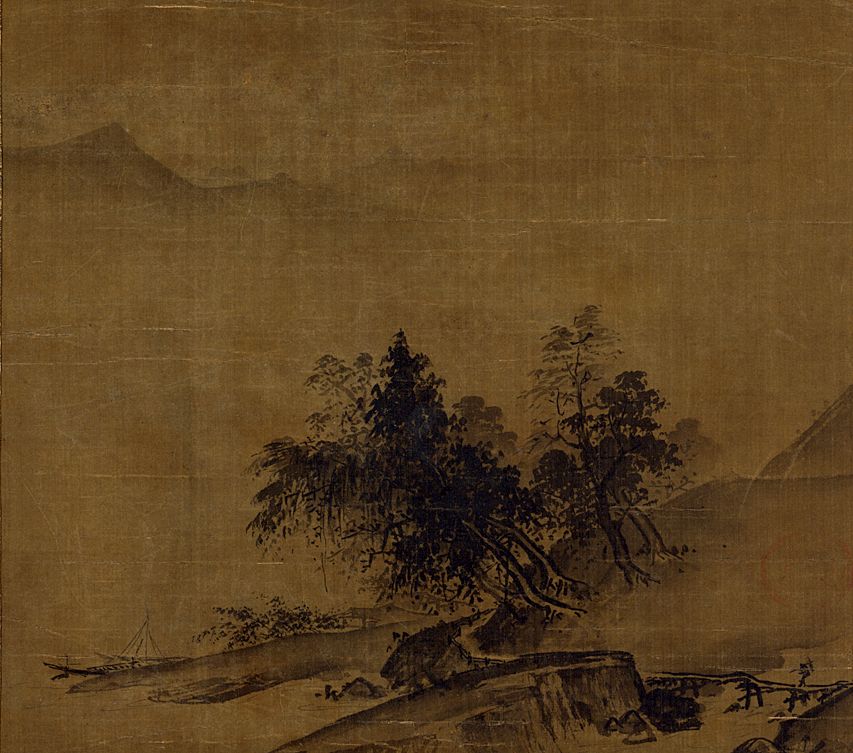
Untitled (Landscape): Xia Gui – ink and light colors on silk: Song Dynasty.
Public domain.

Saturday, June 18, 2016

two quatrains


two quatrains


#1

as days grow longer, mountains & rivers grow lovelier;
on spring breezes, the fragrance of grass & blossoms—

as mud thaws, the swallows are on the wing;
on warm sands, Mandarin ducks doze in pairs

#2

the river’s like jade, the birds exceeding white;
in green mountains, flowers aspire to flame—

this springtime I look on also will pass away;
which day, which year will I ever go home


Jack Hayes
© 2016
based on Du Fu:
絕句二首
juéjù èr shŏu


Notes:
#1: It seems clear that the swallows are gathering the thawing mud for their nests. Renowned Du Fu scholar William Hung actually made that explicit in his prose translation of the poem. However, the Chinese doesn't literally state this, so although it was sorely tempting, we didn't make this explicit. Also, Mandarin ducks traditionally symbolize conjugal happiness. 
#2: Sheila's research has suggested that the flowers described in line 2 are Rhododendron strigillosum, known in China as "prickly rhododendron".  Stephen Owen points out that the final line plays on the pun in Chinese between "going home" & "the end of spring".   

Image links to its source on Wiki Commons:
芳春雨霽 (Spring Fragrance, Clearing After Rain): Ma Lin, between 1195 & 1224; ink and colors on silk.
Public domain

Thursday, June 9, 2016

spring night delighted by rain


spring night delighted by rain


the admirable rain knows its season,
coming with the spring & bringing forth life—


it follows the wind & steals into the night,
& moistens creation, delicately, without sound—


the country lanes & the clouds alike are black;
on the river the only light a boat’s lamp—


daybreak reveals a damp vermilion scene:
the heavy-laden flowers in Brocade City


Jack Hayes
© 2016
based on Du Fu: 春夜喜雨
chūn yè xĭ yŭ


Note: “Brocade City” (锦城 Jinchéng) was, & still is a common name for Chengdu. Interestingly, it has also long been known as "The City of Hibiscus" (蓉城 Róngchéng). Du Fu lived in Chengdu from 760-765, & there is a memorial park to him there, including a recreation of his thatched hut (see photo). This poem is usually dated 761.


Image links to its source on Wiki Commons
杜甫草堂里的花园 (Du Fu Thatched Hut Park) - Taken on 17 July 2005 by 江上清风1961, who makes it available under the Creative Commons Attribution 3.0 Unported license.

Tuesday, May 31, 2016

impromptu poem


impromptu poem

the river moon just a few feet from the man;
the mast lamp illumines the third watch darkness—

on the sandbank herons rest, folded & silent;
in the boat's wake a fish breaks water, splashes


Jack Hayes
© 2016
based on Du Fu:
漫成一首
màn chéng yī shŏu


Image links to its source on Wiki Commons:
Ten Thousand Riplets on the Yangzi: Ma Yuan, 1160-1225. Ink on silk.

Public domain

Tuesday, May 24, 2016

Crooked River


Crooked River

#1
each blossom petal that falls diminishes Spring;
with ten thousand swirled in the wind, a man must worry—

yet I watch with longing till the last petal passes from sight,
as I won’t begrudge myself ale, however it sickens me—

in the small river pavilion, green kingfishers nest;
by the park’s great mausoleum, qilin crouch—

each atom of natural law impels us toward joy:
what good is fleeting fame but to hinder these bodies?


#2

daily returning from morning court I pawn spring clothes;
each evening I come back from the riverside drunk—

everywhere I go, I owe money for ale;
but it’s rare for a man to approach his 70 years—

penetrating blossoms’ depths, butterflies appear;
dragonflies at leisure skim over the water—

the wind & light proclaim flow & shift as one:
why should we not enjoy time’s brief passage?


Jack Hayes
© 2016
based on Du Fu:
曲江二首
qū jiāng


Notes:

The 曲江 or qū jiāng is variously translated as “Meandering River”, “Winding River”, “Twisting River”, Serpentine River”, & “Curved River”. I chose the word “Crooked” not to be contrarian, but because another sense of 曲 is “wrong.”

There’s a fine discussion of the Serpentine River Park in Charles Benn’s China’s Golden Age: Everyday Life in the Tang Dynasty. I’ve excerpted portions that are relevant:

Several parks existed in the districts outside the Forbidden Park and the palaces. The greatest of them was Serpentine River in the southeast corner of the city. In the early eighth century the throne had the river flowing through the area dredged to form a lake so deep that one could not see the bottom. It was joined to a much older park called the Lotus Garden. In 756 it became the most popular spot for feasts the emperors bestowed upon officials [note: the poem is dated to 758]…. The Serpentine River and Lotus Garden had willows, poplars, lotus, chrysanthemums, marsh grasses and reeds…. Patricians could visit the Serpentine River at any time of the year, but they were especially fond of going there during the spring.

Benn, Charles. China’s Golden Age: Everyday Life in the Tang Dynasty, Oxford: Oxford University Press, 2004, pg. 68

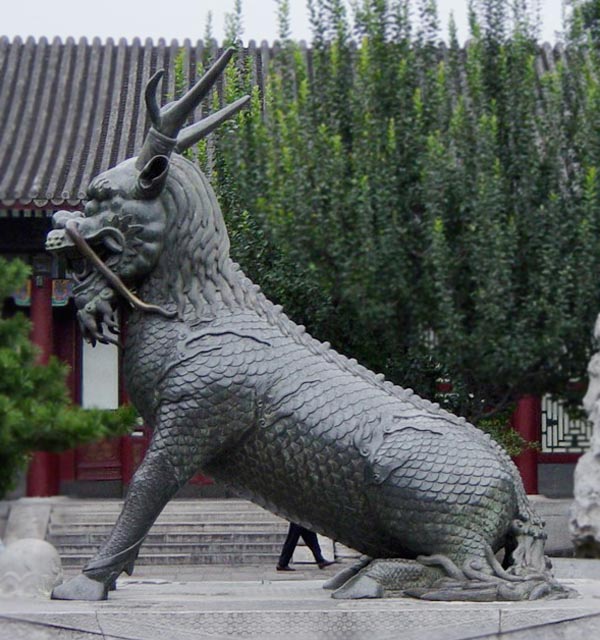
qilin: The qilin is often translated as “Chinese Unicorn”, though they are very different from the unicorns of European myth & legend. In fact, qilin are often depicted as having antlers rather than a single horn. Depictions of the creature varied at different points in history, but it's often a chimera-like being, combining aspects of different animals. They were considered good omens of prosperity & serenity. Interestingly, a giraffe that was brought to the Ming Dynasty court was thought to be a qilin! One other note: in the standard pinyin Romanization, the “q” is pronounced like the “ch” in “church”.   


"hinder these bodies": (絆此身 bàn cǐ shēn) The
shēn character can refer not only to the body of a human or animal, but also to one's moral character; it is also used to refer to a world in Buddhism. Sheila linked this to the doctrine of Trikaya, which refers to the three bodies of the Buddha. In later Chan Buddhism (i.e., by the Song Dynasty) a direct link was made between the Buddha bodies & the body (or bodies) of the practitioner:
The Zhenzhou Linji Huizhao Chansi Yulu advises:

    Do you wish to be not different from the Buddhas and patriarchs? Then just do not look for anything outside. The pure light of your own heart [i.e., 心, mind] at this instant is the Dharmakaya Buddha in your own house. The non-differentiating light of your heart at this instant is the Sambhogakaya Buddha in your own house. The non-discriminating light of your own heart at this instant is the Nirmanakaya Buddha in your own house. This trinity of the Buddha's body is none other than he here before your eyes, listening to my expounding the Dharma.

At this point I'm unable to confirm that this specific mode of thinking would have been current in Du Fu's own day, though Chan Buddhism was certainly developing during the Tang Dynasty, & Du Fu had close relationships with various Buddhist monks as evidenced by a number of his poems.

Image links to its source on Wiki Commons:Qing dynasty qilin: Bronze sculpture located at the New Imperial Summer Palace. Picture taken late September 2002 by Leonard G. who makes it available under the Creative Commons ShareAlike 1.0 License

Monday, April 25, 2016

at Qutang Gorge meditating on ancient times


at Qutang Gorge meditating on ancient times


southwestward ten thousand gullies flow in;
the strong contender split the two cliffs—

the earth gave way, the mountain split to its base;
Long River arrives from the Cave of the Moon—

pared down to accommodate Baidicheng,
the curve of the void conceals the Sun Terrace—

this act of chiselling: impressive, sublime:
but the power of the Potter’s Wheel is vast! 


Jack Hayes
© 2016
based on Du Fu:
瞿唐懷古
Qú Táng Huái Gŭ


Notes:
Qutang Gorge is the westernmost of the Three Gorges  (Sānxiá or 三峡) on the great river the Chinese call the Cháng Jiāng (“Long River”), 长江, & westerners refer to as the Yangtze.  The ancient town of Baidicheng (White Emperor Castle) is located at the mouth of the Qutang; the town is of particular interest because it’s the resting place of Liu Bei, the founding emperor of the Shu-Han during the Three Kingdoms period, & a site of worship for both Liu Bei himself & also his renowned chancellor, Zhuge Liang. Du Fu was in particular an admirer of Zhuge Liang, & addressed a number of poems to him.

It’s always impressive how much material the great Chinese poets can weave into a short form. Here Du Fu is meditating on the forces that shaped Qutang Gorge, both the labors of Yu (the "strong contender"), the mostly mythical ruler who tamed the floods & established the legendary Xia Dynasty (circa 2200 BCE).  While there’s no actual historical record of Yu or the Xia until the Western Zhou Dynasty, over a thousand years after the traditional dates for this ruler, he plays a large role in China's mytho-historical narrative.  Yu’s labors are here contrasted with the vastly more impressive effects of cosmic forces, as symbolized by “the Potter’s Wheel” (陶鈞).


The Sun Terrace is a temple located some distance from Qutang Gorge. It's also worth noting that the character translated as "void" (空) has among its many meanings the sense of Buddhist Sunyata & Daoist "emptiness".

As always, deep gratitude to my partner Sheila Graham-Smith for her crucial help with this translation.


Image links to its source on Wiki Commons“View of the Qutang Gorge along the Yangtze River from Baidicheng”: by Tan Wei Liang Byorn who makes it available under the following licenses: the GNU Free Documentation License, Version 1.2 or any later version; & the Creative Commons Attribution 3.0 Unported license.

Tuesday, April 19, 2016

spring view


spring view


in a shattered nation mountains & rivers endure;
in the city this spring, trees & grass grow lush—

in keeping with the season, dewy blossoms weep;
regretting their parting, birds seem skittish—

beacon fires have burned for three months running;
a letter from family is worth ten thousand gold—

I worry my hoary head till the hairs grow sparse:
soon there won’t be enough to hold a hairpin


Jack Hayes
© 2016
based on Du Fu:
春望
chūn wàng


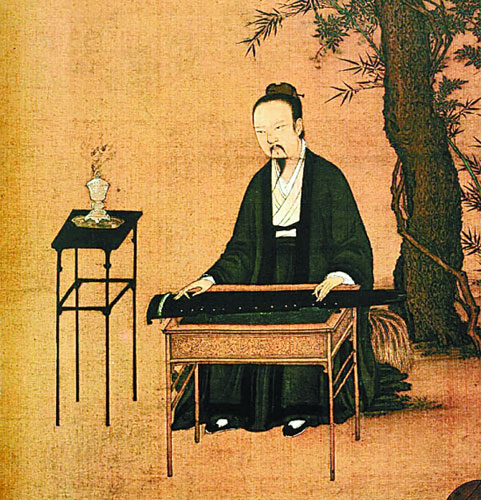
Note: This is one of Du Fu’s most famous poems & has been widely translated. The last couplet proved a conundrum for my translating partner Sheila Graham-Smith & myself. In this “final” version, we’ve gone with a conventional reading. All major English translations have to do with the fact that the poet is rubbing/scratching/worrying his head so much his hair is falling out, & it will soon be so thin it won’t hold a hairpin. It was common for Chinese men to do their hair up in a topknot held in place with a hairpin. See illustration.


Sheila however pointed out that the final two lines could mean something like “worrying my white head changes little/these troubled longings couldn’t overcome a hairpin.” Sheila is a talented poet, a fantastic reader of poetry, & someone with an uncanny intuition when it comes to interpreting poetic lines (whether in her own language or in another); her arguments always carry great weight, & while she eschews taking any credit for the translations themselves, this project would never have gotten as far as it has without her dedication & insight.  In fact, the characters certainly could mean exactly that.

Still, at this point at least we’re going with the conventional reading. We called in a fluent Mandarin speaker & scholar on the question, & that person came down—though not decisively—on the conventional side.

In any case, it’s an interesting problem. Classical Chinese is famously ambiguous, & Classical Chinese poetry even more so. The whole question reminds me of translator Stephen Owen’s remark that no one has enough Chinese to really understand Du Fu; & Owen should know: he’s translated the entire opus of the great Chinese poet.

Images links to their sources on Wiki Commons:
1. Tang Dynasty hairpin.
Photo by Wiki user Daderot who makes it available under the following license:
This file is made available under the Creative Commons CC0 1.0 Universal Public Domain Dedication.
The person who associated a work with this deed has dedicated the work to the public domain by waiving all of his or her rights to the work worldwide under copyright law, including all related and neighboring rights, to the extent allowed by law. You can copy, modify, distribute and perform the work, even for commercial purposes, all without asking permission.

2.  12th century illustration of Hanfu. Public domain.


Monday, April 18, 2016

meeting Li Guinian by chance south of the river


meeting Li Guinian by chance south of the river


I sought & found you often in Prince Qi’s residence
& heard you sing how many times in Cui Nine’s hall?

south of the river the landscape appears exquisite:
now as blossoms fall to meet you once more by chance.


Jack Hayes

© 2016
Based on Du Fu:
江南逢李龜年
jiāng nán féng lĭ guī nián


Notes: 

  • Li Guinian was a renowned singer & a leading figure in Emperor Xuanzong’s musical troupe. It’s worth noting that the times Du Fu would have seen Li Guinian at Prince Qi’s residence would have been before the chaos that ensued following the 755 An Lushan rebellion. The poem dates from the last year of Du Fu’s life, 770, when both he & Li Guinian have been displaced to the southern provinces following 15 years of turmoil within the empire; they are now far from the northern Imperial city of Chang'an referred to in the first couplet.
  • Prince Qi was the brother of Emperor Xuanzong & himself a noted patron of the arts
  • An original note from Du Fu: “Cui Nine was Cui Di, Director of the Palace Administration, the younger brother of the Secretariat Director Cui Shi” – this is quoted by Stephen Owen in his complete Du Fu.

Image links to its source on Wiki Commons:
"Branch of Flowering White Jasmine": This album leaf painting of ink and color on silk is attributed to the early 12th century Chinese artist Zhao Chang. 
Public domain

Friday, March 18, 2016

on the highest tower in White Emperor Castle


on the highest tower in White Emperor Castle


on the walls the way’s sharp, narrow: in waning sun, pennants
    signal mourning—
upright, alone, indistinct in silken mist, he rises to the tower

in the gorge cleft: cloud & fog where dragon & tiger sleep—
the sun-drenched Yangzi enfolds roaming turtles & alligators

western limbs of the Fusang Tree meet this severed stone;
eastern shadow of the Ruo River accompanies its long current

on my goosefoot cane, sighing for this generation: who will inherit it?
weep blood for the rush of empty cycles, bright chancellor


Jack Hayes
© 2015
based on Du Fu:
白帝城最高樓
báidìchéng zuì gāo lóu


Note: for a more conventional translation of this poem, see this post (1/3/18)


White Emperor Castle refers to Baidicheng


Image links to its source on Wiki Commons:
Báidìmiào (White Emperor Temple): Tomasz Dunn
This file is licensed under the Creative Commons Attribution 2.0 Generic license.


Monday, March 14, 2016

Qiang Village (three poems)


Qiang Village #1


towering red clouds steep to the west,
the sun’s foot below the horizon—
at the brushwood gate, sparrows are chirping
as the wanderer returns from a thousand li’s distance—
my wife & children astonished I’ve survived
but recover from the shock & wipe their tears;
adrift in a world in upheaval, driven by chance,
it’s sheer accident I made it back alive—
the neighbors throng, seated atop the wall;
moved also to sighs, they moan & sob—
as night grows late still more bring candles:
we face each other as though in a dream


Qiang Village #2


life's dusk is pressing, & all seems empty:
even homecoming brings scant joy or appeal—
my tender son clings to my knees,
afraid that though I’ve come back I’ll leave again;
I remember how we used to seek a cool breeze
& wind through the trees at the pond’s edge—
now the powerful north wind is howling
& I stew over a hundred worries
but I know I can count on the grain harvest
& already I know the ale is in the mash-press;
now there’s enough to fill my cup to the brim
& drink down to console my dawdling decline


Qiang Village #3


the chicken flock falls to a squawking riot:
visitors arriving sets them squabbling
& I shoo them up into the trees;
only then I hear the knock on my brushwood gate—
a few reverend village elders,
they ask me about walking such a distance;
& each one comes bearing abundance:
ke teng zi beans poured in, first cloudy, then clear,
then speak bitter words about the ale’s thin taste:
no one remains to plow the fields for millet,
soldiers in their armor endlessly;
sons taken off to fight in the east—
reverend elders may I sing a song for you?
I’m shamed by your hardship & deep feeling—
the song ended I gaze toward heaven, sigh:
on all sides tears are wept without restraint


based on Du Fu: 羌村
qiāng cūn

Notes: 

  • The ale referred to in these poems is Huangjiu or at least an early form of it, also known as yellow wine. It's a beverage made by brewing, though it is stronger than a typical western beer or ale, as it approaches 20% alcohol. In this case it would be made of millet, though it can also be made with  rice, sorghum, or wheat.
  • In poem #3: ke te zing beans come from the Entada phaseoloides, which is native to East Asia & Oceania. Its vernacular English name is St Thomas Bean, but there are obvious problems in using that term in translating an 8th century Chinese poem. There are many traditional uses for these beans, but one is as an anti-inflammatory - soothing to someone who has just returned home after walking for many miles!

Image links to its source on Wiki Commons:
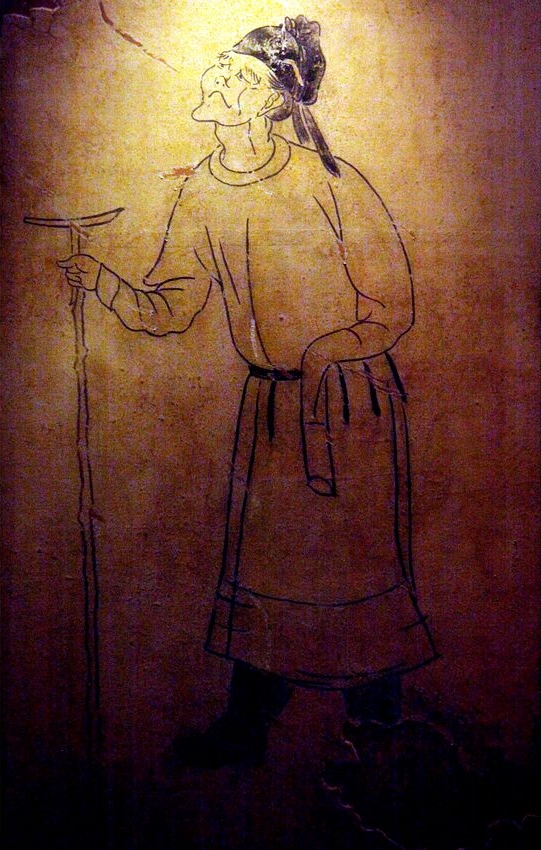
唐朝墓室壁畫 (Tang Dynasty tomb painting)
Public domain