Showing posts with label jazz. Show all posts

Sunday, August 27, 2017

Myself When Young


Welcome back to Sunday music on Robert Frost’s Banjo—& this week it’s even posting on Sunday.

We’re wrapping up this month’s feature on Dorothy Ashby with the opening track from her 1970 Cadet album The Rubaiyat of DorothyAshby. This release not only features Ashby as a vocalist, but she also plays koto in addition to harp. The Allmusic review I’ve linked to the album title is well worth a read; reviewer Thom Jurek concludes his write-up with this statement: “For those who remain open, this may be her greatest moment on record.”

For those who are interested, here’s a Wikisource link to Edward Fitzgerald’s famous 19th century translation of “The Rubaiyat of Omar Khayyam”; the poems provide the text for Ashby’s songs.

Hope you’ve enjoyed this look at Ashby’s work & have been inspired to explore her music more thoroughly.


Image links to its source on Wiki Commons:

“This is the cover art for The Rubaiyat of Dorothy Ashby by the artist Dorothy Ashby. The cover art copyright is believed to belong to the label, Cadet, or the graphic artist(s).” Wiki Commons claims “Fair Use” for the image.


Tuesday, August 22, 2017

Django


My apologies for how late this “Sunday music” post is!

We continue our DorothyAshby series with a track from her 1984 Phillips album, Django/Misty; here we have Ashby’s take on John Lewis’ composition, “Django”, named of course after the great guitarist Django Reinhardt.

There isn’t much background information available on the Django/Misty recording. Ashby recorded this & Concierto de Aranjuez for Phillips in 1984; they were her final albums as a leader, & indeed came after a 14 year absence as a leader on a recording. Before Django/Misty, her previous lead had been on the 1970 Cadet release, The Rubaiyat of Dorothy Ashby. Ashby did considerable work as a sideman in the 1970s, however, appearing with such notables as Stanley Turrentine, Bill Withers, Billy Preston, Freddie Hubbard, as well as on Stevie Wonder’s great Songs in the Key of Life album—yes, that’s Ashby playing harp on “If It’s Magic”.

We’ll return next Sunday (I hope next Sunday!) with the final installment in the Ashby series. Enjoy!


Image links to its source on Wiki Commons:
Per Wiki Commons: This is the cover art for the album Django/Misty by the artist Dorothy Ashby. The cover art copyright is believed to belong to Philips Records.
Wiki Commons claims “Fair Use” for the image.

Sunday, August 13, 2017

Games


We return to Sunday music with this month’s featured artist, jazz harpist Dorothy Ashby.

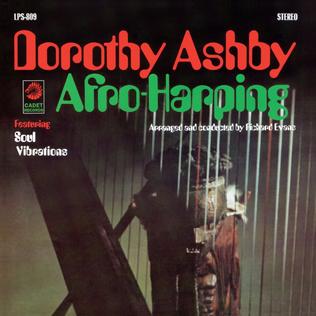
Today’s selection is Ashby’s composition “Games” from her 1968 Cadet release, Afro-Harping. This album features Ashby backed by an apparently unknown orchestra (including theremin on some cuts). Allmusic reviewer Ron Wynn describes Afro-Harping as “the best and most complete album done by jazz harpist …Dorothy Ashby”; Joshua Weiner, writing for the all about jazz site finds the album more a product of its particular time, a proto example of acid jazz, but still describes the music as “fascinating”, & goes on to write:

Those interested in 60s mod will enjoy it for its own sake, while others will be provided with an interest-piquing introduction to a largely forgotten instrument, and musician, in jazz.

Hope you enjoy it.


Image links to its source on Wiki Commons:
“This is the cover art for Afro-Harping by the artist Dorothy Ashby. The cover art copyright is believed to belong to the label, Cadet, or the graphic artist(s).” Wiki Commons claims fair use for this low-resolution image.


Sunday, August 6, 2017

Nabu Corfa


Today we begin our August feature for Sunday music; this month’s feature artist is jazz harpist DorothyAshby. & when we say “harp” here, we don’t mean the slang for a harmonica; we mean an actual harp.

Ashby is an overlooked figure in jazz history; in general, the canon hasn’t given their due to women instrumentalists, & has rather focused on including vocalists. But Ashby was a true innovator, a composer, & a virtuoso player who was able to adapt the harp—an unusual instrument in a jazz context—to bebop. Indeed,the only other well-known jazz harpist being Alice Coltrane, who was also a pianist.

Today’s selection is “Nabu Corfa”, from Ashby’s 1965 Atlantic release The Fantastic Jazz Harp of DorothyAshby; interestingly, the recording session for the album took place in 1958. The session featured Ashby as leader on harp, backed by bassist Richard Davis, drummer Grady Tate, percussionist Willie Bobo, & a horn section consisting of Jimmy Cleveland, Quentin Jackson, Sonny Russo, & Tony Studd (though the latter’s trombone isn’t heard on this selection). “Nabu Corfa” is an original Ashby composition.

Enjoy!


Image links to its source on Wiki Commons:
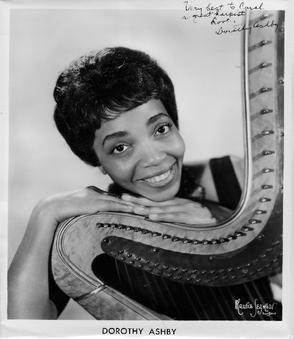
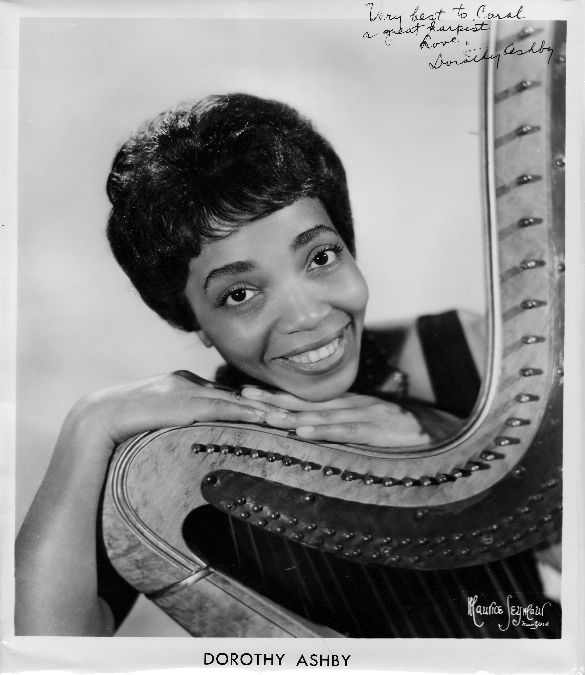
Autographed photo of photo of American musician Dorothy Ashby. Wiki Commons lists the source of the photo as this link, & claims “fair use”. There is apparently no public domain or copyleft photo of Ashby.


Sunday, June 25, 2017

Volunteered Slavery


We bring our all-too-brief series on Rahsaan Roland Kirk’s music to a conclusion today—but it is a rousing conclusion!

This video shows Kirk in peak form, playing sax, a conch shell, a gong, police whistle, & eventually using a wood chair as a percussion instrument, destroying it in the process! The energy level is at maximum level, & also includes a great piano solo by Ron Burton, while Kirk wanders through the audience at the Montreaux Jazz Festival, led by his percussionist & sidekick, Joe Habao Texidor.

“Volunteered Slavery” is the title track of a 1969 Kirk album issued on Atlantic. He also played it as a coda to “The Old Rugged Cross” on his masterful 1972 release, Blacknuss (& I very much regret I wasn’t able to fit a cut from that album into this overview).

I hope you enjoyed these selections, & if you’re new to Kirk’s music, I hope this spurs you to explore his work further. Stay tuned next month for more Sunday music!


Image links to its source on Wiki Commons:
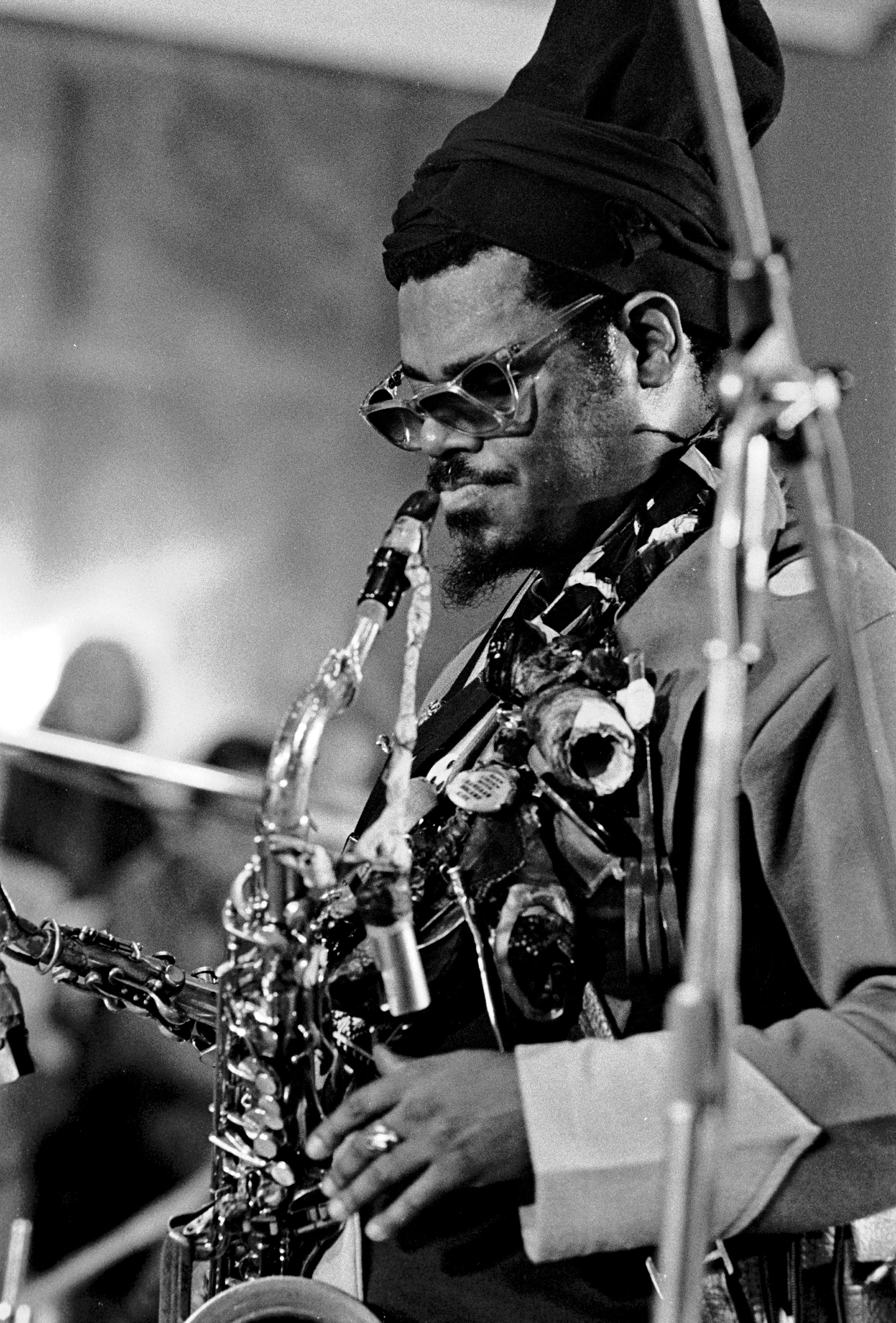
“Roland Kirk playing at Lanchester Polytechnic in Coventry UK, January 1972.” Photo by Kentrethewey [link provided on Wiki Commons is empty], who makes it available under the Creative Commons Attribution-ShareAlike 4.0 International license. 

Sunday, June 18, 2017

Bright Moments


It’s Sunday—& that means more Rahsaan Roland Kirk!

I don’t tend to think in terms of “favorites” when it comes to creative work—no “favorite” poet, musician, song, poem, etc. What speaks most directly to me at one point in my life is bound to change as time passes &, with that passage of time, my consciousness changes. But having said that, today’s song means a great deal to me & has for many years. I first heard it played at the Vermont Jazz Festival in the 1970s, a dark time in my life, a time very much in need of “bright moments”—there’s something about this music that speaks to me on the deepest level.

This performance is from Kirk’s Bright Moments album, recorded live at San Francisco’s Keystone Korner & released on the Atlantic label in 1973. Indeed, the record is a great introduction to Kirk’s music, as it covers a wide array of styles—from the transcedent post-bop flute playing of the title track to his tenor sax take on Fats Waller’s “Jitterbug Waltz”, & a whole lot of greatness in between.

Enjoy!


Image links to its source on Wiki Commons:
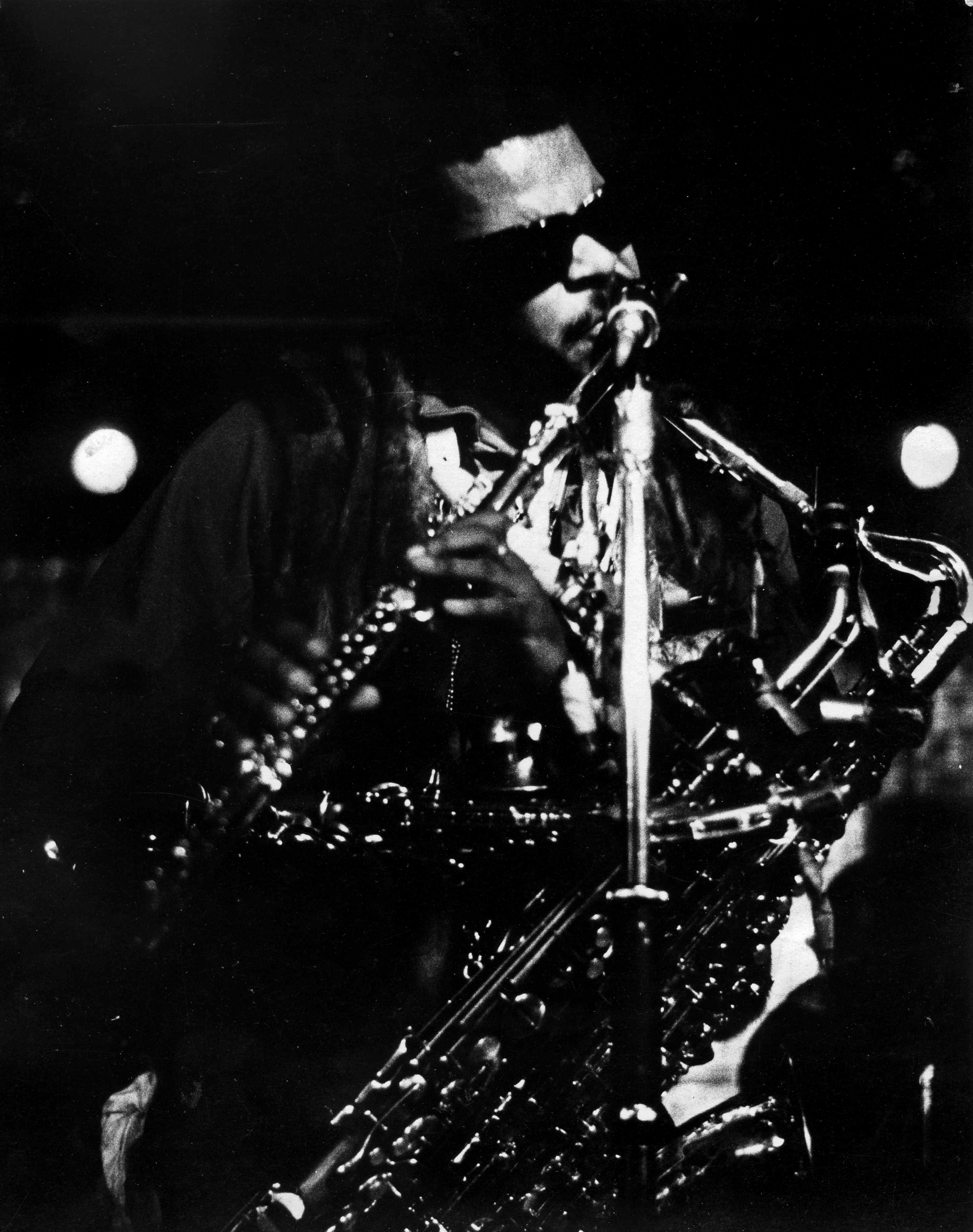
"Roland Kirk at Ronnie Scott's Club" by Del de la Haye (Flickr name:del) who makes it available under the Creative Commons Attribution-Share Alike 2.0 Generic license.


Sunday, June 11, 2017

Serenade to a Cuckoo


We continue our series on the music of Rahsaan Roland Kirk with a live performance of his wonderful composition, “Serenade to a Cuckoo”.  This piece first appeared on Kirk’s all flute album, I Talk With theSpirits, released on Limelight in 1964. Although this album was later re-issued on CD, it’s currently out-of-print, which is absolutely criminal. If you can find a used copy at your local music store, I’d encourage you to pick it up—great music.

Indeed, while Kirk is most renowned for his reed playing, he was also one of the best jazz flutists, as inventive on that instrument as he was on the sax. This is a beautiful rendition of the song, & also features a brief concluding interlude on nose flute—& no feature on Rahsaan Roland Kirk would be complete without the nose flute making an appearance.

Hope you enjoy it!


Image links to its source at Wiki Commons:
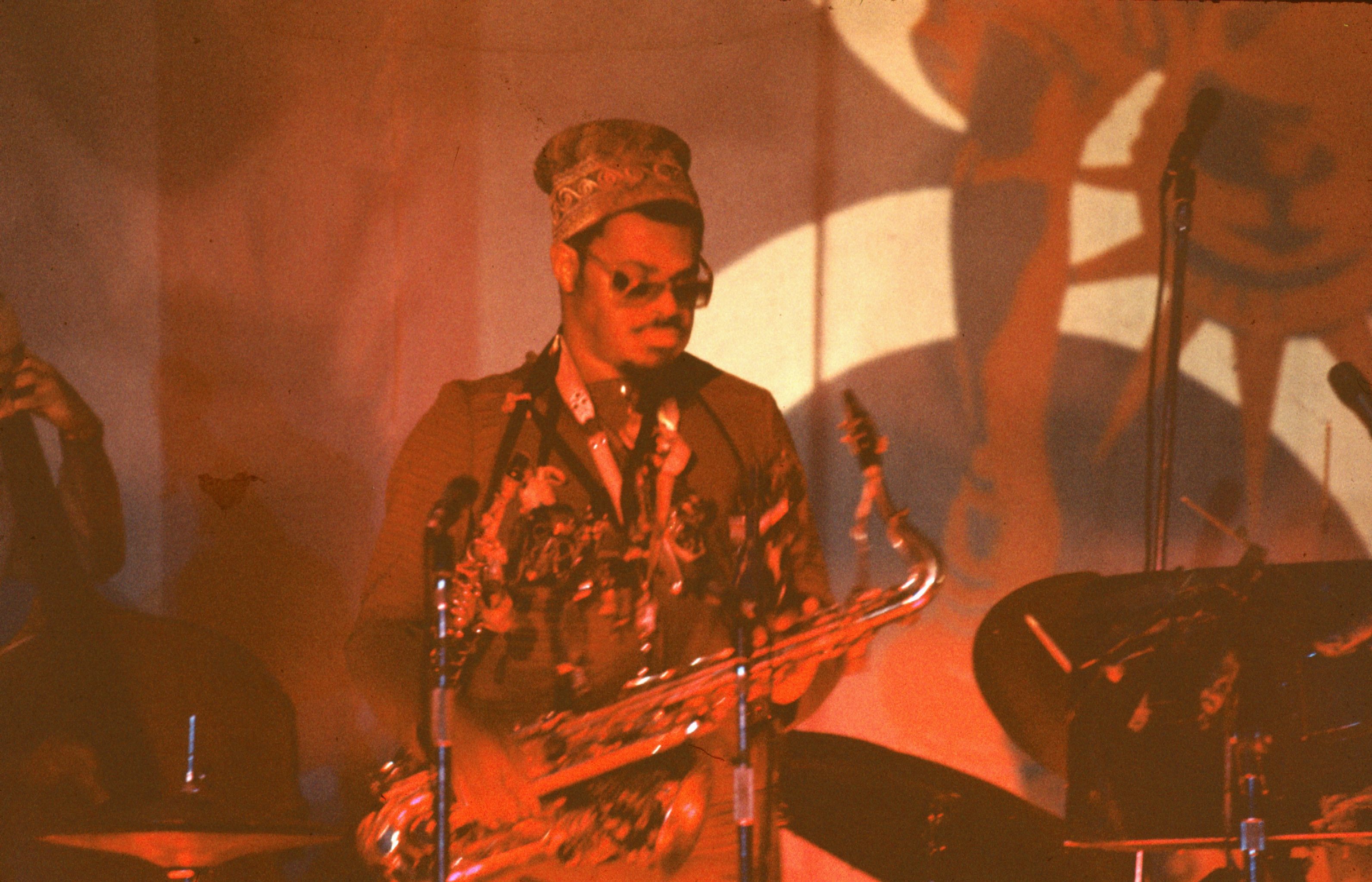
“Roland Kirk playing at Lanchester Polytechnic in Coventry UK, January 1972, with Henry Pete Pearson (bass), Rahn (Ron) Burton (piano), Joe Habao Texidor (percussion), and unidentified drummer.” Photo by Kentrethewey [link provided on Wiki Commons is empty], who makes it available under the Creative Commons Attribution-ShareAlike 4.0 International license.


Monday, June 5, 2017

The Inflated Tear


This week’s Sunday Music post is late indeed, as it’s well into Monday afternoon out here in Portland, Oregon. But while today’s post is both late & shorter than I'd have liked, I didn’t want to miss a week, & am really excited about this month’s featured artist.

In fact, in June I’ll be featuring music from one of my all-time favorite musicians, an artist I was privileged to see perform live twice way back when—Rahsaan Roland Kirk.

If you love jazz, if you love great music, if you love singular & powerful expressions of the artistic spirit, then Rahsaan Roland Kirk’s music is for you. Kirk played with passion, virtuosity, & almost unreal inventiveness. A master on reed instruments, a talented composer, & indeed, a visionary in his ability to connect popular music of his day with the most up-to-date currents in jazz (as for instance on his Motown-inspired 1971 album Blacknuss), Kirk brought a complex musical vision to bear throughout his work.

Of course Kirk was known for his ability to play multiple reed instruments at once, as well as his incredible ability to use circular breathing in his playing. But it’s important to stress that these techniques went far beyond showmanship, & were integral to the symphonic imagination found in his playing & composition.

A truly great artist. As was the case with Arvo Pärt, such a short series is only going to give the most bare bones introduction to his music, but if you aren’t familiar with Kirk, I do hope these posts inspire you to seek out more of his music. & if you already know his work, I know you’re going to enjoy them & be moved by them!

Here Kirk plays his composition “The Inflated Tear” live around the time the piece was written.


Note: No post tomorrow (Tuesday 6/6/17) to give this post a full day plus to “headline” the blog.

Image links to its source on Wiki Commons:
Roland Kirk, "Rahsan Roland Kirk" Live im Großen Sedesaal des NDR Hamburg, 1972. Photo by Heinrich Klaffs [also here], who makes this image available under the Creative Commons Attribution-Share Alike 2.0 Genericlicense.


Saturday, May 13, 2017

What's Goin' On/Mercy Mercy Me (The Ecology)


Image links to its source on Wiki Commons:
"The Blue Marble" is a famous photograph of the Earth taken on December 7, 1972, by the crew of the Apollo 17 spacecraft en route to the Moon at a distance of about 29,000 kilometres (18,000 mi). It shows Africa, Antarctica, and the Arabian Peninsula.
This file is in the public domain in the United States because it was solely created by NASA. NASA copyright policy states that "NASA material is not protected by copyright unless noted". 


Saturday, May 6, 2017

Saturday, April 29, 2017

Peace on Earth


Image links to its source on Wiki Commons:
"Peace on Earth" in Portland, Oregon; 17 December 2013 by Visitor7 [the link provided is empty], who makes it available under the Creative Commons Attribution-Share Alike 3.0Unported license.

Saturday, April 22, 2017

Peace Piece


Image links to its source on Wiki Commons:
Dahler Straße in Neuenrade, 30 May 2009. Photo by Frank Vincentz who makes it available under the GNU Free Documentation License, Version 1.2 or any later version & the Creative Commons Attribution-Share Alike 3.0 Unported license. He states "You may select the license of your choice."


Sunday, July 5, 2015

"'Round Midnight" – Jazz on Nylon #9 (a & b)

A happy Sunday, friends. We’re back at you with another installment in the Jazz on Nylon series. Great song for a hot summer evening or night—so great in fact, that I’m posting two versions for your listening pleasure.

Thelonious Monk’s composition “’Round Midnight” is, according to the Jazz Standards website, “the most-recorded jazz standard written by any jazz musician.” There are conflicting stories about the songs composition. Some claim that Monk was as young as 18 or 19 when he wrote the song, originally under the title of “Grand Finale.” Others claim it was written in 1940 or 1941, when Monk was in his early 20s. At any rate, it’s known that trumpet player Cootie Williams recorded the song in 1944; as Cootie Williams shares the composition credit with Monk, it’s generally thought that a handful of Williams’ embellishments became a part of the song, but there is a bit of controversy on this point. Bernie Hanighen added lyrics a few years later.

“’Round Midnight” became a signature song for Cootie Williams, & later for Miles Davis as well (who titled an album “Round About Midnight,” which led to this being used as an alternate title); Dizzy Gillespie & Art Pepper also recorded notable versions, & the vocal version has been sung by a number of jazz singers.

The song is written in the key of Eb minor, which is considerably more friendly for a piano, brass, or reed instrument than it is for the guitar. According to Jazz Standards,”the initial harmonic progression is i -vi -ii7 -V7, similar to ‘Alone Together’”; however, on the same page, saxophonist Jim Clark states that while this is the progression given in The Real Book, it’s not what he hears Monk & others actually playing.

My original idea was to post Ukrainian guitarists Roman Viazovskiy’s great version based on Roland Dyen’s arrangement. Intricate & highly lyrical, this is a beautiful reading. But let’s face it: when there’s a version that exists by the Brazilian virtuoso Baden Powell, it’s pretty hard to overlook that! The video & audio are better on the Viazovskiy rendition, but Powell’s highly improvised Latin reading is masterful—& given the importance of this song in the Jazz songbook, why not go with two versions? In addition, it will make up a little for the lapse since the last post in this series! Finally, as an added bonus for those who find even two versions to be insufficient: here’s a link to the great guitarist Wes Montgomery playing a jazz box version in his amazing thumb style & a link to a beautiful solo piano version by Monk himself.

Enjoy!


Image links to its source on Wiki CommonsThelonious Monk, Minton's Playhouse, New York, ca. September 1947. Photograph by William P. Gottlieb – Library of Congress, Public Domain

Thursday, January 8, 2015

“Stardust” – Jazz on Nylon #8

Some music for your Thursday—& more Hoagy Carmichael at that.

When it comes to the Carmichael canon of songs, so many of which have become standards at a deep level, almost like folk songs (approached in our time probably only by the Beatles), we must admit it’s hard to pinpoint one as a high water mark. But if one had to make such a selection, “Stardust” would almost have to be the choice. There have been over 1,500 recordings of the song since it was first composed as an instrumental in 1927; the Library of Congress added it to the definitive recording archive, the National Recording Register, in 2004.

The song has a complex evolution. Carmichael claimed it came to him first as a melody he whistled. He first recorded it—actually as an upbeat instrumental—in 1927, but the song didn’t attract much public interest. Carmichael composed a lyric for it, but his publisher rejected it, & the lyric we know today was written by Mitchell Parrish, with some input from Carmichael. The song with Parrish’s lyric & a slightly modified melody was published in 1929. It wasn’t until the following year that Isham Jones recorded it as a slow ballad that it reached the form we know today.

“Stardust” was composed in the key of C, & that’s the key it’s typically played in. The song’s structure is idiosyncratic, & the melody wanders widely, spanning the range of a 10th. It's been noted that there are distinct similarities between the melodic structure of the song & the pattern of some Bix Beiderbecke improvisations.  There is a contrast between the arpeggiated movement in the A section & the straightforward quarter note melody found especially in the C section. As Oscar Hammerstein II wrote:

“Star Dust” “rambles and roams like a truant schoolboy in a meadow. Its structure is loose, its pattern complex. Yet it has attained the kind of long-lived popularity that few songs can claim. What has it got? I’m not certain. I know only that it is beautiful and I like to hear it.”

Today’s guitar version is based on an arrangement by the great Brazilian master Laurindo Almeida, & played with great skill & feeling by Tony R Clef. Clef is, like Naudo Rodrigues who has also been featured in this series, a guitarist whose work appears on YouTube, & I'd encourage you to check out his channel there; however, he has recorded an album, Tuesday Afternoon on Big Round Records, & this has received really positive reviews. I admire both his playing overall & his handling of the Almeida arrangement, which moves from a fairly straightforward reading of the song into a full on Bossa Nova treatment.

Enjoy!


Image links to its source on YouTube

Monday, January 5, 2015

“Winter Moon”

A happy Monday to you, friends—or whatever day you happen by here. Hope you all had a wonderful holiday season…or at least made it through relatively unscathed. However you fared, here’s some gorgeous music for your Monday—just in time for tonight’s full moon.

Of all the great songwriters who helped to create the beautiful “Great American Songbook of the early to mid 20th century, I may well like Hoagy Carmichael best. His melodies are timeless, & his harmonies unfailingly rich & fascinating. There’s a depth to the music, as well as an unfailing goodwill. It’s become a bit of a “thing” to call Carmichael the “first singer-songwriter”, which isn’t really accurate, in part because he didn’t write the lyrics to as many of his compositions as is commonly thought (though when he did write lyrics, they were first-rate), & he also didn’t record very often as a singer. Simply put, Carmichael’s voice isn’t the classic sort you’d associate with singing jazz tunes. His pitch is imperfect & his range is limited. Despite that, I’ve always enjoyed the recordings he did make, & one in particular stands out: Hoagy Sings Carmichael, originally released in 1956 on the Blue Note label. This session finds Carmichael backed by an all-star band called the Pacific Jazzmen, & led by Johnny Mandel. Among the luminaries are Art Pepper on alto sax, Al Hendrickson on guitar, Harry “Sweets” Edison on trumpet, & more.

“Winter Moon” is one of Carmichael’s later compositions, copyrighted in 1957 (oddly a year after the release of the record!), & it’s not well-known—which to my mind is a shame, because it’s a heartbreakingly lovely song. Art Pepper did cover it as an instrumental, but this is one of the few Carmichael songs that hasn’t made its way into the standard repertoire.

Hope you enjoy it.


Image links to its source on the net. Although this isn’t a public domain image, there are many copies available on the net, & many of them considerably higher resolution than this. That being the case, along with the fact that the post is educational in nature, I believe this is “fair use.”

Tuesday, December 9, 2014

"Linus and Lucy" – Jazz on Nylon #7


Okay, I really promise not to contribute overmuch to the ubiquitous holiday soundtrack, but I do have a wonderful performance today of Vince Guaraldi’s “Linus & Lucy” as part of the Jazz on Nylon series. It’s such a delightfully buoyant composition, & it seemed just the thing for a rainy Portland day.

“Linus & Lucy” became known through A Charlie Brown Christmas special that first aired in 1965—& yes, I was one of the many who watched during that first airing. Guaraldi’s score for the special produced not only “Linus & Lucy”, but also the lovely “Christmas Time is Here” & “Skating”. The song was originally written in Ab & is notable for an immediately recognizable bass line that weaves under the melody.

Vince Guaraldi was, of course, much more than a one-off composer who happened to score a Peanuts special. He was a highly respected jazz pianist & composer who also had a hit with “Cast Your Fate to the Wind”, released in 1962. Unfortunately, Guaraldi passed away in 1976 at the young age of 47.

Today’s version is by a formidable guitarist, Andrew York, who was one of the founding members of the Los Angeles Guitar Quartet. York’s recording career dates back to the mid 1980s with Perfect Sky, which not only includes his version of “Linus & Lucy”, but also some of his own noteworthy compositions like “Andecy” & “Sunshine Rag”. His most recent release is Yamour, which came out on Majian Music in 2012.

York’s version of “Linus & Lucy” is in an interesting tuning that I’d not encountered previously: DADF#BE. The open strings form a D6/9 chord, & it’s a hybrid of standard tuning & open D tuning. Using this tuning—not to mention his very impressive chops!—York keeps the bass line moving as he moves the melody all over the fretboard. But the performance is much more than a tour de force; it’s a joyous & lyrical interpretation.

Hope you enjoy it!


Image links to its source. This is an image in Andrew York’s press kit; the photograph is by Terry De Wolf

Friday, November 21, 2014

"Here’s That Rainy Day" – Jazz on Nylon #6


Music for a Friday—& a rainy Friday at that for those of us in Portland.

“Here’s that Rainy Day” was written in 1953 by the songwriting team of Jimmy Van Heusen & Johnny Burke; Van Heusen & Burke were of course prolific, & wrote many other standards in the “Great American Songbook,” including such notable songs as “Swinging on a Star”, “Moonlight Becomes You”, “It Could Happen to You”, & “Imagination”. Both Van Heusen & Burke collaborated with others, Van Heusen working with Sammy Cahn, with whom he composed “All the Way”, “Call Me Irresponsible”, “Come Fly with Me” & many others. Burke meanwhile also worked with (among others) Arthur Johnston, with whom he penned the standard “Pennies from Heaven”. “Here’s that Rainy Day” was written in F major, & was debuted by Dolores Gray in the Broadway musical, Carnival in Flanders.

Here’s a fine short analysis of “Here’s that Rainy Day” by Jeremy Wilson on jazzstandards.com:

John Barrett Jr. aptly described “Here’s That Rainy Day” as “a gentle yawn, the sun rising on a sad feeling.” It is a ballad about lost love, about love turning to a cold, rainy day. With a relaxed tempo and a feeling of melancholy, the lyrics and music support each other in creating the mood. That is not to say that it is a simple song. Alec Wilder, in his book American Popular Song: The Great Innovators, 1900-1950, comments that “Here’s That Rainy Day” is “a very difficult song” with a complex bass line. He characterizes it as “powerful,” “affecting,” and with “great weight and authority.” The song is an excellent example of the sophistication that became acceptable in popular songs in the 1940’s.

Jazz musicians appreciate the elegance of “Here’s That Rainy Day” with its surprising melodies and harmonies. The song’s flexibility has allowed it to be recorded hundreds of times as a ballad, a swing number, and even an up-tempo, bossa nova tune.

Eric Hill is today’s guitarist, & I wish I knew more about him. He does have a website, & we learn there that he retired after a long career as a professional classical guitarist & teacher. He also mentions that his retirement occurred after recovering from a serious illness, & goes on to say that in retirement he plans to work on improvisation using jazz standards. His YouTube channel has a handful of videos, each excellent—& each will probably appear in this series as it continues—but it’s worth noting that he hasn’t uploaded anything since 2008; not sure what that means, but it is certainly a loss, because Mr Hill is a formidable player.

Hope you enjoy this.


Image links to its source at .erichillguitardownloads.co.uk

Tuesday, October 28, 2014

"Autumn Leaves" – Jazz on Nylon #5

Some music for an October Tuesday.

Odd tale indeed how this video came to be posted. I visited YouTube on Sunday wondering if there was a version of “Autumn Leaves” played on classical guitar. Indeed there is, & a very good version at that, played by a terrific guitar player I’d never heard before Naudo Rodrigues.

There was only one catch—embedding wasn’t available. Undaunted, I looked through what turns out to be Naudo Rodrigues’ vast catalog of performances—not only mind boggling in number, but also in the diversity of music he covers. Everything from traditional songs to jazz standards to rock to pop. He is clearly a phenomenon, & I would encourage anyone to check out his YouTube channel. There’s also a playlist assembled by another user, which can be found here. In any case, I found a live version of Django Reinhardt’s beautiful “Nuages,” & decided that would be a good fallback option. The sound quality isn’t as good, but the performance is first rate for all that—& embedding was allowed. Then this morning as I began to put the post together, I found that, overnight as it were, embedding had been disabled on this version of “Nuages”! On a whim, I checked back, & found that embedding is now allowed on “Autumn Leaves.” The vicissitudes of YouTube. Anyway, this is a caveat that the video may not available on the post for long, but if the embedded version goes away, it can be found at this link.

Naudo Rodrigues, as I was saying, appears to be a singular musical genius. There’s very little biographical information about him. He was born in Brazil & now lives in Tenerife in the Canary Islands. He does perform locally. On the other hand, I can’t find much recording information, though there are about a dozen songs on iTunes. He seems to be—in addition of course to his live shows in Tenerife—a YouTube phenomenon. YouTube in its infinite wisdom closed down one of his accounts for copyright violation, but Rodriques opened a new one. In any case, his playing is superb, & he really deserves to be heard by a wide audience.

“Autumn Leaves” needs no introduction. Originally composed as “Les Feuilles Mortes” by Joseph Kosma with lyrics by the wonderful French poet, Jacques Prévert, the song moved into the “Great American Songbook” when Johnny Mercer composed the English lyric we know today. Yves Montand gave the original version its premier in 1946 in the film Les Portes de la Nuit, while Jo Stafford premiered Mercer’s English version.

Enjoy!


Friday, October 3, 2014

“All of Me” – Jazz on Nylon #4

Some wonderful music for your Friday listening pleasure.

“All of Me”is a staple in the Great American Songbook, & has been recorded at least 140 times  since it was first composed by Gerald Marks & Seymour Simons in 1931. The song was debuted that same year in live performance by Belle Baker, while the original recordings were by the Paul Whitman Orchestra & Ruth Etting, both in 1932.

Marks & Simons are not among the better known songwriters of that period, but each had his hand in other notable compositions.  Marks composed “Is It True What They Say About Dixie”, while Simons collaborated with Richard A. Whiting on “Breezin’ Along with the Breeze.” Certainly “All of Me” was their most notable achievement.

The song was originally composed in “the people’s key” of C, & is typically performed in that key when played instrumentally. The chord progression is one I associate with ragtime compositions, as the first change jumps from the tonic to the 3 chord in its major iteration, & then follows a circle of fifths progression through the first 16 bars. There’s also a bridge involving a typical move from the 4 major to the 4 minor chord. “All of Me” is a 32-bar song, which is of course typical of Great American Songbook tunes.

Francesco Buzzurro is a virtuoso guitarist from Italy. His mix of swing, feeling & pure chops is truly formidable, as he uses both impeccable classical & flamenco techniques with a lightning fast right hand. Buzzurro favors a Godin classical guitar as his primary instrument.

Hope you enjoy this!


Image links to its source on Wiki Commons.
“Francesco Buzzurro guitarist in concert” 20 March 08. The file has generously been released into the public domain by its creator “Albatros978”. (dead link on Wiki Commons)

Friday, September 12, 2014

"The Jitterbug Waltz" – Jazz on Nylon #4

Some wonderful music for your Friday listening pleasure!

It occurred to me a while back that if I was going to run a series called Jazz on Nylon, there were a few players who simply couldn’t be omitted. While the series so far has focused on guitarists who aren’t as well known, & while that may continue to be the focus going forward, I don’t want to simply overlook the handful of guitarists who’ve made a significant reputation for themselves in the jazz world while playing a classical guitar as their main instrument. Of course Charlie Byrd has to be high on that list,

Although Charlie Byrd began playing guitar as a boy on a regular steel string acoustic, he began studying classical guitar after being discharged from the army in 1945. In the 1950s he studied with Sophocles Pappas & then later with the great Andrés Segovia. Byrd’s first major engagement was a European tour with Woody Herman’s Herd in 1959—this version of the Herd also included Vince Guaraldi & Nate Adderly. Also around this same time Byrd began to develop an interest in Bossa Nova, & he & Stan Getz recorded the seminal Jazz Samba in 1962 for Verve Records. Byrd’s passion for Bossa Nova continued throughout his career, & you can hear him playing such classics as “Samba de Orfeu” & “Corcovado”on YouTube.

Unlike the other guitarists featured so far in this series, Byrd really didn’t work as a soloist. He collaborated with many notable players, including his work with Herb Ellis & Barney Kessel in Great Guitars. But his standard format was the trio, as in this video; & as in this video, his bass player was often his brother Joe Byrd.

“The Jitterbug Waltz” is a true jazz classic. Written by the great Fats Waller, who first recorded it on Hammond organ in 1942, the song was reportedly inspired by some piano exercises his son Maurice was studying. Waller is a giant in the jazz world. Although he was known for his comic persona & his novelty songs like “All That Meat & No Potatoes” & “Your Feet’s Too Big,” he was a masterful composer & a virtuoso both on piano & organ.

Byrd’s rendering of the song is just lovely—plenty of swing, as well as the great warmth & clarity of tone for which he is always noted. Hope you enjoy this beautiful music.


Image links to its source at
jazzinphoto