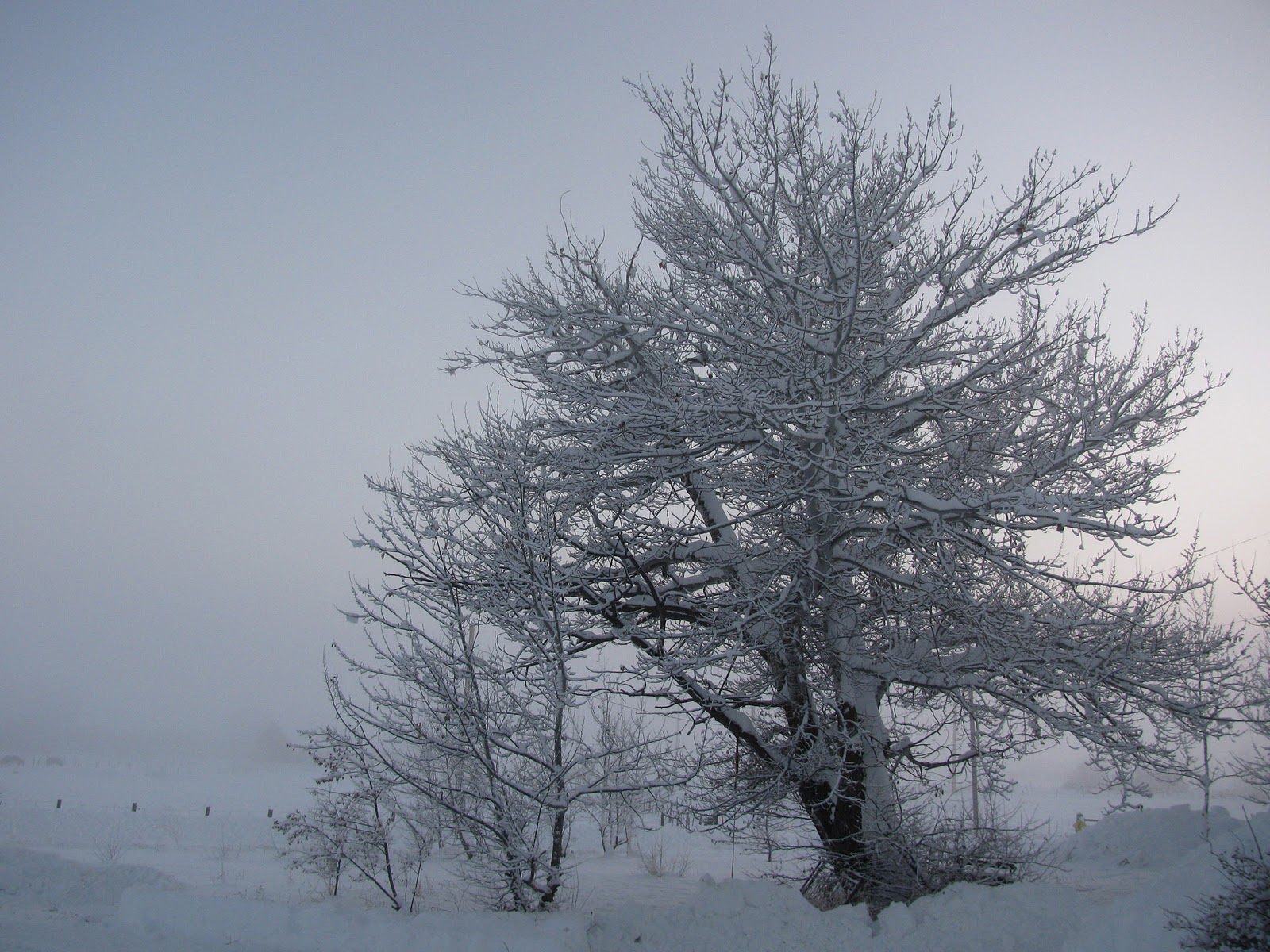
A miscellany like Grandma’s attic in Taunton, MA or Mission Street's Thrift Town in San Francisco or a Council, ID yard sale in cloudy mid April or a celestial roadmap no one folded—you take your pick.
Friday is here, & hope you’re ready for today’s edition of Homegrown Radio, because it’s an exciting one! Once again, we’ll be featuring Ami Worthen of the band The Mad Tea Party.
If you’re a regular reader of this blog, you know I love the Mad Tea Party’s music; I gave them a write-up here. In addition to Ami Worthen’s singing, songwriting & ukulele & guitar player, the Mad Tea Party also features Jason Krekel, who is simply one heckuva guitar player—& Krekel also sings, plays fiddle & composes!
I’m jazzed that Ami Worthen agreed to supply a couple of songs for this month’s Homegrown Radio series, & I also should mention that Ami has just released an ep called 4 for 40, which you can download on a pay what you can basis right here. Hope you check her album out, & please be generous when paying what you can: Ami Worthen is a seriously talented musician.
The two songs Ami submitted for Homegrown Radio are not on the ep, so these are a bonus! This week’s song is “On a Summer Night”—let’s see whatAmi has to say about it:
Another old song, written in the summer of 2004 when gas prices were way high, Asheville was in a drought, and things felt sort of hopeless. Luckily, love and romance supercede most troubles.
Doing solo home recordings like these liberates me from some of the standards we hold for Mad Tea Party. As a band, we strive to put out professional sounding recordings. In contrast, I am comfortable with releasing free solo downloads that are not studio quality. Also, since Mad Tea Party is such a rock 'n' roll dance band, these home recordings are a place where I can embrace my folkier side. I hope to do more over the course of the year.
Thanks again!
You can hear Ami’s first song, “Pounding Down the Trail,” here, & you also can follow Ami Worthen on her aptly titled blog, Ukulele Rockstar. She posts regularly, & her interesting observations on music, art & more are always interesting! So enjoy the music, & don’t be shy about commenting—I know Ami would love to hear from you!
Christmas Day is passing—even here in the western U.S., the winter sun is low in a gray blue sky. I must say this has been the most unusual Christmas season I can remember, but I also feel a strange peace on this Christmas afternoon, & I thought I’d share that by sharing a piece I’ve posted each year during this season since Robert Frost’s Banjo began.
It’s “Silent Night” played “classical style” (essentially like guitar fingerpicking) on a 5-string banjo. I made this recording a few years ago, & no doubt I could play it better now, but I was satisfied with the take when I recorded it, & still don’t have any real objections to the performance—perhaps a few quibbles, but that’s it.
I will be back with a post tomorrow, most likely the final installment of the Old-Time Holiday Train.
All the blessings of the season to you, dear readers!
Photo: The christmas song Stille Nacht, autograph (ca. 1860) by Franz Xaver Gruber (1787–1863)
[I'd planned to post something about The Spring Ghazals today, but decided instead to switch into full holiday mode with the following re-post. Also: please note that Writers Talk will return next Thursday with Dick Jones of Patteran Pages]
Today’s musical offering for Christmas Eve is one of my favorites among the traditional carols, “O Little Town of Bethlehem.” The melody has so much peace & gentleness to impart, & I’ve played it here on one of my old favorite instruments, a koa Lanikai baritone ukulele. I don’t play the baritone uke much anymore, but it’s hard to beat for a certain soft & melodic sound, with just enough low(ish) end to create some harmony.
This tune is very popular of course, & it seems evocative too. But as I was playing it, I began meditating on what, exactly, this song does evoke. What is the “little town of Bethlehem” we picture when we hear this melody? For those of us brought up in a Christian tradition, even if we no longer subscribe to the faith’s beliefs, we may well see an image of a Nativity scene divorced from any historical context.
But Bethlehem is a real place, a city on the West Bank in Israel, with a population divided between the Jewish, Christian & Islamic faiths (with a Muslim majority in the population). This is an area of the world that could well use tranquility & peace, but the conflicts there are so deeply rooted that they sometimes seem impossible to resolve. The territory is essentially mythic for three major religions & beyond that, conflicting historical claims spring from various wars fought over thousands of years. By the 20th century, Bethlehem was part of the British Mandate of Palestine & was included in the state of Israel by the United Nations resolution in 1947. The city is the site of Rachel’s Tomb, a very holy site in the Jewish faith; it also is considered the birthplace of King David, as well as the birthplace of Jesus of Nazareth.
One organization that has a very hands-on approach to resolving these conflicts is Ukuleles for Peace, an organization whose mission is “reating opportunities for Jewish and Arab children to meet & become involved with one another in their daily lives." One way the organization does this is by providing the kids with ukes so they can play music together. Please check them out. Is this the whole answer to the problems in that region? Of course not; but it strikes me as the sort of grassroots movement that could have a real impact, & perhaps spread to other areas.
All the images in the slideshow are from Wiki Commons, & all are in the public domain. They show Bethlehem & its inhabitants from the 19th thru early 20th centuries. Hope you enjoy the music.
Pic at the top of the post:
Main entrance into Bethlehem from Jerusalem, 2005 (photo released into the public domain by Wikipedia user Zero0000)
Happy Wednesday, folks. In honor of the recent solstice event, & also with hope of imparting some Christmas spirit both to Robert Frost’s Banjo & to myself, a re-post of sorts: a video of yours truly playing a fingerstyle guitar arrangement of “In the Bleak Midwinter,” Holst’s lovely setting for Christina Rosetti’s poem (you can read the poem here, at WikiSource.)
I recorded the song & made the video last December when it was originally posted on this blog. The arrangement (not original, but by Doug Sparling, with some minor variations by yours truly) is for guitar in the DADGAD tuning—so called because those are the notes of the open strings, as opposed to EADGBE in standard tuning. The DADGAD tuning is particularly used by fingerstyle guitarists exploring British Isles folk music—the open strings taken as a whole are a “suspended chord”—one that is neither major nor minor, but hovering somewhere in between. It’s a lovely tuning, & one that loves to have open strings ringing. I played it on my well-loved old Washburn, which is a sweet fingerstyle instrument.
Hope the holiday season has been good to you, & that you enjoy the music. There’ll be one more holiday tune—from the Alice in Wonder Band archives—on Friday!
Today is the last Holiday Music post for this season, & it’s a short video—three times thru the very old British “Coventry Carol.” The instrument I chose for this is a bit unusual: a 6-string Greek bouzouki that Eberle & I were given by her parents some years back. I fingerpicked the bouzouki in a “chord melody” style.
“The Coventry Carol” is appropriate for a post after December 25th, since it refers to the Feast of the Holy Innocents (held on the 29th), which commemorates the deaths of all male children under two years of age in Bethlehem in order to prevent the Messiah’s coming. The incident is related in Matthew 2:16-18, tho it isn’t mentioned in the other gospels or in any other contemporary accounts. It was a stock episode in the medieval mystery plays, with Herod being played as a larger than life villain—in fact, the character became a watchword for "chewing the scenery;" Shakespeare has Hamlet direct the players to “out-Herod Herod.”
In fact, “The Coventry Carol” was performed at the Coventry mystery play, in the Shearmen and Tailors' Pageant—this covered the entire Nativity story, from the Annunciation to the Massacre of the Innocents. The images are all from Wiki Commons, & all date to the 14th & 15th centuries.
Hope you enjoy it!
Pic at top of post: The Flight into Egypt:Melchior Broederlam (1398)
Today’s musical offering for Christmas Eve is one of my favorites among the traditional carols, “O Little Town of Bethlehem.” The melody has so much peace & gentleness to impart, & I’ve played it here on one of my old favorite instruments, a koa Lanikai baritone ukulele. I don’t play the baritone uke much anymore, but it’s hard to beat for a certain soft & melodic sound, with just enough low(ish) end to create some harmony.
This tune is very popular of course, & it seems evocative too. But as I was playing it, I began meditating on what, exactly, this song does evoke. What is the “little town of Bethlehem” we picture when we hear this melody? For those of us brought up in a Christian tradition, even if, as is the case with yours truly, we no longer subscribe to many of the faith’s beliefs, we may well see an image of a Nativity scene divorced from any historical context.
But Bethlehem is a real place, a city on the West Bank in Israel, with a population divided between the Jewish, Christian & Islamic faiths (with a Muslim majority in the population). This is an area of the world that could well use tranquility & peace, but the conflicts there are so deeply rooted that they sometimes seem impossible to resolve. The territory is essentially mythic for three major religions & beyond that, conflicting historical claims spring from various wars fought over thousands of years. By the 20th century, Bethlehem was part of the British Mandate of Palestine & was included in the state of Israel by the United Nations resolution in 1947. The city is the site of Rachel’s Tomb, a very holy site in the Jewish faith; it also is considered the birthplace of King David, as well as the birthplace of Jesus of Nazareth.
One organization that has a very hands-on approach to resolving these conflicts is Ukuleles for Peace, an organization whose mission is “reating opportunities for Jewish and Arab children to meet & become involved with one another in their daily lives." One way the organization does this is by providing the kids with ukes so they can play music together. Please check them out. Is this the whole answer to the problems in that region? Of course not; but it strikes me as the sort of grassroots movement that could have a real impact, & perhaps spread to other areas.
All the images in the slideshow are from Wiki Commons, & all are in the public domain. They show Bethlehem & its inhabitants from the 19th thru early 20th centuries. Hope you enjoy the music.
Pic at the top of the post: Main entrance into Bethlehem from Jerusalem, 2005 (photo released into the public domain by Wikipedia user Zero0000)
The solstice is here, a season when the light comes out of darkness. Festivities recognizing this time of year date back very far in human history, & of course, at least since the Fourth Century C.E., the Christian church has also celebrated the birth of Jesus at this time of year (it appears that this practice probably didn’t much pre-date the Fourth Century, as some earlier Church Fathers specifically prohibited any type of winter holidays).
One of the most beautiful carols celebrating this was the product of an odd collaboration; the lyrics are a poem by the very much underrated 19th century poet Christina Rossetti (pictured at the top of the post), with music added by Gustav Holst in the early 20th century—the poem has also been set to music by Harold Darke, Thomas Strong & Benjamin Britten.
The video below is yours truly playing a guitar arrangement by Doug Sparling of Holst’s setting (I made a few interpolations, but almost all of the arrangement is Sparling’s). The arrangement is for guitar in the DADGAD tuning—so called because those are the notes of the open strings, as opposed to EADGBE in standard tuning. The DADGAD tuning is particularly used by fingerstyle guitarists exploring British Isles folk music—the open strings taken as a whole are a “suspended chord”—one that is neither major nor minor, but hovering somewhere in between. It’s a lovely tuning, & one that loves to have open strings ringing.
I’ve also included the words to Rossetti’s beautiful poem after the video. But if you’re singing along, watch out! The poem is five stanzas long, & I only play the song thru three times. Hope you enjoy this.
In the Bleak Mindwinter
In the bleak midwinter Frosty wind made moan, Earth stood hard as iron, Water like a stone; Snow had fallen, snow on snow, Snow on snow, In the bleak midwinter, Long ago.
Our God, heaven cannot hold him, Nor earth sustain; Heaven and earth shall flee away When he comes to reign; In the bleak midwinter A stable place sufficed The Lord God incarnate, Jesus Christ.
Enough for him, whom Cherubim Worship night and day A breast full of milk And a manger full of hay. Enough for him, whom angels Fall down before, The ox and ass and camel Which adore.
Angels and archangels May have gathered there, Cherubim and seraphim Thronged the air; But his mother only, In her maiden bliss, Worshipped the Beloved With a kiss.
What can I give him, Poor as I am? If I were a shepherd I would bring a lamb, If I were a wise man I would do my part, Yet what I can I give Him — Give my heart.
Happy Friday everybody—as promised, I do have a holiday tune for you all this morning, & a well known one at that—“Silent Night.” As a bit of a wrinkle, I’m playing it “classical style” (essentially like guitar fingerpicking) on a 5-string banjo.
I made this recording a couple of years ago, & no doubt I could play it better now, but I was satisfied with the take when I recorded it, & still don’t have any real objections to the performance—perhaps a few quibbles, but that’s it. Long-time followers will remember that this same music & slideshow was posted last Christmas Eve. Apologies for the re-post, but I wanted to jump start the Holiday Music series. Between last weekend’s rehearsals for & performances of the McCall Christmas Concert (with attendant driving) & the accompanying if unrelated disaster of a our furnace vent pipe coming askew in snow & wind & causing up to $5,000 of damage before we caught it (coming home from dress rehearsal & finding the fluorescent light fixture in our utility room filled with water was a big clue), these have been a busy couple of weeks. We’ve also been hit by snow, then rain, power failures & the general scatteredness of coming back to day-to-day life after a week & a half immersed in an out-of-town performance.
I also feel a bit remiss because I failed to wish Jewish friends & family members a Happy Hannukah earlier in the festival—so almost belated wishes to the Rosenbergs & the Kleins & Sue R., & all readers who observe this holiday. My plans for playing “Chanuke, Chanuke” in frailing style on the banjo (in the odd D minor tuning!) will have to wait for another year.
There will be another holiday music post Monday morning, & that will involve guitar. But this time around it’s the banjo. Hope you enjoy it!
The holiday season is a particularly musical time, isn’t it? Of course, when we venture out for holiday shopping—or even for any errands—we’re usually bombarded with an endless soundtrack of Christmas music, much of which has—to say the least—lost some freshness over the years.
So you may ask with some justification why I’ve decided to add to this soundtrack! Truth is, I like Christmas music, & I’m hoping to offer some tracks that are a bit unusual for your holiday listening pleasure. Of course, with Eberle & I being involved in a rather large production Christmas show over the next week (rehearsals & performances), I’ve questioned the prudence of adding a recording project, but I’ve decided to forge ahead.
Today’s song is usually performed as a round with a capella voices. The melody has been ascribed to Palestrina, a 16th century Italian composer, but it’s not certain that he wrote it. The words “Dona nobis pacem” (“grant us peace”) come from the “Agnus Dei” (“Lamb of God”) section of the Latin mass. “Pacem” is pronounced “pachem.”
The images I’ve chosen for the slideshow illustrate, I believe, the link between justice & peace. I do want to mention that the famous folk shown in the film (Dorothy Day, Mother Theresa, Rosa Parks, Martin Luther King, Jr. & Harvey Milk) have all passed into history now. However, the fact that they are now historical doesn’t mean that we no longer need to strive for justice & peace—just because these men & women, & countless others who are unknown strove for justice & peace in the past, we aren’t excused from continuing to seek these ideals, & we shouldn’t be lulled into a sense that such struggles are only a part of history. They are the struggles of today, & they will be the struggles of tomorrow as well.