Showing posts with label Dao De Jing. Show all posts

Wednesday, November 22, 2017

Dao De Jing 19


Dao De Jing 19


Reject sagacity, abandon expertise
& the people will benefit a hundred times over;
reject altruism, abandon morality,
and the people will return to benevolence;
reject ingenuity, abandon profit,
& thieves will no longer steal.
But these three are superficial & not in themselves sufficient.
Thus follow this directive:
manifest simplicity, embrace modesty,
diminish self-interest, curtail desire.


Laozi, 道德經
Translation by John Hayes
Unlike with my original poetry & poetry translations, I don’t asset a copyright claim on my translation of the Dao De Jing. It may be freely used under the terms of the Creative Commons license.


Image links to its source on Wiki Commons:
“Xuan Yuan Inquires of the Dao”, scroll, color on silk, 32 x 152 cm. Xuan Yuan is the given name of the Yellow Emperor. This painting is based on the story that the Yellow Emperor went out to the Kongtong Mountains to meet with the famous Daoist sage Guangchengzi. Ming Dynasty.
Public domain.


Tuesday, September 5, 2017

Dao De Jing 18


Dao De Jing 18


When the Great Way was abandoned, humaneness & morality became abundant;
Wit & cleverness emerged, & hypocrisy abounded;
When harmony no longer held through the six close kinships*, filial sons grew abundant;
When the nation was benighted with disorder, loyal ministers grew plentiful.

Laozi, 道德經
Translation by John Hayes
Unlike with my original poetry & poetry translations, I don’t asset a copyright claim on my translation of the Dao De Jing. It may be freely used under the terms of the Creative Commons license.


Note:
* 六親 [liù qīn]
six close relatives, namely: father 父[fu4], mother 母[mu3], older brothers 兄[xiong1], younger brothers 弟[di4], wife 妻[qi1], male children 子[zi3]


Image links to its source on Wiki Commons:
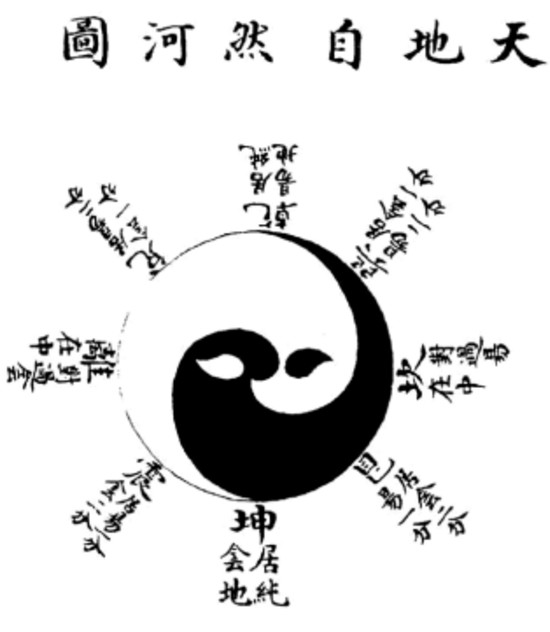
“Bagua diagram by Zhao Huiqian ("River Chart spontaneously [generated] by Heaven and Earth" 圖河.自地天). This image may in fact be a reproduction of the diagram by Hu Wei in his Yitu mingbian (‘Clarification of the diagrams in the book of changes’), dated 1706.” circa 1370; 1706. Public domain.

Wednesday, August 30, 2017

Dao De Jing 17


Dao De Jing 17


The one who ranks highest is scarcely known by the people;
The one who ranks second, they love & praise;
The one who ranks third, they fear;
The one who ranks fourth, they despise.
If you have no trust, no trust will be shown you in return.
The sage removes himself, as if his words are precious.
When the work is done & duties performed successfully, the people say: “We did this ourselves!”

Laozi, 道德經
Translation by John Hayes
Unlike with my original poetry & poetry translations, I don’t asset a copyright claim on my translation of the Dao De Jing. It may be freely used under the terms of the Creative Commons license.


Image links to its source on Wiki Commons:
Statue of a Taoist sage. 16th century. Photo by Wiki user BurgererSF, who makes it available under the Creative Commons CC0 1.0 Universal PublicDomain Dedication.

Wednesday, August 9, 2017

Dao De Jing 16


Dao De Jing 16


Come to utmost emptiness,
preserve deep stillness.
The ten thousand things arise as one,
& as we see return to their source.
Returning to the source is called stillness—returning thus is unchanging fate;
where the unchanging is known there’s wisdom,
where the unchanging isn’t known, there’s lawlessness.
Knowledge of the unchanging embraces all, & embracing all is justice.
justice then is majesty, majesty then is divine, the divine then is the Way;
the Way endures through time.
One who follows the Way is free from peril even until death.


Laozi, 道德經
Translation by John Hayes
Unlike with my original poetry & poetry translations, I don’t asset a copyright claim on my translation of the Dao De Jing. It may be freely used under the terms of the Creative Commons license.


Image links to its source on Wiki Commons:
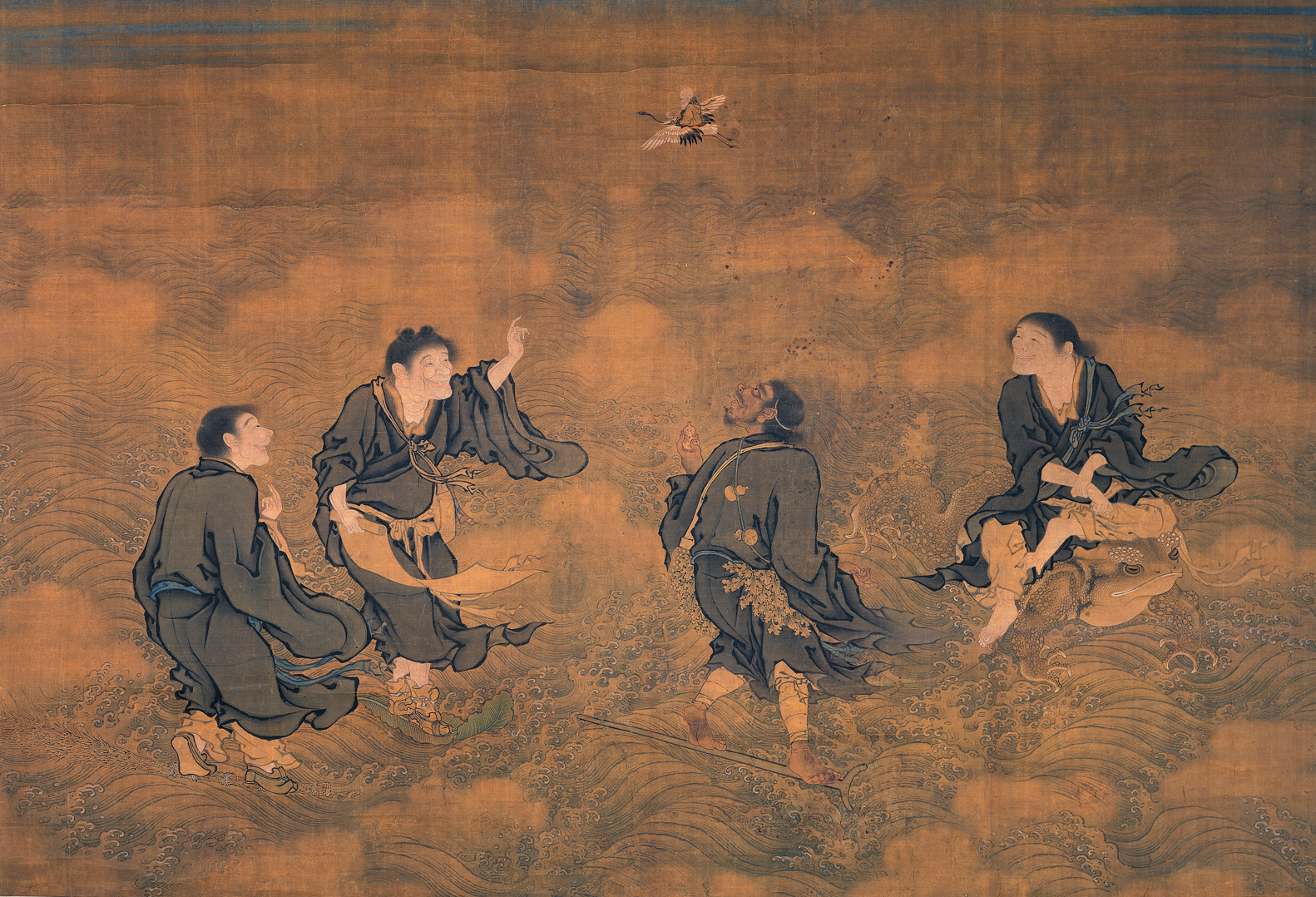
“Four Immortals Saluting Longevity”: Shang Xi, early Ming Dynasty, hanging scroll, Color on silk. (“The immortals are from left to right: Shide standing on a broom, Hanshan standing on a banana leaf, Iron-Crutch Li standing on a crutch, and Liu Haichan riding a 'Chan Chu' three footed toad. The being riding the crane is the Longevity Star God”).
Public domain.


Thursday, June 22, 2017

Dao De Jing 15


Dao De Jing 15

The ancient & skillful sages, subtle, mysterious, profound, were too deep to be fathomed. Because men could not fathom them, it’s best to describe their appearance:
Cautious as men fording a river in winter!
Trembling with fear at what surrounded them!
Grave & respectful as a guest!
Dispersing like melting ice!
Simple as uncarved wood!
Empty as a gorge!
Turbid as muddy water!
Who can turn muddy water gradually clear?
Who being quiescent can stir others to life?
Those who preserve the Way don’t desire fulfillment.
Not desiring fulfillment, they remain concealed & don’t ripen prematurely

Laozi, 道德經
Translation by John Hayes
Unlike with my original poetry & poetry translations, I don’t asset a copyright claim on my translation of the Dao De Jing. It may be freely used under the terms of the Creative Commons license.

Image links to its source on Wiki Commons:
“Depiction of the Daoist immortal Lü Chunyang, also known as Lü Dongbin”: Zhang Lu (1464–1538) – Ink and light colors on gold-flecked paper; album leaf. Ming Dynasty.
Public domain.


Thursday, June 15, 2017

Dao De Jing 14


Dao De Jing 14

Look at it, do not see, give the name beyond form;
Listen to it, do not hear, give the name beyond speech;
Seize it, don’t obtain it, give the name abstruse.

Looked at, it’s not seen & is named formless;
Listened to, it’s not heard & is named beyond speech;
Seized, it’s not grasped & is named abstruse.
These three qualities aren’t possible to investigate, so we mix them together to create the One.
Above it there’s no light & below it there’s no darkness.
Beyond measure, it has no name, & it returns again & again to nothingness.
It is named form without form, image without image, indistinct & dim.
Meeting it, there is no front; following it, there is no rear.
Follow the ancient Way & you can master the present.
To know the ancient beginning is to pick up the thread of the Way.


Laozi, 道德經
Translation by John Hayes
Unlike with my original poetry & poetry translations, I don’t asset a copyright claim on my translation of the Dao De Jing. It may be freely used under the terms of the Creative Commons license.


Image links to its source on Wiki Commons:
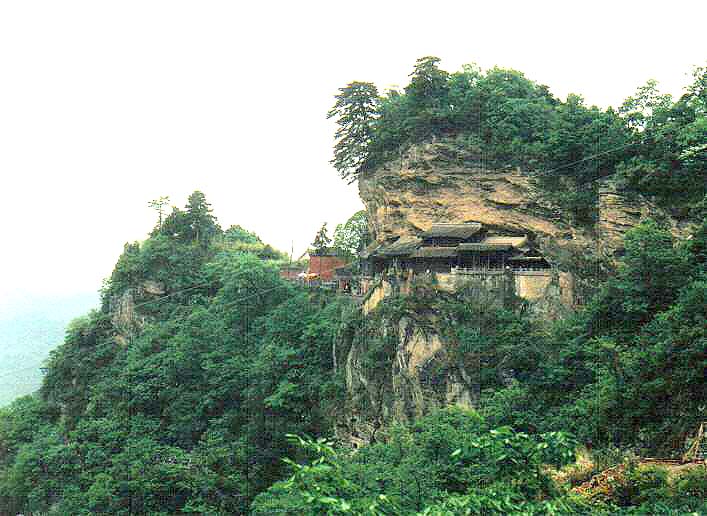
Wu Tang Cliffside Temple
Date    photo taken 1994 by Wiki User Fire Star [empty link on Wiki Commons].
This work has been released into the public domain by its author, Fire Star at the English Wikipedia project. This applies worldwide.


Wednesday, May 31, 2017

Dao De Jing 13


Dao De Jing 13

Favor & disgrace are feared equally,
Honor is a great misfortune, like the bodily self.
What does it mean to say “favor & disgrace are feared equally”?
Favor is joined with disgrace, obtaining it leads to fear of losing it, losing it leads to more fear—this is what is meant by saying “favor & disgrace are feared equally”.
What does it mean to say “honor is a great misfortune, like the bodily self”?
I am subject to great misfortune because I have a bodily self, & if I had no bodily self, what misfortune could come to me?
Thus, whoever would give his bodily self for the world’s honor, whoever would give the world the same love he gives his bodily self, may be entrusted with the world.

Laozi, 道德經
Translation by John Hayes
Unlike with my original poetry & poetry translations, I don’t asset a copyright claim on my translation of the Dao De Jing. It may be freely used under the terms of the Creative Commons license.


Image links to its source on Wiki Commons:
The Chunyang Gong(Temple of Lu Dongbin)in Datong, Shanxi, China. Photo by Wiki user JPBennett from Yamato, Japan, who makes it available under the Creative Commons Attribution 2.0 Genericlicense.

Wednesday, May 24, 2017

Dao De Jing 12


Dao De Jing 12

The five colors blind the eye;
The five tones deafen the ear;
The five flavors ruin taste;
Galloping over fields in the hunt make the mind insane;
Rare goods are an impediment along the road.
The sage therefore follows the belly & not the eye,
Putting aside the one in favor of the other.

Laozi, 道德經
Translation by John Hayes
Unlike with my original poetry & poetry translations, I don’t asset a copyright claim on my translation of the Dao De Jing. It may be freely used under the terms of the Creative Commons license.


Image links to its source on Wiki Commons:

Musicians. Eastern Han Dynasty (25-220 AD). Shanghai Museum. These two lively musicians play a bamboo flute and a plucked instrument. The figure on the right wears an elaborate headdress with three large flowers.

Photograph by Wiki user G41rn8 (Michael Gunther), who makes it available under the Creative Commons Attribution-Share Alike 4.0International license.


Wednesday, May 17, 2017

Dao De Jing 11


Dao De Jing 11


Thirty spokes converge to form a wheel;
but it’s the empty space that makes the cart useful.
Clay is shaped to form vessels;
but it’s the empty space that makes the vessel useful.
Windows & doors are chiseled to form a room;
but it’s the empty space that makes the room useful.
Thus what it formed has its advantages,
but the empty space creates usefulness.


Laozi, 道德經
Translation by John Hayes
Unlike with my original poetry & poetry translations, I don’t asset a copyright claim on my translation of the Dao De Jing. It may be freely used under the terms of the Creative Commons license.


Image links to its source on Wiki Commons:
Proto celadon jar with ears and vertical stripes. Warring States period (475BCE-211BCE). Photo by Wiki user Uploadalt, who makes it available under the Creative Commons Attribution-Share Alike 3.0 Unported license.


Thursday, May 11, 2017

Dao De Jing 10


Dao De Jing 10

Can your bodily soul embrace unity
& not depart from it?
Can you give full attention to the pliant breath
like a newborn child?
Can you purify your deep perception
until it has no flaw?
Can you care for the people & the nation
without exerting control?
Can you open & close the gate of heaven
as a woman would?
Can your understanding reach with clarity to all four corners
without the need for cunning?
Nourishing them,
rearing them,
caring for them without possession,
acting without presumption,
leading but not dominating,
this is what is meant by the deep morality.


Laozi, 道德經
Translation by John Hayes
Unlike with my original poetry & poetry translations, I don’t asset a copyright claim on my translation of the Dao De Jing. It may be freely used under the terms of the Creative Commons license.
 
Image links to its source on Wiki Commons:
A painting of the Yuanshi Tianzun ('the Primeval Lord of Heaven') one of the supreme divinities of Daoism.
Public domain (as stated by Wiki Commons).

Friday, May 5, 2017

Dao De Jing 9


Dao De Jing 9

Rather than carry what’s brimming,
it’s better to stop filling the vessel;
keep working the edge & the blade can’t hold its keenness.
A hall filled with gold & jade can’t be defended;
When riches & honors lead to arrogance, the self is lost.
When the work is accomplished, withdraw:
this is the Way of Heaven.

Laozi, 道德經
Translation by John Hayes
Unlike with my original poetry & poetry translations, I don’t asset a copyright claim on my translation of the Dao De Jing. It may be freely used under the terms of the Creative Commons license.

Image links to is source on Wiki Commons:
Sunrise viewed from Mount Tai – 9 April 2011 by AlexHe34 who makes it available under the Creative Commons Attribution-Share Alike 3.0Unported license.

Wednesday, April 26, 2017

Dao De Jing 8


Dao De Jing 8

The highest virtue is like water. 
Water’s virtue comes from its benefit to the ten thousand things; 
without striving against this, it settles in the low place all men despise, and so is like the Dao.   
The virtue of a residence comes from its site, 
that of the mind comes from depth, 
that of friendship from kindness, 
that of words from truth, 
that of governing from promoting peace and order, 
that of work from competence, 
that of action from timeliness. 
In the absence of conflict there is no blame.

Laozi, 道德經
Translation by John Hayes
Unlike with my original poetry & poetry translations, I don’t asset a copyright claim on my translation of the Dao De Jing. It may be freely used under the terms of the Creative Commons license.


Image links to its source on Wiki Commons:
“Scholar by a Waterfall” – Ma Yuan (Chinese, active ca. 1190–1225), Southern Song dynasty (1127–1279): ink & color on silk


Thursday, April 20, 2017

Dao De Jing 7


Dao De Jing 7

The heavens are everlasting & the earth is long-enduring.
The heavens & the earth endure because they don’t exist for themselves.
Thus, the sage puts himself last & yet is first; he puts himself to the side & yet he thrives.
Is it because he is unconcerned with self that he can achieve his ends?


Laozi, 道德經
Translation by John Hayes
Unlike with my original poetry & poetry translations, I don’t asset a copyright claim on my translation of the Dao De Jing. It may be freely used under the terms of the Creative Commons license.
Image links to its source at Wiki Commons:
Hua Shan. Photo by Peretz Partensky from San Francisco, USA, who makes the image available under the Creative Commons Attribution-Share Alike 2.0 Generic license.

Wednesday, April 12, 2017

Dao De Jing 6


Dao De Jing 6


The Valley Spirit does not die,
Her name is the Profound Female.
The gateway of the Profound Female is the root of heaven & earth.
Unbroken yet fine like a thread, seeming to exist;
It works without effort.


Laozi, 道德經
Translation by John Hayes
Unlike with my original poetry & poetry translations, I don’t asset a copyright claim on my translation of the Dao De Jing. It may be freely used under the terms of the Creative Commons license.


Image links to its source at Wiki Commons:
Art of the Ming dynasty明朝1368–1644
Chinese immortal painting of Queen Mother of the West Riding Foo Dog , Ink Color & Gold on Paper Xi Wangmu portrait with the symbols, Scarf with black cloud .
The crown decorated with black heaven cloud, blue-greyish plants, pheonix feather splayed out in nine straight feathers at the top with rising flames,colored water droplet in almond forms,red green blue and in the middle with white for west.

This file is made available by Wiki User King Muh (the link provided with his user name is dead), who makes it available under the Creative Commons Attribution-Share Alike 4.0International license.


Wednesday, April 5, 2017

Dao De Jing 5


Dao De Jing 5


Heaven & earth lack sentiment & treat the ten thousand things like straw dogs;
The sage lacks sentiment & treats the people like straw dogs.
The space between heaven & earth is like a bellows:
Empty yet unyielding.
The more it is worked the more it sends forth.
Much discussion impoverishes it:
Instead conserve the core 


Laozi, 道德經
Translation by John Hayes
Unlike with my original poetry & poetry translations, I don’t asset a copyright claim on my translation of the Dao De Jing. It may be freely used under the terms of the Creative Commons license.


Image links to its source on Wiki Commons:
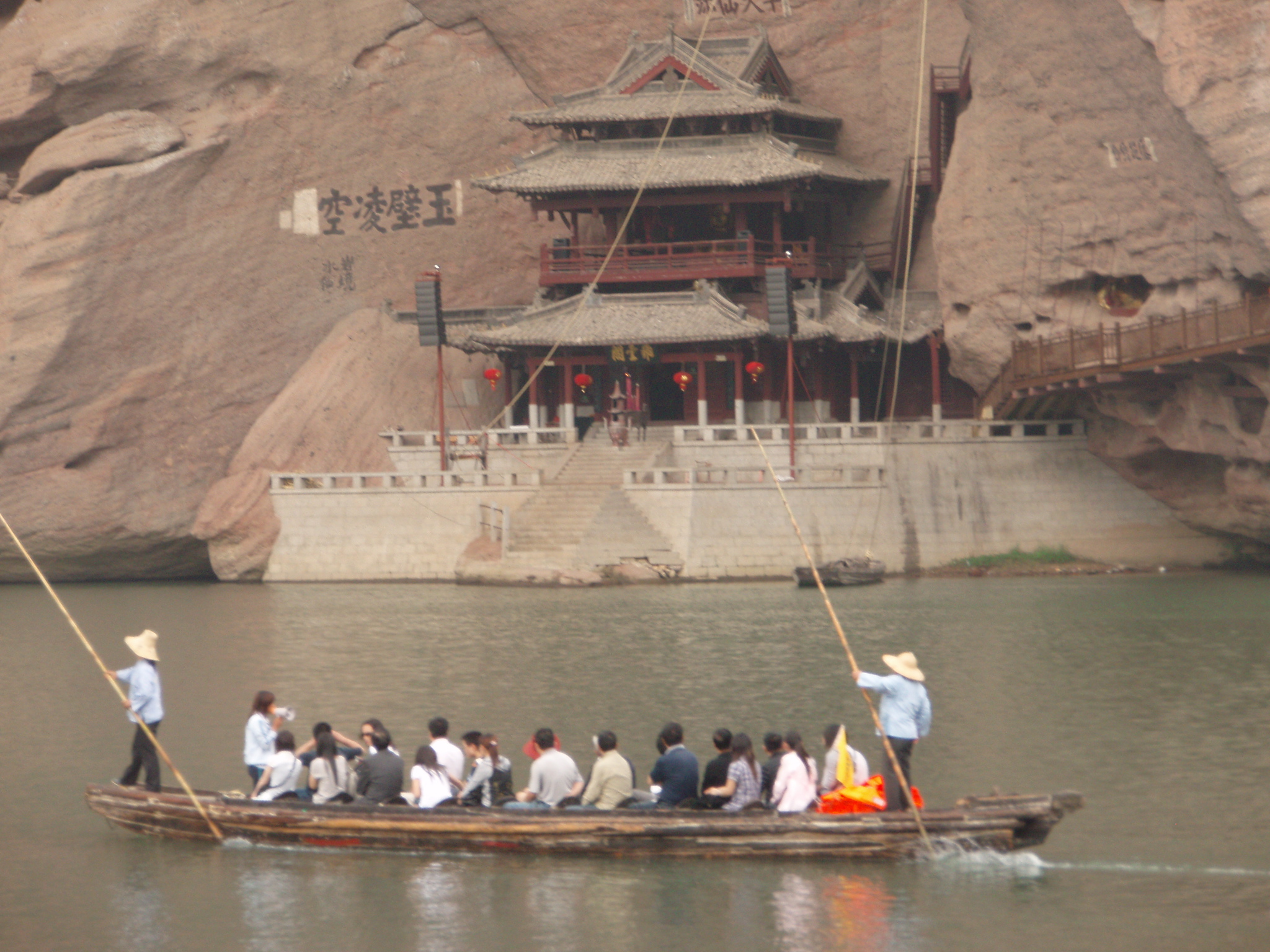
Tourists at Longhu Shan; photo by Tyler from Shanghai, China who makes the image available under the Creative Commons Attribution 2.0 Generic license.

Tuesday, March 28, 2017

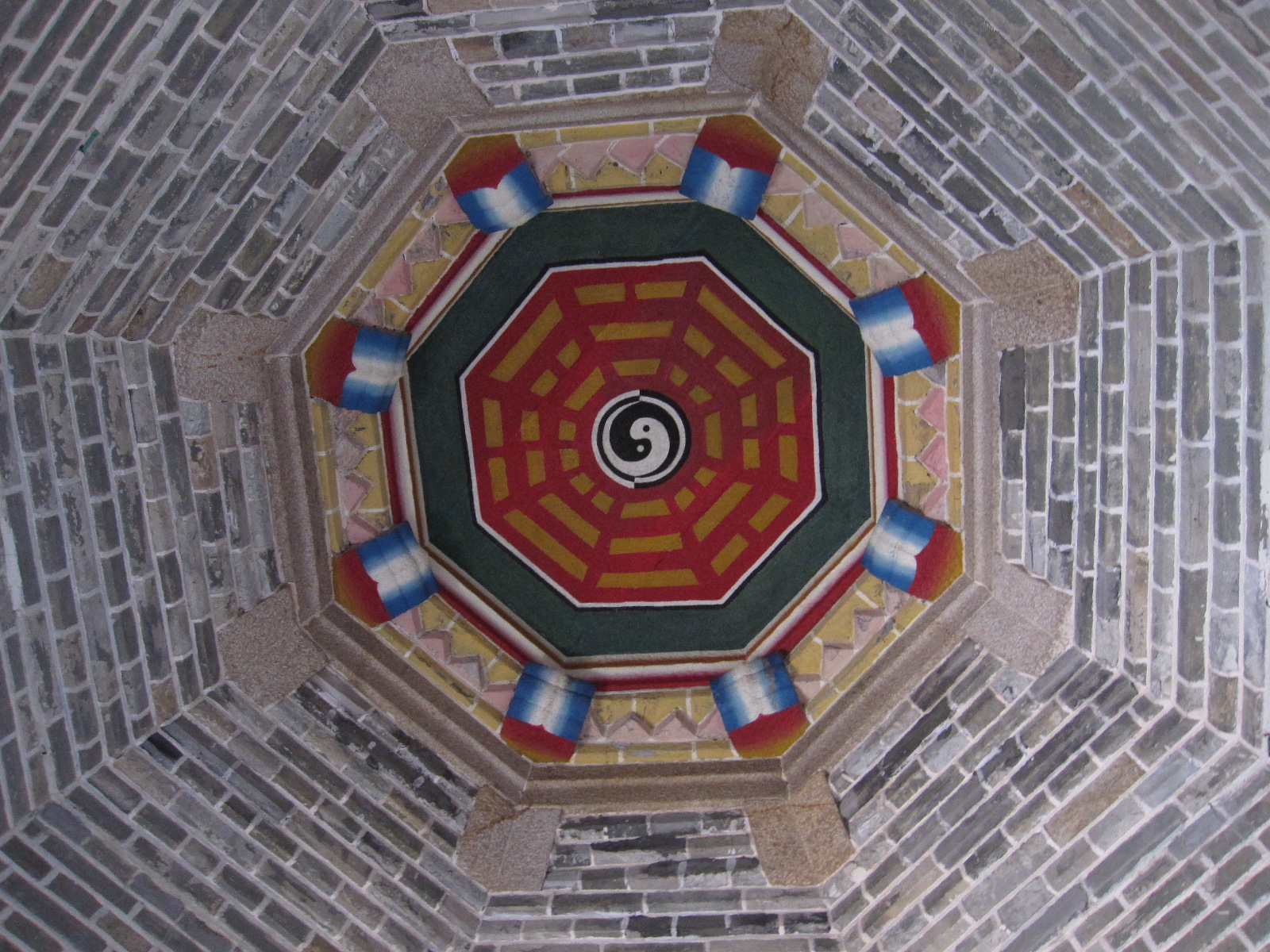
Dao De Jing 4


Dao De Jing 4


The Way is a vessel poured out, used but not filled.
It is an Abyss, as if the ancestor of the ten thousand things!
It blunts the sharp edge,
It unties what is tangled,
It tempers bright light,
It settles the dust.
So deep! As though it only seems to have existence.
I do not know whose son it is,
An emblem of what existed before God.

Laozi, 道德經
Translation by John Hayes
Unlike with my original poetry & poetry translations, I don’t asset a copyright claim on my translation of the Dao De Jing. It may be freely used under the terms of the Creative Commons license.


Image links to its source on Wiki Commons:
This is a photo of a (or part of a) Major National Historical and Cultural Site in China identified by the ID CNGD-754-055; described on Wikipedia as “A zaojing depicting a taijitu surrounded by the bagua.”
Photo by Wiki Commons user Kunwi (link to user’s page is dead), who makes the image available under the Creative Commons Attribution-Share Alike 3.0 Unported license.


Wednesday, March 22, 2017

Dao De Jing 3

Dao De Jing 3

When the gifted are not valued & employed, there is no strife;
When expensive & rare goods are not valued, thieves are not created;
When things longed for are not made visible, there is no disorder.
The sage ruler, then, will empty the heart-minds of the people, will fill their stomachs, will weaken their willfulness, will make their bones strong.
He will constantly keep the people in a state of not perceiving & not longing, & will keep  those who do have perceptive knowledge from daring to act.
When non-action is practiced, then all is put in order.

Laozi, 道德經
Translation by John Hayes

Unlike with my original poetry & poetry translations, I don’t asset a copyright claim on my translation of the Dao De Jing. It may be freely used under the terms of the Creative Commons license.


Image links to its source on Wiki Commons:
A painting of the Daode Tianzun ('the Heavenly Lord of Dao and its Virtue'), the deified Laozi, one of the supreme divinities of Daoism.
Public domain (as stated by Wiki Commons).

Wednesday, March 15, 2017

Dao De Jing 2


Dao De Jing 2


All under heaven understand the beautiful as the beautiful, & this creates the ugly.
Everyone understands the good as the good, & this creates evil.
So being & non-being create each other, difficulty & ease complement each other, the long & the brief arise by contrast, the lofty & the low flow from each other, musical pitches & tones are known through harmony, leading & following are created by sequence.
The sage, then, manages affairs through non-action & teaches by saying nothing; the ten thousand things flourish & he is able to let them be; acknowledges their existence without needing to possess them; acts without expectation. The work is completed, but not dwelt upon, & because of this it is not lost.


Laozi, 道德經
Translation by John Hayes


Note: The concept I’d like to highlight is 無爲 (wú wéi), here translated as “non-action”, which is a common translation. Wu wei, as it is often romanized, is a major idea in both philosophical & religious Daoism, though its meaning is difficult to translate, & it can have two quite different meanings in Chinese. According to Sinologist Herrlee G. Creel, Wu wei can mean both an “attitude of genuine non-action, motivated by a lack of desire to participate in human affairs” & also a “technique by means which the one who practices it may gain enhanced control of human affairs.” While the first meaning is particularly exemplified in the writings attributed to Zhuangzi, Creel draws a connection between the concept of Wu Wei in the Dao De Jing & The Analects, specifically this passage from the latter, here in Waley’s translation—Waley translates 無爲 as “inactivity”:

The Master said, Among those that ‘ruled by inactivity’ surely Shun may be counted. For what action did he take? He merely placed himself gravely and reverently with his face due south; that was all.

Unlike with my original poetry & poetry translations, I don’t asset a copyright claim on my translation of the Dao De Jing. It may be freely used under the terms of the Creative Commons license.

Image links to it source on Wiki Commons:
“Confucius meets Laozi”: Shih K'ang, Yuan Dynasty (1261–1368)
public domain


Wednesday, March 8, 2017

Dao De Jing 1


Dao De Jing 1


The Way that can be talked about is not the unchanging Way—
The Name that can be named is not the unchanging Name—
Nameless, it generates heaven & earth;
Named, it is Mother of the ten thousand things—
Always free of attachment observe the unchanging cause
Always holding onto attachment observe the outer boundary—
These two aspects come from the same source, with different names, but together they are named the Profound—
The Profound within the Profound is the door to the essence of all


Laozi, 道德經
Translation by John Hayes


NOTE: Although there are many aspects of this passage that could be noted, the one I want to draw your attention to is the opening line. This contains an untranslatable pun:  道可道,非常道 [dào kě dào fēi cháng dào]. The character 道dào carries multiple meanings, including “road, journey, method, skill, method, law, doctrine, to speak, to talk; in its own way, 道 is as untranslatable as the Greek λόγος [logos], which we know from the beginning of the Gospel According to St John, though it’s a concept in Greek philosophy dating at least as far back as Heraclitus; in fact, 道 shares several meanings with λόγος.


Unlike with my original poetry & poetry translations, I don’t asset a copyright claim on my translation of the Dao De Jing. It may be freely used under the terms of the Creative Commons license.


Image links to its source on Wiki Commons:
Bagua diagram by Zhao Huiqian ("River Chart spontaneously [generated] by Heaven and Earth" 圖河.自地天). Circa 1370. Also found in Hu Wei’s “Yitu mingbian” ("Clarification of the diagrams in the book of changes"), dated 1706.
Public domain.