Happy July 4th! I thought a brief banjo interlude might be just the thing for the day, & what says Americana better than a Scottish & French sextet playing a composition by an African American composer on various forms of an African instrument that has been considerably altered in the Americas?
The Auld Alliance Banjo Sextet is a spin off from Rob McKillop’s Scottish Classic Banjo Quartet, which features McKillop on gut-strung banjo along with his students, Alasdair Dewar (banjorine), Alan Ramsey (banjo), & Cat Campbell (cello banjo). McKillop has been featured several times on Robert Frost’s Banjo. He’s a classical guitarist, a lutenist, a uke player, & a wiz on various forms of the banjo. In the sextet version of the group, he’s added accomplished French players Eric and Pat Stefanelli.
“The Calliope Rag” was composed by James Scott. Scott is less well-known than Scott Joplin, but he was a major composer in the ragtime tradition who published a number of pieces between 1903 & 1922. In fact “The Calliope Rag” was published posthumously & didn’t become available until 1966!
For those of you celebrating the Fourth of July, hope you have a wonderful day & evening. & for those of you not in the States, hope you have a lovely day!
Image links to its source on Wiki Commons
"Calliope, the wonderful operonicon or steam car of the muses", advertising poster, 1874
Library of Congress. Public domain

A happy Banjo Friday to you!
Today we wrap up our monthly series on Vess Ossman, the “classic style” banjoist who made some of the first ragtime recordings & also some of the first banjo recordings. As far as I can determine, Ossman’s earliest recordings date to 1897, when he recorded “The Smiler” & Sousa’s “Stars & Stripes Forever.” In fact today’s recording, “Ragtime Skedaddle” (with piano accompaniment to Ossman’s banjo) dates to 1899.
Recordings at that time were made on cylinders—the disc record was still several years away. The cylinders were first made of wax, but later were made of celluloid, & were marketed as “indestructible.” Fortunately, a number of them proved to be, & there are organizations like the Cylinder Preservation Project (link here to their home page, & here to their Facebook page), which are making an effort to preserve the actual cylinders & digitize the music they hold. There are a number of recordings on the Project’s website, all free to listen to (obviously, all this music falls in the public domain.)
In referring you to the site, I probably should note that a fair number of music titles from this era, including several recorded by Ossman himself, contain offensive racial epithets. Sadly, the banjo has always had a fraught history in this country in terms of its symbology as an instrument that began with black/African origins & was co-opted by white/European culture.
It’s a deep subject, & one that would require more space than I have here to treat. Those who are interested in reading more about the banjo’s social history in the U.S. really should check out the fine Picturing the Banjo, which I reviewed on the blog some time ago.
In the meantime, this is delightful music, & I hope you enjoy it! Back next month with a new series.
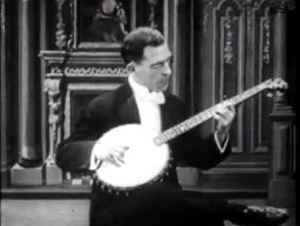
The photo of Vess Ossman links to its source on violafair.com. It appears to be a still of Ossman from an early film. In any case, since Ossman died in 1923, any photographic image of him must of necessity be in the public domain.

A happy Banjo Friday!
Today’s post will be brief, as it’s being done on the fly, but it’s another selection from this month’s featured artist, Vess Ossman. If you’ve missed the previous two posts, Ossman was a master banjo player in the late 19th & early 20th centuries, a star of the vaudeville circuit, & also an early recording artist.
“The Buffalo Rag” was recorded in 1905 or 1906 (I find conflicting dates on the web.) This is a departure from the first two recordings I’ve featured, in that one of those was a solo & the other played with just a backing piano. In this case, Ossman is playing with his full “orchestra,” presumably a combo similar to the one in the photo above.
Now 1905 was in the days of cylinder recording (by that time, mostly the “indestructible” celluloid cylinders), & more to the point, it was years before the advent of mult-tracking. In order to “balance” the instruments’ sound, the recording engineer had only one expedient at his disposal—get the loud back-up instruments as far from the mike as necessary! Now a 5-string banjo is relatively loud, but remember, Ossman was playing a banjo strung with gut-strings, which are not as loud as the steel strings used by most players now, & he was playing with his bare fingers, not with fingerpicks. In addition, based on the photographs I’ve seen, his banjos all were open-backed, & not equipped with a resonator, such as you see on banjos set up for bluegrass. All of those would combine to make an instrument that had a more mellow tone, & also one that projected less sound—so getting its sound to come through the brass would be a challenge. I do note that the diameter of the head on Ossman’s banjo is fairly large, & that would help give a somewhat more full sound.
Hope you enjoy it! It’s fun music.
Image links to its source at soupgreens.com. Given that Ossman died in 1923, which is the cut-off year for public domain in the United States, any photograph of him must necessarily be in the public domain.

Hey, it’s Banjo Friday! Hope your week is coming to nice end & that you’re looking forward to the coming weekend. What better way to start it than with some banjo music?
If you stopped by last week, you know that this month’s featured artist is Vess Ossman, a master banjoist who played in the late 19th through the early 20th century, & made some very early recordings of banjo music, both as a soloist as in today’s selection & as a leader in an ensemble. Ossman played the 5-string banjo with gut strings, in what is now called the “classic style,” namely in an approximation of the right-hand technique used for classical guitar playing. This style has lost favor over the years, & most people these days encounter the banjo either in a bluegrass context, where the Scruggs style finger rolls are the underlying technique or in an old-time music, where the banjo is typically played in the frailing style. But there are still players these days who like the “classic style,” & I’ve featured it a good deal lately on the blog, since it interests me quite a bit.
Ossman recorded “Dill Pickles Rag” in 2008, & it’s a cylinder recording as you will see in the video. Phonograph cylinders are quite a story in themselves. Edison’s first recording cylinders used tin foil, but within a couple of years he had patented the wax cylinder, which actually could be used for home recording, as well as commercially. However, by the early 20th century, the “indestructible” celluloid cylinders were developed, & these came into mainstream use. Actually, by the time Ossman recorded “Dill Pickles Rag,” the cylinders were already in decline in favor of the disc. It is interesting that the cylinders were thought to have better audio reproduction than discs—so apparently, the downhill curve that we note in our own time in audio reproduction from LPs downward to CDs & still further down to mp3s, had already started in the early 20th century! We should have stuck with the cylinders.
Hope you enjoy this lively & fun recording.
The image of the Edison Cylinder Records links to its source on Wiki Commons. It dates from 1910 & is the public domain
A happy Banjo Friday! The month of February is upon us, & I have some exciting series planned for this month—with one caveat. I have been having some computer woes, & these have affected the posting schedule a bit (e.g., no Any Woman’s Blues in January.) But I hope to have the problem straightened out before too long, & also hope that I can keep things going with some degree of normalcy in the interim.
I think Banjo Friday works best when there’s a theme or featured artist, & we do have one for February. Vess Ossman was one of the most popular banjo players at the turn of the 20th century, & also was an early recording artist, including recordings made on cylinders in the latter part of the 19th century—in fact, today’s recording “A Bunch of Rags,” was made in 1898! One source claimed that this is the first ragtime recording, but according to the Red Hot Jazz website, it was actually the third.
Ossman played in what is now called the “classic banjo” style: he fingerpicked the instrument in a way that’s similar to playing a classical guitar, & he used gut strings. His repertoire featured a number of rags & rag-inflected pieces. In addition to making many recordings, he toured the vaudeville circuit, & enjoyed considerable fame both in the States & abroad; at one point he made a tour of Great Britain.
This is wonderful music, & while the mainstream banjo sound has developed in different directions, musicians like Ossman played a key role in popularizing the instrument.
Hope you enjoy “A Bunch of Rags.”
Photo of Vess Ossman (circa 1900) links to its source on Wiki Commons & is in the public domain

A happy Banjo Friday everybody! I know the Fridays have been banjo-less around here in January, but never you fear: I have a fun banjo series planned for February—& I have some very fun banjo music for you today.
If you’re familiar with Banjo Friday, you know that I’m always happy to showcase the banjo in unusual settings, so when I saw today’s video, I knew I’d have to post it. For one thing, as regular readers know, I’m a big fan of Cathy Fink & Marcy Marxer, who I think are true forces for good in the music world & indeed in the world in general. These women have been touring Asia with American Voices Abroad, bringing their wonderful renditions of American old-time music to kids, & of course as is typical, they are teaching & encouraging participation along the way. You can read about their travels on their blog.
Fink & Marxer are also teaming up with some top musicians from the countries they’re visiting, & in this show in Malaysia, they are joined by Kumar Karthigesu & Vick Ramakrishnan of the Malaysia World Music Group on sitar & tabla, as well as by fellow Yank Barbara Lamb on fiddle.
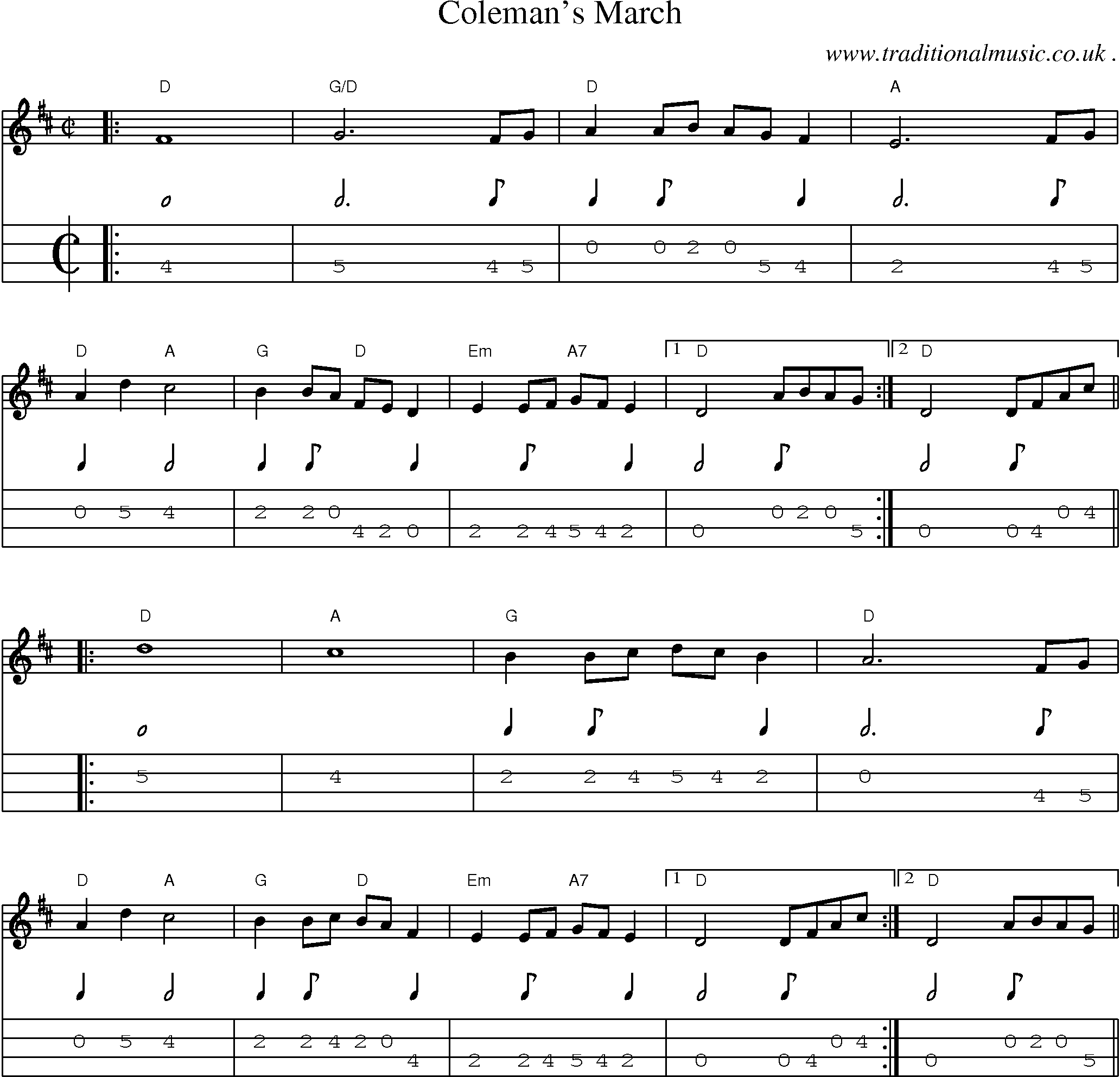
I love this version (though I might wish the sitar were brought forward a hair in the mix)—there is something so odd & yet so right about the mix of banjo with sitar & tabla. If you want a more straightforward version as a point of contrast, here’s a link to Fink & Marxer playing “Coleman’s March” on 5-string & cello banjo respectively.
Hope you enjoy it!
Image links to its source on traditionalmusic.co.uk. The tablature is for mandolin.
Welcome once again to Banjo Friday, final edition of 2012!
Today we wrap up our series with December’s featured artist Rob MacKillop, as he performs another Frank Converse tune, this one dating from 1886 & played on a gut-strung Luke Mercier banjo. MacKillop’s playing is always first-rate both in terms of technique & feeling, so I’d encourage you to check out more of his music—he also performs on classical guitar, lute (in its various manifestations) & ukulele. MacKillop has also authored several books of arrangements for both banjo & ukulele, & those look really interesting. Please see Rob MacKillop’s website for details on his recordings, performances & books.
Have a happy Friday, friends! Hope this lovely & playful banjo tune adds to your day.
Image links to its source at robmackillop.net
Welcome to the all-time latest edition of Banjo Friday ever—"latest" in every sense of the word. Really, I’m a bit sheepish to post this when Friday is almost become Saturday back east. But it will remain the top post on the blog all day tomorrow. I’m also confident we won’t encounter another snafu with this piece as we did with Thursday’s ill-fated Guitarists We Like post; that video, featuring John Fahey’s singular version of “It Came Upon the Midnight Clear,” was blocked by UMG & wouldn’t play on the blog, despite the fact it had played on YouTube itself the evening before.
This evening—or tomorrow, or whenever you come across this—we have more classic banjo with this month’s featured artist, Rob MacKillop, & another piece from late 19th century banjoist & composer Frank Converse, whose works are a staple among classic banjo enthusiasts. It really is a lovely, delicate piece, played with great sensitivity by MacKillop on a Thomson and Odell banjo from Boston, dating to around 1890. MacKillop is using Aquila Nylagut strings, a brand with a good reputation not only with nylon string banjo players, but with uke players as well.
Enjoy!
Image of Mr MacKillop links to its source at banjocrazy.com

Welcome, friends, to Banjo Friday! We sure do have a couple of pretty banjo tunes for you today.
If you’re a regular here, you know that this month’s featured artist is Rob MacKillop, a Scottish banjoist who excels in the classic banjo style (when he’s not excelling on various lutes, the classical guitar, the uke or the 4-string varieties of banjos!) & if you’re a regular you also know that the so-called classic style has its origins in the 19th century, & has two defining characteristics: it is typically played on a gut strung (or nylon/synthetic gut-strung) instrument, & it is played by plucking the strings in the same way as a fingerstyle guitarist, with bare fleshy side of the fingers & thumb. In this, it contrasts quite sharply with the two most prevalent styles in contemporary banjo playing—the so-called 3-finger Scruggs or bluegrass style, which also features “up plucks,” but builds melodies on syncopated patterns & is always played with fingerpicks & thumbpicks & on a banjo fitted with steel strings & a resonator; & the frailing or clawhammer style, which covers a host of techniques, but typically involves striking down on the strings with the fingernail of either the index or middle finger, which then alternates in various patterns & configurations with the thumb. The Scruggs style emphasizes the banjo’s brightness & volume; frailing emphasizes its percussiveness.
But the classic banjo style is a whole different thing altogether, & really makes for fun listening! I’ve always found it most natural to “fingerpick” the banjo myself, coming as I do from playing fingerstyle guitar, though I admit I’ve yet to actually put nylon strings on mine. Some day.
The “Gumbo Reel” & “The Pequod Galop” both come from Frank Converse’s 1865 New & Complete Method for the banjo, & features just the sort of pieces folks love to play in the classic style. As is his wont, MacKillop presents delightful versions for our listening pleasure.
Enjoy!
Image links to its source at classicbanjorm.com

A happy Friday, friends! & a Banjo Friday at that.
A new month is upon us, & so we have a new featured artist. After a fun month with the innovative Danny Barnes in November, we’re going back to the “classic banjo” sound with master Scottish banjoist (& lutenist, guitarist & uke player) Rob MacKillop (& see also this link.) MacKillop has appeared in previous posts here, & I’m a big admirer of his work in genres ranging from early music on the theorbo to Scott Joplin on the banjo!
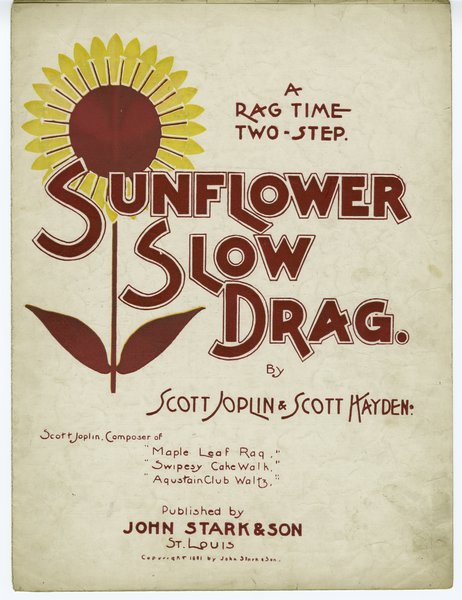
Obviously, Scott Joplin needs no introduction—he’s one of the truly great American composers, a man who really brought the ragtime form to its true artistic heights. Of course, Joplin’s compositions were written for piano, the banjo is also a great vehicle for expressing his pieces—in skilled hands, the banjo can produce the delicacy of the compositions, while also lending its characteristically “American” sound. The “Sunflower Slow Drag” was co-written by Joplin & Scott Hayden & was copyrighted in 1901. It is a ragtime two-step.
As is typical of “classic banjo” playing, MacKillop is using a gut-strung instrument. His playing is precise, but at the same time is always marked by the sort of verve & panache that’s necessary to truly animate the tune.
I know you’ll enjoy this one!
Image links to its source on Wiki Commons – public domain

Hi, friends! A belated Banjo Friday post today—my time got a bit away from me, with a morning (?!?) band rehearsal. But banjo is always better late than never, like so many things.
All this month we’ve been featuring the music of Danny Barnes, & I thought it would be appropriate to end with Barnes’ cover of a more traditional tune; but then I decided it would be even better still to end the month with two Danny Barnes’ covers of the tune—one is a straight version, with just singing & banjo, while the other features his looped electronic sound.
If you’d like to find out more about Danny Barnes, please check out his full service website, or you can also read my write-up about him here. & be sure to check out his tour schedule, because Barnes is a performer you definitely do not want to miss if & when he pulls into your town. His playing is superb, as is his singing & songwriting, & his sense of orchestration using looping technology is always inventive. But perhaps most importantly, Barnes always reminds us that we “play” music—his joy in music & love for it come through with virtually every note & phrase.
We’ll be heading back into the classic banjo next month, as we feature the excellent playing of Rob MacKillop, so be sure to tune in for that—& enjoy these fine performances by Danny Barnes!
Hey, folks, it’s time for Banjo Friday—& here to drive away the November doldrums for one & all & the post-holiday doldrums for those of us stateside is the wonderful Danny Barnes, our featured artist this month.
Today’s Danny Barnes’ selection comes from a show early this year, actually the same weekend as when I saw Barnes perform at Portland’s Crystal Ballroom, & right down the road in Forest Grove, Oregon. The song is “Rocket,” the title track from his 2011 ATO release. This live version differs considerably from what’s on the record, as the studio version is a hard rocker with distorted guitars; here we have some of Barnes’ beautifully composed & conceived looping with live banjo, & of course his always delightful songwriting.
Hope you enjoy it, & have a great Friday!
Image of Danny Barnes links back to its location on his site

Happy Banjo Friday, kids! & in order to ensure that it’s a happy Friday indeed, I have a sweet, sweet banjo love song for your listening pleasure today.
If you tuned in last week, you know that I designated November, at least in terms of the Banjo Fridays, to be Danny Barnes month—because I believe November is a month when we often need a mood boost, & Barnes is someone very capable of giving us that!
I’ve written about Danny Barnes in the past (& here), so rather than go back over old territory, I’ll simply say that this song, “Overdue,” comes off his wonderful 2009 release Pizza Box, & that this version was recorded right down the street from me at Mississippi Studios in Portland. “Overdue” features Barnes making full use of looping technology, & doing so to great effect. If you love great banjo playing & innovative music combined with excellent songwriting, I encourage you to check out more of Barnes’ music—& definitely catch one of his live shows if you have the chance!
But for now, have fun with “Overdue” & enjoy your Friday!
Image links to its source at dannybarnes.com
Happy Banjo Friday, one & all! We’ve sure been focused on both classical music played on the banjo & the “classical style” of banjo playing here of late, & I admit I’m really quite fascinated these days by both of these types of performances. But I also don’t want Robert Frost’s Banjo to turn into Robert Frost’s Baroque, & since I’m also posting music on Sundays these days—& that may involve baroque & early music for a bit—I thought I’d do something a little different on Fridays this month.
Truth is, November has always been a hard month for me. I have unpleasant associations with the Thanksgiving holiday that are very long-standing, & the diminishing light can make me blue. So what a perfect time to mention one of my favorite Charles Schulz cartoons (as pictured), & also to feature a performer who may illustrate Linus’ point better than anyone I’ve ever watched & listened to—Danny Barnes.
I’ve written about Danny Barnes before on Banjo Friday, both as a feature post & also in a post highlighting his wonderful song (& album) “Pizza Box,” but as I was surfing all manner of banjo videos on YouTube & feeling very dissatisfied with what I was hearing, I came back to Danny Barnes, & I realized he was the answer for this month! Yes, I'll be featuring Danny Barnes on Banjo Friday for the rest of November.
Although Danny Barnes often performs with extensive use of looped sound (which he handles beautifully—I had a chance to see him live, which I also wrote up here), this video features just his banjo & his voice & his fantastic songwriting. “Get It While You Can” is from his 2004 release, Dirt on the Angel.
One thing about music: it gives us the capacity for joy in a way that few activities can. & anyone who has seen or heard Danny Barnes knows that to be true!
Image links to its source at 4.bp.blogspot.com

Banjo Friday returns, & it appears my fascination with the classical banjo style continues!
Today we have an odd banjo—one that is not heard much anymore, & that always had more of a heyday in Great Britain than in the United States. In fact the instrument, namely, the zither banjo, was first designed in England by banjo maker William Temlet, who began selling the instruments in the 1840s. Although the zither banjo has gone through various manifestations over the years, the current version owes much to U.S. violinist (& later banjo player) Alfred Davis Cammeyer, who designed the 5-string model most commonly seen now. Other innovations were made by the British banjo manufacturer, Arthur O. Windsor—& Windsor banjos are dear to me, since my regular old open-back 5-string is indeed a 1930s Windsor "Popular" model. One of the main characteristics of the zither banjo is its mixture of gut & steel strings. While Cammeyer's version had 5 strings, there have also been 6 & 7 string versions of the zither banjo. Interestingly, even the 5 string models generally use the 3-on-a-side guitar tuners, which means one tuner is "just for show"!
The performer is Rob MacKillop, who we heard on an earlier Banjo Friday post, when he performed some 91th century popular pieces in the classical banjo style. As I mentioned at that time, Mr MacKillop is a Scottish multi-instrumentalist who is not only a banjo virtuoso (all varieties), but is also a master classical guitar player & lutenist, & who branches out into the ukulele, the vihuela & the medieval guitar! Mr MacKillop has published a book entitled Early American Classics for Banjo, which contains arrangements of pieces similar to these. You can find out more about this & more of his ventures into classical music on the banjo at his website dedicated to this subject.
“Ballad #1” is a piece composed by none other than Alfred Davis Cammeyer himself. At this link, you can read Cammeyer’s own account of how the zither banjo got its name, & much more. Rob MacKillop notes this is one of Cammeyer’s “easier” pieces,
Enjoy!
Image links to its source at www.zither-banjo.org

Happy Banjo Friday!
I began my recent obsession with baroque & other classical forms of music played on the banjo with a video of Robby Faverey performing the Prelude from Bach’s Cello Suite no. 1 on a cello banjo. I’ve since learned a couple of things about Faverey: he did indeed build his own cello banjo; & he tunes it a minor third below cello tuning: A E B F#. This puts his instrument essentially at a mid-point between cello & bass range, & certainly enhances the sonorousness of its tone.
But Faverey’s playing is itself marvelous; a classical guitarist who is also an accomplished lutenist, he studied at Amsterdam’s Sweelinck Conservatory, & has also studied both sitar & sarod. After reading about the Stedman bania, housed in the Museum voor Volkenkunde in Leiden & thought to be the oldest example of a American banjo (dating from about 1770 in Suriname, which is also his own home), Faverey became intrigued by this instrument as well. After building some gourd banjos, he experimented with using the drum head of a floor tom (!) & was able to contruct the large cello banjo he plays today.
I love this sound! Hope you enjoy it too!
Image links to its source on Wiki Commons: The Face of Bach / Elias Gottlob Haussmann, Version of 1748; public domain
A happy Banjo Friday, friends!
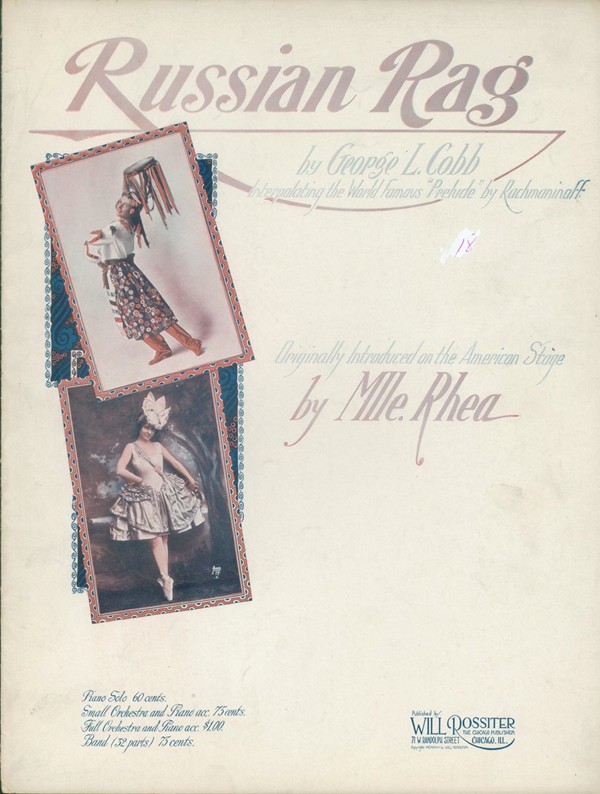
It appears that my fascination with classical music on the banjo is ongoing, tho this week’s entry is a bit of a twist on that theme. “Russian Rag” was composed in 1918 by one George Linus Cobb an an “interpolation” of Rachmaninoff’s Prelude in C-sharp minor, Op.3, No.2. The piece was originally conceived as a piano composition, but it’s received various treatments over the years—none, I would venture to say, more fun than this banjo trio by the Old 78s.
The Old 78s is the duo of Curly Miller & Carole Anne Rose , often in combination with various collaborators, including Clarke Buehling, who plays cello banjo on this piece, as well as Ray & Melanie Palmer. According to the band’s website (link above):
Curly Miller and Carole Anne Rose play "Extreme" pumped-up rowdy Old Time fiddle and clawhammer banjo, Hillbilly Fiddle Rags, Classic Banjo duets, Celtic, World, and historic music, featuring the duo's unique combination of talents.
Great fun! Hope you enjoy it!

A happy Banjo Friday, friends!
In keeping with the other banjo posts this month, we’re going “classical” again today—but with a twist. Pete Seeger requires no introduction, of course—a great man, & a great banjo player & ambassador for the banjo.
If you’ve ever had the pleasure of looking into his fine publication How to Play the 5-string Banjo, you know that he sees the banjo as being able to play a diverse range of music—& you’ve also seen his banjo arrangement of Bach’s “Jesu, Joy of Man’s Desiring,” the 10th movement from the cantata Herz und Mund und Tat und Leben, BWV 147 (“Heart & Mind & Deed & Life”). If you’ve ever heard Seeger’s 1954 recording Goofing Off Suite, you’ve heard him play this as part of a singular line-up of songs—from old-time standards like “Cindy” & “Sourwood Mountain” to Grieg’s “Anitra’s Dance”!
This wonderful performance is from a 1963 concert in Australia, at a time when Seeger was blacklisted in the U.S. One thing I will say: if a song has words, you know Pete Seeger is going to raise his voice to sing it!
Image of Pete Seeger is from Wikipedia; Library of Congress photo, public domain

Welcome to this week’s Banjo Friday! Today we have some more music that fits (more or less) in the classical banjo vein, & I think you’ll enjoy it.
When we think of banjo music in the 1860s, we probably think first of the “comic” & sentimental tunes we’d associate with blackface minstrelsy: “Camptown Races,” “Polly Wolly Doodle,” “The Old Folks at Home,” & so forth. Certainly the Foster tunes & other like them were a significant part of the banjo repertoire. But the banjo was already adapted to other uses within the Euro-American culture: although the banjo as parlor instrument—played by both sexes—is often thought of as a somewhat later development from the 1880s & 90s, in fact, parlor music & light classical type pieces were composed earlier than this. We know this by the existence of books like Buckley’s Banjo Guide from 1868, which contains a truly diverse collection of playing styles.
In today’s video, Scottish multi-instrumentalist Rob MacKillop gives a recital of four dance pieces from Buckley’s guide (a polka, schottische, mazurka, & jig) on a fretless banjo strung with gut strings. It’s a wonderful sound & a great performance by a musician who is not only a banjo virtuoso (both 5 & 4 string varieties), but is also a master classical guitar player & lutenist, & who branches out into the ukulele, the vihuela & the medieval guitar!
Of course by 1868, the banjo was not exclusively a fretless instrument as it had been in origin—in fact, the illustration on the cover of Buckley’s Banjo Guide shows a fretted instrument. But the fretless certainly remained in common use until the true mass production of banjos started in the 1880s & beyond.
Mr MacKillop has published a book entitled Early American Classics for Banjo, which contains arrangements of pieces similar to these. You can find out more about this & more of his ventures into classical music on the banjo at his website dedicated to this subject.
In the meantime, enjoy this wonderful music!
Image links to its source at MacKillop's Classical Banjo site

A happy Banjo Friday, friends! As the next in this recent series of short & sweet entries, I have another great banjo performance for you today.
If you’ve followed Robert Frost’s Banjo for a while, & especially the banjo-related posts, you know that I admire Cathy Moore’s playing a good deal. There have been several posts about her on this blog, & in addition to the link above, which leads to her fine Banjo Meets World blog, I’d also encourage you to visit her YouTube channel, where you’ll find not only other fine performances, but also some great instructional videos—including a video on how to play today’s tune!
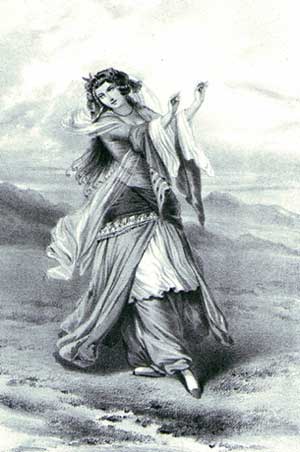
Of course, “Rampi Rampi” (AKA “Rompi Rompi” & "Çadırımın Üstüne") is pretty far from your typical banjo repertoire—it’s a Turkish song for accompanying belly dance, & it’s in 9/8 time. 9/8 does come up some in western European music, specifically in Irish jigs like “The Rocky Road to Dublin,” but it’s not a meter you’d associate with the banjo & especially the banjo played clawhammer style—clawhammer is traditionally associated almost exclusively with 2/4 or 4/4 time. But one of Moore’s strengths as a musician is her ability to adapt the clawhammer technique to unusual time signatures, which she does with great effectiveness & musicality on several eastern European & Middle Eastern tunes she’s adapted to the banjo.
Very fun indeed! Hope you enjoy this wonderful tune, & have a happy Friday.
Image links to source on Wiki Commons. The image is titled "Almeh du Caire - 19th century Egyptian dancer" by Frederic Goupil Fesquet (1806-1893); image is public domain.
.jpg/767px-Calliope_-_The_Wonderful_Operonicon_(1874).jpg)