Showing posts with label China. Show all posts

Friday, January 12, 2018

Autumn Daybreak, Walking through a Deserted Village in South Valley


Autumn Daybreak, Walking through a Deserted Village in  South Valley

at autumn’s end, frost and dew hanging heavy,
rise at dawn to walk through a hidden valley—

yellow leaves have enveloped the creek bridge,
in the deserted village, nothing but ancient trees—

winter blossoms here and there, sparse and lonely,
the stream’s murmur cut off, then picks up again—

my heart’s desires long since have been put aside:
what is it that startles the milu deer?


Translation © Jack Hayes 2018
Based on Liu Zongyuan: 秋曉行南谷經荒村
Qiū Xiăo Xíng Nán Gŭ Jīng Huāng Cūn


Note: Milu—also known as Père David’s deer—are essentially extinct in the wild, though a small feral population does currently exist in China, composed of a herd that escaped a zoo. Otherwise, the milu only exist in zoos. Dating back to prehistorical times, milu ranged across all of China, though the population shrank steadily during historical times. The milu are sometimes called “sibuxiang” (Chinese: 四不像; pinyin: sì bú xiàng), which could be translated as “four not alike”; they are variously described as having "the hooves of a cow but not a cow, the neck of a camel but not a camel, antlers of a deer but not a deer, the tail of a donkey but not a donkey"; "the nose of a cow but not a cow, the antlers of a deer but not a deer, the body of a donkey but not a donkey, tail of a horse but not a horse"; "the tail of a donkey, the head of a horse, the hoofs of a cow, the antlers of a deer"; "the neck of a camel, the hoofs of a cow, the tail of a donkey, the antlers of a deer"; "the antlers of a deer, the head of a horse and the body of a cow".


Image links to its source on Wiki Commons:
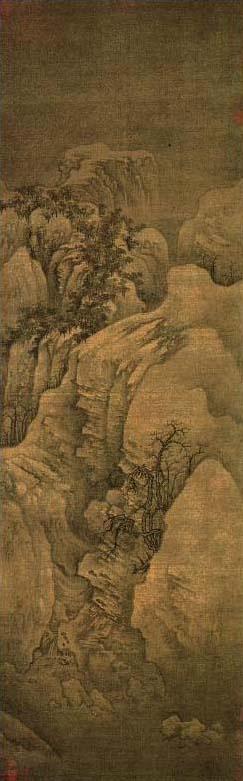
“Snow Mountains”: Guo Xi. 11th Century. Public domain.

Thursday, January 11, 2018

After Lunch


After Lunch


after the meal: doze off for one nap;
waking, it’s time for two bowls of tea—
raise my head to gaze at the sun; it’s
already turned southwest, light slanting—
those who are glad rue the urgent sun;
those who grieve hate the distant new year—
those knowing neither grief nor gladness
bear life, long or short, to the far shore


translation © Jack Hayes 2018
based on Bai Juyi: 食後
Shí Hòu


Image links to its source on Wiki Commons:
Excerpts from Bai Juyi's "Biography of a Master of Drunken Poetry": calligraphy by Fujiwara no Yukinari(972 – 1028); detached section of a handscroll mounted as a hanging scroll; ink on paper – early 11th century.
Public domain


Tuesday, January 9, 2018

Moon Poem


Moon Poem


perched on the highest peak I gaze
in all directions without end—
no one knows I sit here alone;
orphan moon shines on the cold stream,
but there’s no moon within the stream:
the moon’s after all in blue skies—
I recite this scrap of a song,
but in the song, no trace of Zen


translation © Jack Hayes 2018
based on Hanshan


For more on Hanshan (literally “Cold Mountain”) see this Wikipedia page.

Image links to its source on Wiki Commons:

“The Immortal Hanshan”: Attributed to Jiang Gui; c 1500 – Hanging scroll, ink on silk.

Public domain


Wednesday, January 3, 2018

On The Highest Tower In White Emperor Castle


On The Highest Tower In White Emperor Castle


on the walls the way’s sharp, narrow: in waning sun, pennants
signal mourning—
one stands alone on the misty tower’s soaring heights—

in the gorge cleft: cloud and fog where dragon and tiger sleep—
the sun-drenched Yangzi enfolds roaming turtles and alligators

western limbs of the Fusang Tree meet this severed stone;
eastern shadow of the Ruo River accompanies its long current

what son of man leans on his gooesfoot cane sighing for this
generation?
he weeps blood into thin air, turns his white head away


translation © Jack Hayes 2018
based on Du Fu: 白帝城最高樓
báidìchéng zuì gāo lóu


Note: This is a much more conventional reading of a poem Sheila Graham-Smith & I worked on (& posted) earlier.


Image links to its source on Wiki Commons:
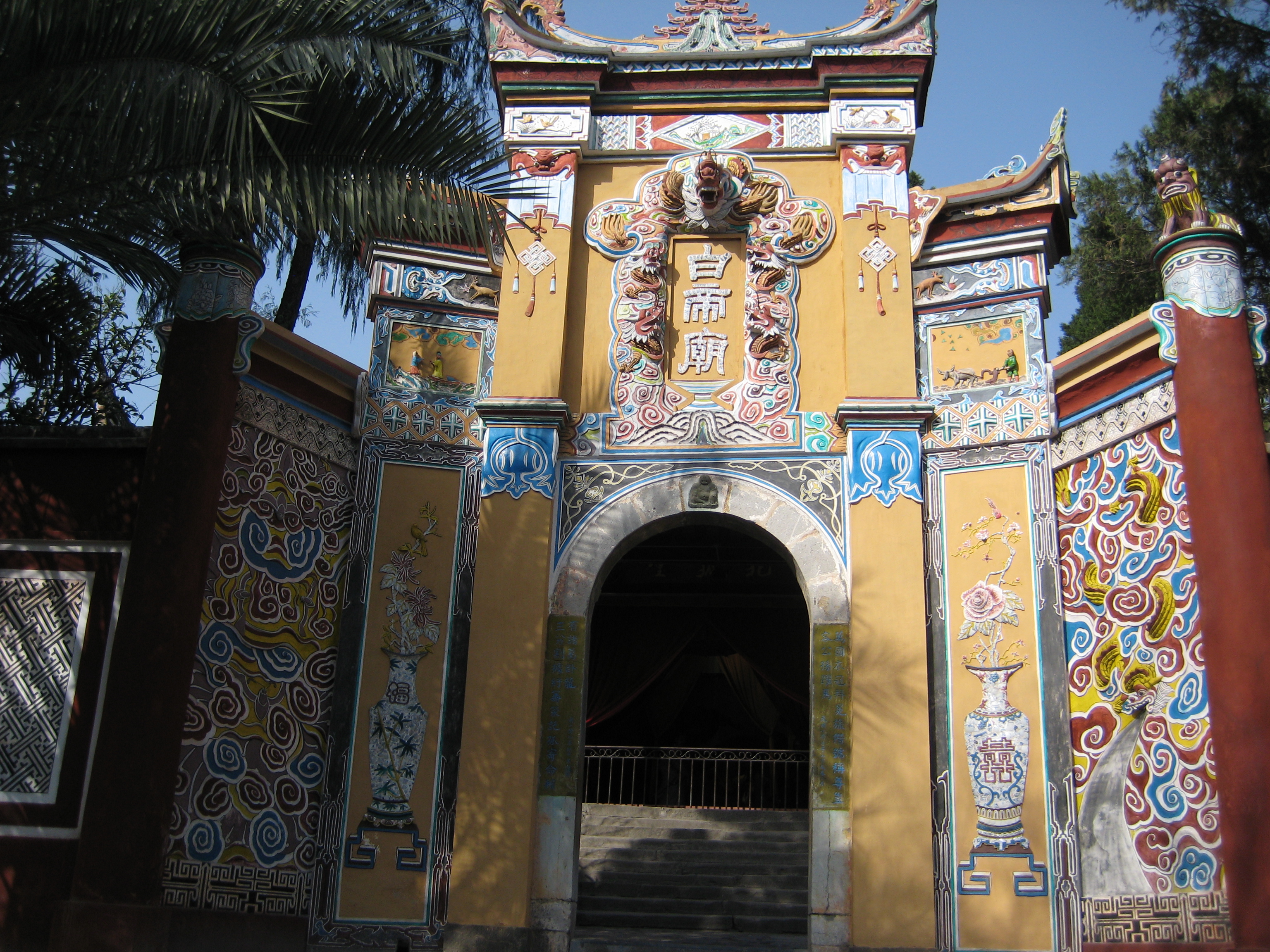
Temple of the White Emperor, Baidicheng: photo by Wiki user Tomasz Dunn, [https://www.flickr.com/people/63651050@N00] who makes it available under the Creative Commons Attribution 2.0 Generic license. [https://creativecommons.org/licenses/by/2.0/deed.en]


Friday, December 22, 2017

Three Poems for Chang’e


Chang’e


on the candlelit mica screen, a distant shadow;
Heaven's River ebbs slowly, the morning star sinks low—

Chang’e must regret stealing the elixir of life:
blue of sea, blue of sky, her dark heart, night after night


translation © Jack Hayes 2017
based on Li Shangyin: 嫦娥
Cháng'é

Mid-Autumn Moon


insects hidden under grass, frost atop the leaves;
a vermilion balcony presses against the bright lake—

the Rabbit chilled, the Toad cold, the Cassia blossoms white:
this night must be gut-wrenching for Chang’e


based on Li Shangyin: 月夕
yuè xī


Frost Moon


once expeditionary geese are heard, cicadas fall silent;
the hundred-foot tower connects river and sky—

Blue Maiden and White Lady both can endure cold;
in the moon, within frost, they compete in beauty


based on Li Shangyin:  霜月
shuāng yuè 

 
Notes:
This set of translations would be more appropriate for the Mid Autumn Festival, Zhōngqiū Jié, which is the full moon closest to the Autumn Equinox. But rather wait until next September, I’m posting them now.

We have no way of knowing whether Li Shangyin intended these poems as a complementary set or as distinct & individual compositions. James JY Liu in his seminal work on the poet, The Poetry of Li Shang-yin: Ninth-Century Baroque Chinese Poet, does place the poems together & discuss them as a group. Poet David Young also places the poems together under the title “Three for the Goddess of the Moon” in his Five T'ang Poets. Since Young is a poet & not a Sinologist, I assume in grouping the poems together he is following Liu either directly or at second or third hand.

For more information on the Chang’e myth, see the Wikipedia page. Briefly, Chang’e stole the elixir of immortality & flew to the moon, where she lives with a rabbit (or hare) who pounds herbs into the elixir of immortality with a mortar & pestle & a three-legged toad. There is also a cassia tree on the moon in this myth. Chang’e is the “White Lady” mentioned in the third poem (素娥, sù é), while the Blue Maiden (青女, qīng nŭ) is Qing Nu, the Goddess of Frost & Winter.

As is the case with almost all the Chinese translations, grateful acknowledgment is due to Sheila Graham-Smith, who did a marvelous job of elucidating the first line of the first poem.


Image links to it source on Wiki Commons:
Chang'e flees to the moon: from Yoshitoshi’s 100 Aspects of the Moon. (1885-1892)
Public domain.


Monday, December 18, 2017

In the Classical Style


In the Classical Style


this lifetime passes, a wandering guest;
this death, like someone who returns home—

an upstream journey between earth and heaven,
then the grief of dust across ten thousand years—

the moon rabbit grinds the elixir in vain,
the tree of life already turns to kindling—

white bones lie desolate, without voice,
while dark pines rejoice, sensing springtime—

ahead there’s sighing, behind there’s sighing too:
this glory of a brief day, what’s it worth


translation © Jack Hayes 2017
based on Li Bai: 拟古
nĭ gŭ


Note:
This poem has been titled “Old Dust” in other English translations, though that isn’t the meaning of the characters passed down in Chinese tradition as a title: 拟古. It’s worth noting in this context that Li Bai has a series of fifty poems titled古風 (gŭ fēng), which might be translated as “Antiquity”, or “Ancient Airs” or “After the Classics” or some similar phrase. Victor Mair has translated the whole sequence in his excellent Four Introspective Poets, & Paula Varsano has translated a number of the poems in her study, Tracking the Banished Immortal: The Poetry of Li Bo and Its Critical Reception. My sense is that Li Bai in this poem is also deliberately looking back to his classical predecessors.


Image links to its source on Wiki Commons:
Sunset at Mt Tai in Shandong province, China, January 2005. Photo by Wiki Commons user Pfctdayelise, who makes the image available under the Creative Commons Attribution-Share Alike 2.5 Generic, 2.0Generic & 1.0 Generic licenses.


Friday, December 15, 2017

Moon


Moon


in the fourth watch the mountains spew up the moon,
in night’s remains, waters illuminate the tower—

in essence, a dusty case revealing a mirror,
curtains raising themselves in gusts to the topmost hook—

the Rabbit ought to ponder my crane-white hair,
but the Toad only longs for my sable coat—

I mull over the Widow Lady Chang-E,
how she bears the chill of the ninth month


translation © Jack Hayes 2017
based on Du Fu: 月
yuè


Note:
Chang-E is the Moon Goddess, & her companions are the Jade Rabbit (or Hare), who pounds herbs into the elixir of immortality, as well as a Toad, often depicted with three legs. Chang-E pilfered the herbs of immortality from her husband, the mythical archer Yi, & flew to the moon. In poetry, she is often a figure for loneliness.


Image links to its source on Wiki Commons:
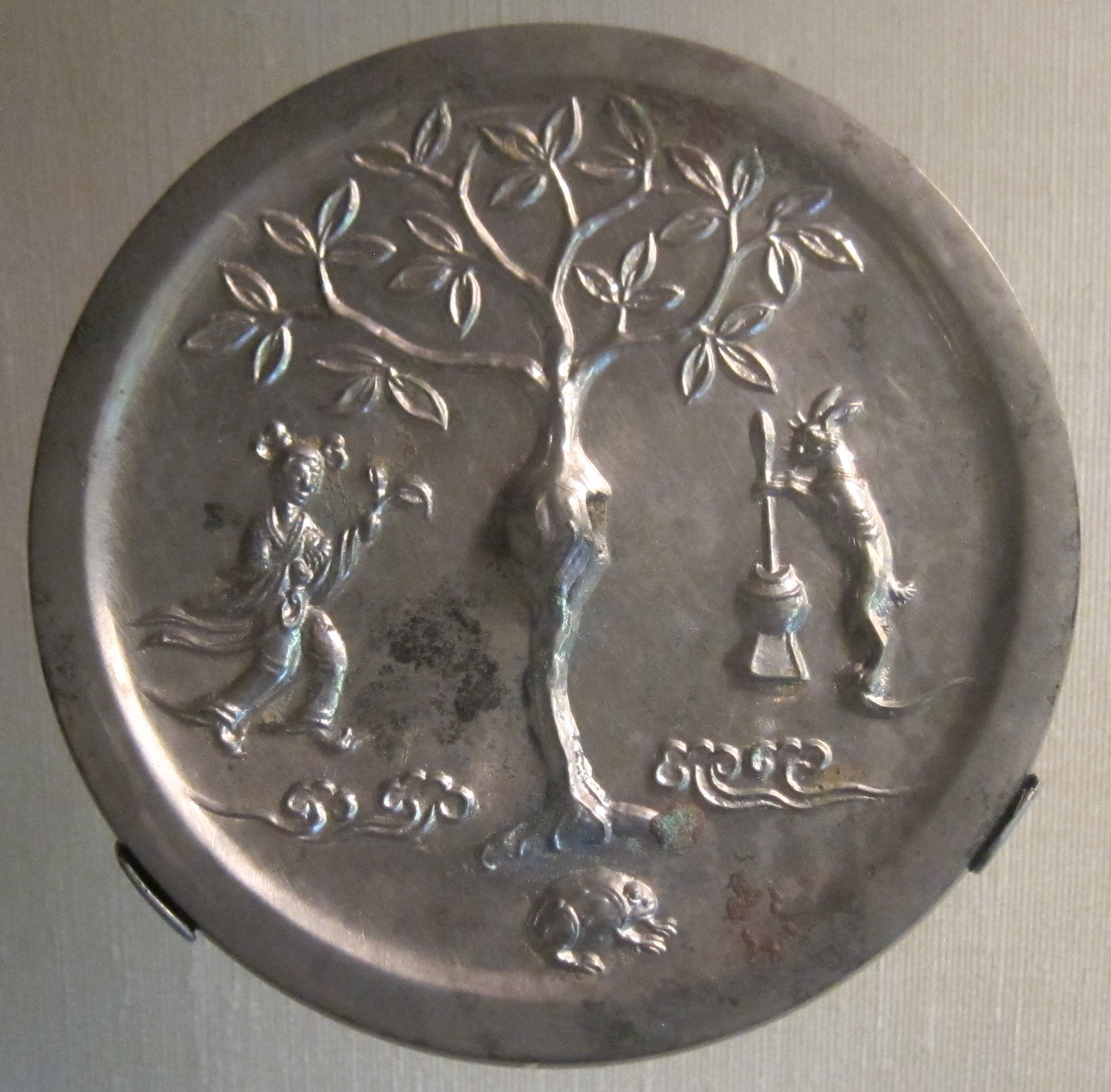
Tang dynasty (618-906) bronze mirror with moon goddess and rabbit design. Photo by Wiki user Hiart [link provided on Common is empty], who publishes it under the following license: This file is made available under the Creative Commons CC0 1.0 Universal Public Domain Dedication.


Wednesday, November 22, 2017

Dao De Jing 19


Dao De Jing 19


Reject sagacity, abandon expertise
& the people will benefit a hundred times over;
reject altruism, abandon morality,
and the people will return to benevolence;
reject ingenuity, abandon profit,
& thieves will no longer steal.
But these three are superficial & not in themselves sufficient.
Thus follow this directive:
manifest simplicity, embrace modesty,
diminish self-interest, curtail desire.


Laozi, 道德經
Translation by John Hayes
Unlike with my original poetry & poetry translations, I don’t asset a copyright claim on my translation of the Dao De Jing. It may be freely used under the terms of the Creative Commons license.


Image links to its source on Wiki Commons:
“Xuan Yuan Inquires of the Dao”, scroll, color on silk, 32 x 152 cm. Xuan Yuan is the given name of the Yellow Emperor. This painting is based on the story that the Yellow Emperor went out to the Kongtong Mountains to meet with the famous Daoist sage Guangchengzi. Ming Dynasty.
Public domain.


Friday, November 17, 2017

Sent North on a Rainy Night


Sent North on a Rainy Night
               

you ask the date of my return: there’s no date;
in the Ba mountains ponds swell with autumn rain—

when may we again trim wicks by the west window,
and speak together about Ba mountain night rain


based on Li Shangyin: 夜雨寄北
yè yŭ jì běi


Image links to its source on Wiki Commons:
“Cloudy Mountains”: Mi Youren; 1130.
Public domain.


Wednesday, November 8, 2017

Taking Down A Trellis


Taking Down A Trellis


the bound sticks already wither & fall;
the gourd’s leaves turn wilted & sparse—

since its white flowers managed to bear fruit
how can green vines not accept this dismantling—

autumn insects’ voices haven’t gone away;
sparrows at dusk: what can they be thinking—

in the cold, things now fall to waste;
human life also has its beginnings


based on Du Fu: 除架
chú jià


Image links to its source on Wiki Commons:
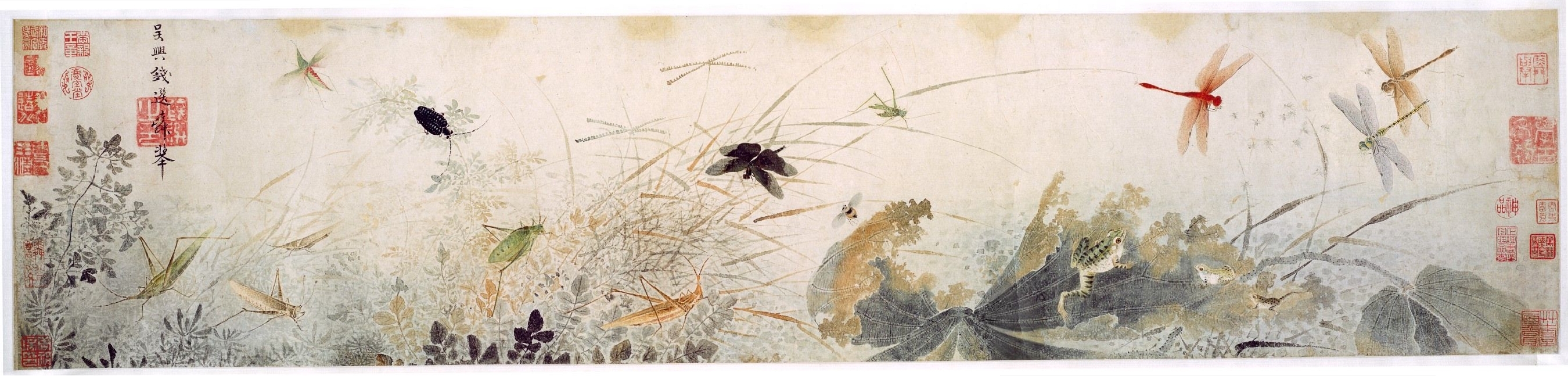
“Early Autumn”: Qian Wuan. 13th Century; ink & colors on paper scroll.
Public domain


Wednesday, November 1, 2017

Partridge Sky


Partridge Sky

forest groves cut off mountain dawn, bamboo hides the walls,
cicadas’ hubbub fades in grass by the small pond—
white birds appear reeling & reeling again through the sky,
lotus shines vermilion, its delicate scent on the water—

past the cottages,
near the ancient city,
I stroll quietly on goosefoot cane, turning to the oblique light—
thanks to yesterday’s midnight rain
I get another cool day in this drifting life


Translation by Jack Hayes
© 2017
based on Su Shi: 鷓鴣天
zhè gū tiān


Many thanks as always to Sheila Graham-Smith for her helpful suggestions.


Image links to its source on Wiki Commons:
“Autumn Skies Part”: Guo Xi. Song Dynasty – Public domain


Tuesday, September 5, 2017

Dao De Jing 18


Dao De Jing 18


When the Great Way was abandoned, humaneness & morality became abundant;
Wit & cleverness emerged, & hypocrisy abounded;
When harmony no longer held through the six close kinships*, filial sons grew abundant;
When the nation was benighted with disorder, loyal ministers grew plentiful.

Laozi, 道德經
Translation by John Hayes
Unlike with my original poetry & poetry translations, I don’t asset a copyright claim on my translation of the Dao De Jing. It may be freely used under the terms of the Creative Commons license.


Note:
* 六親 [liù qīn]
six close relatives, namely: father 父[fu4], mother 母[mu3], older brothers 兄[xiong1], younger brothers 弟[di4], wife 妻[qi1], male children 子[zi3]


Image links to its source on Wiki Commons:
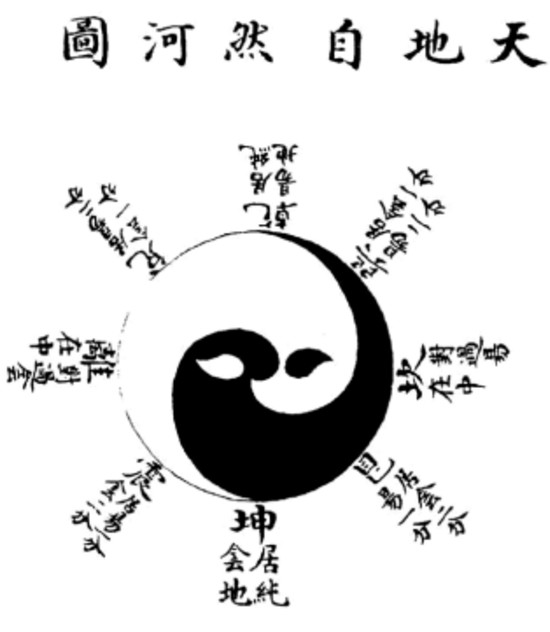
“Bagua diagram by Zhao Huiqian ("River Chart spontaneously [generated] by Heaven and Earth" 圖河.自地天). This image may in fact be a reproduction of the diagram by Hu Wei in his Yitu mingbian (‘Clarification of the diagrams in the book of changes’), dated 1706.” circa 1370; 1706. Public domain.

Wednesday, August 30, 2017

Dao De Jing 17


Dao De Jing 17


The one who ranks highest is scarcely known by the people;
The one who ranks second, they love & praise;
The one who ranks third, they fear;
The one who ranks fourth, they despise.
If you have no trust, no trust will be shown you in return.
The sage removes himself, as if his words are precious.
When the work is done & duties performed successfully, the people say: “We did this ourselves!”

Laozi, 道德經
Translation by John Hayes
Unlike with my original poetry & poetry translations, I don’t asset a copyright claim on my translation of the Dao De Jing. It may be freely used under the terms of the Creative Commons license.


Image links to its source on Wiki Commons:
Statue of a Taoist sage. 16th century. Photo by Wiki user BurgererSF, who makes it available under the Creative Commons CC0 1.0 Universal PublicDomain Dedication.

Wednesday, August 9, 2017

Dao De Jing 16


Dao De Jing 16


Come to utmost emptiness,
preserve deep stillness.
The ten thousand things arise as one,
& as we see return to their source.
Returning to the source is called stillness—returning thus is unchanging fate;
where the unchanging is known there’s wisdom,
where the unchanging isn’t known, there’s lawlessness.
Knowledge of the unchanging embraces all, & embracing all is justice.
justice then is majesty, majesty then is divine, the divine then is the Way;
the Way endures through time.
One who follows the Way is free from peril even until death.


Laozi, 道德經
Translation by John Hayes
Unlike with my original poetry & poetry translations, I don’t asset a copyright claim on my translation of the Dao De Jing. It may be freely used under the terms of the Creative Commons license.


Image links to its source on Wiki Commons:
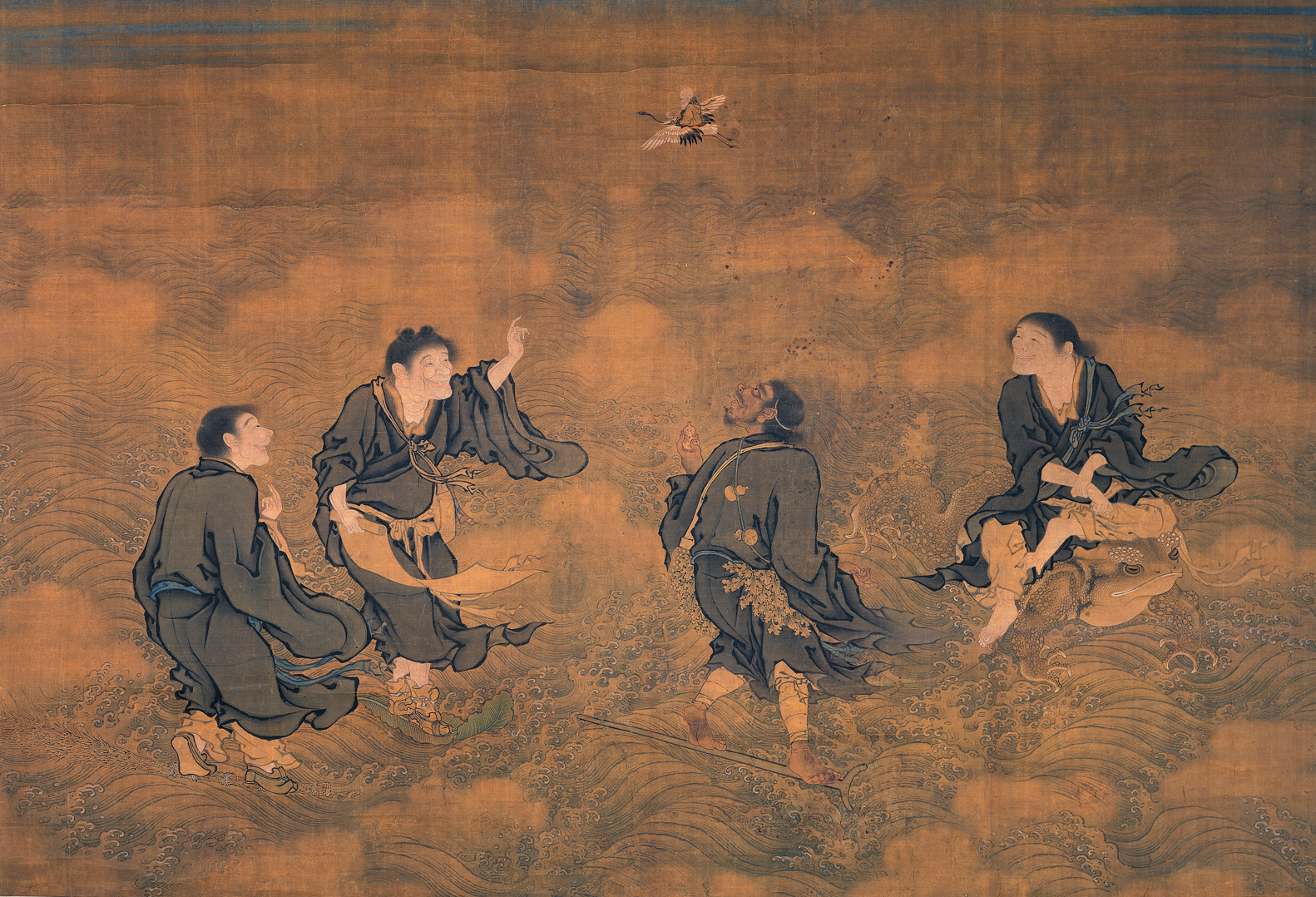
“Four Immortals Saluting Longevity”: Shang Xi, early Ming Dynasty, hanging scroll, Color on silk. (“The immortals are from left to right: Shide standing on a broom, Hanshan standing on a banana leaf, Iron-Crutch Li standing on a crutch, and Liu Haichan riding a 'Chan Chu' three footed toad. The being riding the crane is the Longevity Star God”).
Public domain.


Wednesday, July 26, 2017

Cornel Dogwood Grove


Cornel Dogwood Grove


bearing fruit it’s vermilion & green,
as if its blossoms opened anew—
to keep your guest in these mountains
offer him this hibiscus cup


Translation by Jack Hayes © 2017
based on Wang Wei: 茱萸沜
zhū yú pàn


Image links to its source in Wiki Commons:
Cornus officinalis's fruits; photo by Dalgial, who makes it available under the Creative Commons Attribution-Share Alike 3.0 Unportedlicense.


Thursday, June 22, 2017

Dao De Jing 15


Dao De Jing 15

The ancient & skillful sages, subtle, mysterious, profound, were too deep to be fathomed. Because men could not fathom them, it’s best to describe their appearance:
Cautious as men fording a river in winter!
Trembling with fear at what surrounded them!
Grave & respectful as a guest!
Dispersing like melting ice!
Simple as uncarved wood!
Empty as a gorge!
Turbid as muddy water!
Who can turn muddy water gradually clear?
Who being quiescent can stir others to life?
Those who preserve the Way don’t desire fulfillment.
Not desiring fulfillment, they remain concealed & don’t ripen prematurely

Laozi, 道德經
Translation by John Hayes
Unlike with my original poetry & poetry translations, I don’t asset a copyright claim on my translation of the Dao De Jing. It may be freely used under the terms of the Creative Commons license.

Image links to its source on Wiki Commons:
“Depiction of the Daoist immortal Lü Chunyang, also known as Lü Dongbin”: Zhang Lu (1464–1538) – Ink and light colors on gold-flecked paper; album leaf. Ming Dynasty.
Public domain.


Thursday, June 15, 2017

Dao De Jing 14


Dao De Jing 14

Look at it, do not see, give the name beyond form;
Listen to it, do not hear, give the name beyond speech;
Seize it, don’t obtain it, give the name abstruse.

Looked at, it’s not seen & is named formless;
Listened to, it’s not heard & is named beyond speech;
Seized, it’s not grasped & is named abstruse.
These three qualities aren’t possible to investigate, so we mix them together to create the One.
Above it there’s no light & below it there’s no darkness.
Beyond measure, it has no name, & it returns again & again to nothingness.
It is named form without form, image without image, indistinct & dim.
Meeting it, there is no front; following it, there is no rear.
Follow the ancient Way & you can master the present.
To know the ancient beginning is to pick up the thread of the Way.


Laozi, 道德經
Translation by John Hayes
Unlike with my original poetry & poetry translations, I don’t asset a copyright claim on my translation of the Dao De Jing. It may be freely used under the terms of the Creative Commons license.


Image links to its source on Wiki Commons:
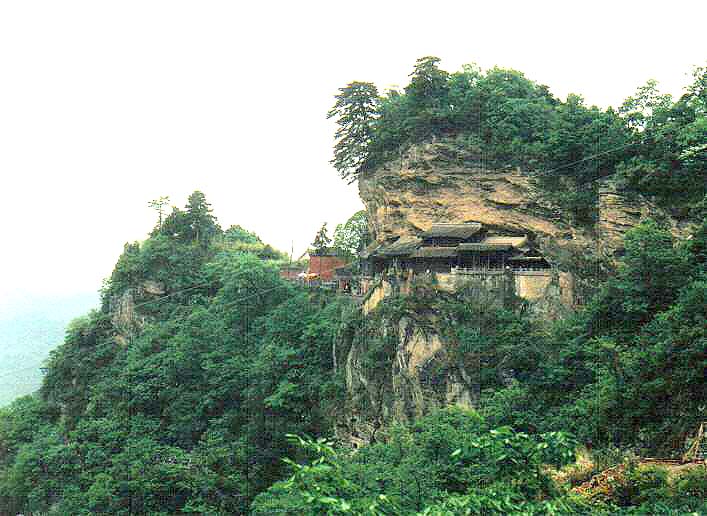
Wu Tang Cliffside Temple
Date    photo taken 1994 by Wiki User Fire Star [empty link on Wiki Commons].
This work has been released into the public domain by its author, Fire Star at the English Wikipedia project. This applies worldwide.


Tuesday, June 13, 2017

Jinzhu Ridge


Jinzhu Ridge


sandalwood & goldenrain shine at the empty bend;
kingfisher-green swirls in the stream’s ripples—
a secret way opens to the Shang Mountain path:
not even the woodcutters can know of it


Translation by Jack Hayes
© 2017
based on Wang Wei: 斤竹嶺
jīn zhú lĭng


Image links to its source on Wiki Commons:
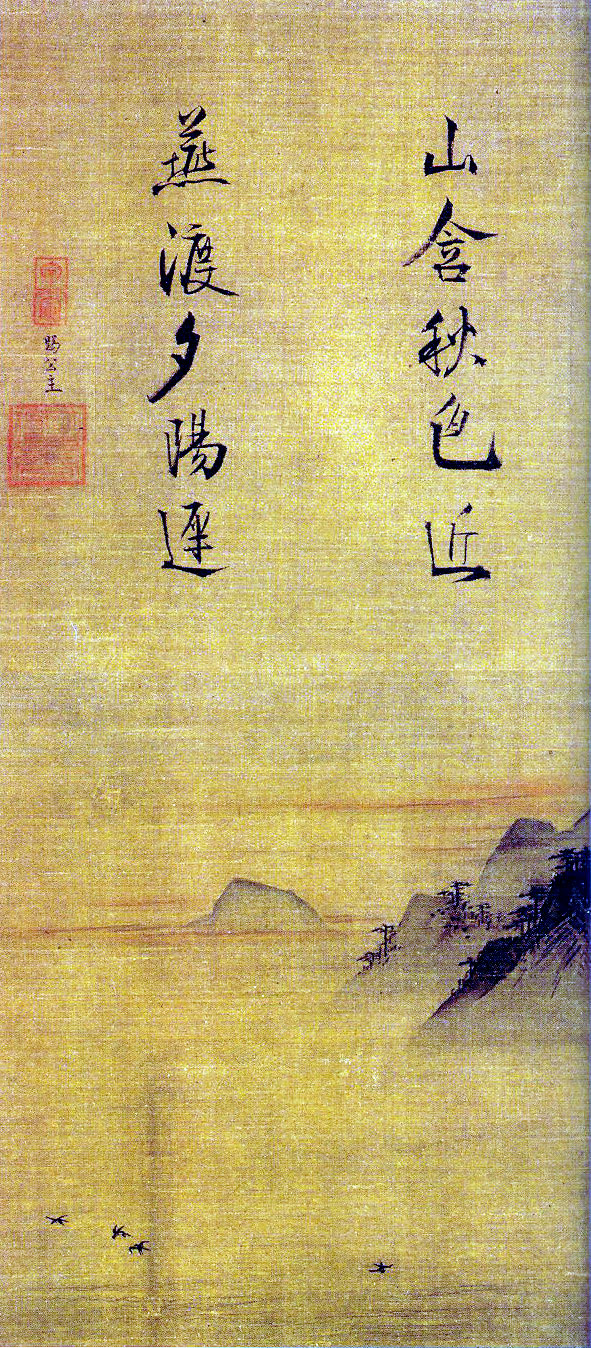
"Sunset Landscape": Ma Lin; ink & color on silk – 1254 CE
Public domain


Wednesday, June 7, 2017

Sleepless


Sleepless


Qutang in the night: its waters black;
within the city, the watch changes—

shaded, shaded, the moon sinks in fog;
shining, shining, stars near the tower—

life faltering, accepting less sleep;
mind fragile, hating to know sorrow—

ramparts spreading in mountain valleys;
Peach Blossom Spring existing nowhere


Translation by Jack Hayes
© 2017
based on Du Fu: 不寐
bù mèi


Image links to its source on Wiki Commons:
“Clouds Rising from the Green Sea”, from a series of paintings of water: Ma Yuan, circa 1225 CE. ink on silk.
Public domain

Wednesday, May 31, 2017

Dao De Jing 13


Dao De Jing 13

Favor & disgrace are feared equally,
Honor is a great misfortune, like the bodily self.
What does it mean to say “favor & disgrace are feared equally”?
Favor is joined with disgrace, obtaining it leads to fear of losing it, losing it leads to more fear—this is what is meant by saying “favor & disgrace are feared equally”.
What does it mean to say “honor is a great misfortune, like the bodily self”?
I am subject to great misfortune because I have a bodily self, & if I had no bodily self, what misfortune could come to me?
Thus, whoever would give his bodily self for the world’s honor, whoever would give the world the same love he gives his bodily self, may be entrusted with the world.

Laozi, 道德經
Translation by John Hayes
Unlike with my original poetry & poetry translations, I don’t asset a copyright claim on my translation of the Dao De Jing. It may be freely used under the terms of the Creative Commons license.


Image links to its source on Wiki Commons:
The Chunyang Gong(Temple of Lu Dongbin)in Datong, Shanxi, China. Photo by Wiki user JPBennett from Yamato, Japan, who makes it available under the Creative Commons Attribution 2.0 Genericlicense.