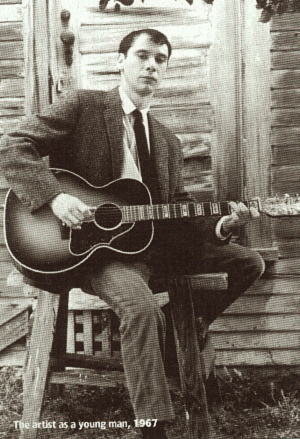
Happy Monday to you all! I’m changing up the schedule a bit here on the Monday Morning Blues & using this post to bring the Poor Boy series to a close. Yes, this is the twelfth & final post in a series that has enabled us to see a blues song in various states of transformation from Bo Weavil Jackson’s 1926 recording to this almost contemporary version released in 2004 as “The Moan” on their EP of the same name by The Black Keys.
The Black Keys are a guitar & drum duo that hail from the U.S. Rust Belt—Akron, Ohio, in fact, & who bring a heavy duty, roots-based attack to a repertoire of mostly original material—but they do include interesting covers of diverse musicians, including Louisiana blueman Robert Pete Williams, the Stooges, the Sonics, & Mississippi Juke Joint bluesman Junior Kimbrough. Speaking of Mississippi Juke Joints, “The Moan” to my ear is heavily influenced by RL Burnside’s “Poor Boy Long Way From Home.” The band members are Dan Auerbach on vocals & guitar & Patrick Carney on drums.
Recently, the Black Keys have won some relatively mainstream recognition, as their song “Tighten Up” won a Grammy for “Best Rock Performance by a Duo or Group with Vocal,” & was also nominated for “Best Rock Song.” In addition, Brothers, their 2010 Nonesuch release on which this song appears won both “Best Alternative Music Album” & “Best Recording Package”—the latter refers to an album’s artwork, not to the actual recorded performances.
Auerbach & Carney bring a lot of energy to their version of the song (they actually claim writing credits for “The Moan”—I’ll just let you draw your own conclusions on that), & their grunge/punk-inflected version of old blues is one of the more interesting from a white band since Captain Beefheart’s massive deconstruction/reconstruction of blues—both covered & original—during his heyday.
Next month there will be some changes in the Monday Morning Blues line-up—two new features will debut, & in addition to the Poor Boy series ending, the Blue Notes blues/jazz series also is going to go away, tho to some extent it may be incorporated into one of the new features—stay tuned for details! Any Woman’s Blues will continue (at the rate of one post per month, I could keep this feature going a couple of years more at least!) & the Blues Guitar series will go at least one more month, tho I’m running a bit low on ideas of guitars that are very associated with blues performers.
In the meantime, enjoy The Black Keys & “The Moan”!
A miscellany like Grandma’s attic in Taunton, MA or Mission Street's Thrift Town in San Francisco or a Council, ID yard sale in cloudy mid April or a celestial roadmap no one folded—you take your pick.
Showing posts with label Poor Boy Long Way From Home. Show all posts
Monday, March 19, 2012
Monday, March 5, 2012
Poor Boy Long Way From Home #11 – RL Burnside
Hi friends! Time for another edition of the Monday Morning Blues, & today’s feature is our penultimate entry in the Poor Boy Blues series.
Today’s artist is RL Burnside, a favorite of mine, & his version of “Poor Boy Long Way From Home” is also one of my favorites. Burnside also introduces us to the song in an electric incarnation—tho he also recorded it acoustically, I’ve always thought Burnside was at his best with an electric guitar; I’ve read that he preferred to play electric & that his acoustic recordings were done mainly to please the “folk blues” purists.
Burnside grew up & spent most of his life in the hill country east of the Mississippi Delta region, mainly around Holly Springs, Mississippi. His music always had a raw edge, often featuring open tunings & slide & frequently not moving from the root chord. Reportedly Burnside began playing guitar in his early 20s after hearing John Lee Hooker’s hit "Boogie Chillen,” & his music has some similarities with Hooker’s, as it also does with Mississippi Fred McDowell’s playing—in fact, McDowell was something of a mentor to Burnside. Burnside was also related to Muddy Waters by marriage, & he claimed Waters as an influence as well.
Although he was recorded in the 1960s by George Mitchell (these recordings were released on Arhoolie), he spent much of his life as a sharecropper, commercial fisherman, & tractor driver, playing local juke joints as a sideline. Burnside did make some additional recordings in the 1980s on the Swingmaster label, & he was featured in the 1990 film Deep Blues; following this he signed with Fat Possum Records, a Mississippi label with the particular mission of recording older blues players. He also recorded with the Jon Spencer Blues Explosion during the 1990s.
This version of “Poor Boy Long Way from Home” is straight-ahead & driving like most of Burnside’s music. Its great strength is its simplicity, but this is simplicity of finely honed & definite gestures—a lot of folks can spend a whole lifetime playing music & not figure out how to get so “simple.” Burnside is accompanied by his grandson Cedric Burnside on drums & by slide guitarist Kenny Brown, with whom he played from the 1970s onward; he called Brown his “adopted son.”
This is the real deal, folks—enjoy!
Today’s artist is RL Burnside, a favorite of mine, & his version of “Poor Boy Long Way From Home” is also one of my favorites. Burnside also introduces us to the song in an electric incarnation—tho he also recorded it acoustically, I’ve always thought Burnside was at his best with an electric guitar; I’ve read that he preferred to play electric & that his acoustic recordings were done mainly to please the “folk blues” purists.
Burnside grew up & spent most of his life in the hill country east of the Mississippi Delta region, mainly around Holly Springs, Mississippi. His music always had a raw edge, often featuring open tunings & slide & frequently not moving from the root chord. Reportedly Burnside began playing guitar in his early 20s after hearing John Lee Hooker’s hit "Boogie Chillen,” & his music has some similarities with Hooker’s, as it also does with Mississippi Fred McDowell’s playing—in fact, McDowell was something of a mentor to Burnside. Burnside was also related to Muddy Waters by marriage, & he claimed Waters as an influence as well.
Although he was recorded in the 1960s by George Mitchell (these recordings were released on Arhoolie), he spent much of his life as a sharecropper, commercial fisherman, & tractor driver, playing local juke joints as a sideline. Burnside did make some additional recordings in the 1980s on the Swingmaster label, & he was featured in the 1990 film Deep Blues; following this he signed with Fat Possum Records, a Mississippi label with the particular mission of recording older blues players. He also recorded with the Jon Spencer Blues Explosion during the 1990s.
This version of “Poor Boy Long Way from Home” is straight-ahead & driving like most of Burnside’s music. Its great strength is its simplicity, but this is simplicity of finely honed & definite gestures—a lot of folks can spend a whole lifetime playing music & not figure out how to get so “simple.” Burnside is accompanied by his grandson Cedric Burnside on drums & by slide guitarist Kenny Brown, with whom he played from the 1970s onward; he called Brown his “adopted son.”
This is the real deal, folks—enjoy!
Photo of RL Burnside (in 1984) is by Wiki Commons user
Bubba73 (Jud McCranie) & is licensed under the Creative Commons Attribution-Share Alike 3.0 Unported license. The picture links to its source.
Monday, February 6, 2012
Poor Boy Long Way From Home #10 – Mississippi John Hurt
A happy Monday to you—still morning out here on the Left Coast, so here comes another edition of the Monday Morning Blues.
Today we have our monthly installment in the ongoing Poor Boy Blues series—a post that almost didn’t happen, because the video I initially intended to post was taken down by YouTube due to copyright infringement claims. Someone recently re-posted a version of Mississippi John Hurt’s version of “Poor Boy Long Ways From Home” however, so—at least for the time being—it’s looking like the complete set of 12 I’d planned on posting may remain intact.
Mississippi John Hurt has long been a favorite of mine. His precise, melodic & almost delicate style of playing is beautiful & distinctive, as is his rich, if subdued, voice, which can express tenderness & a sort of gentle humor in a way that few blues players can. Hurt’s playing style is akin to the “Piedmont” style of fingerpicking usually associated with guitarists who lived along the U.S. southeastern seaboard in the Carolinas or Virginia. But Hurt lived in Avalon, Mississippi, which he famously sung about in “Avalon Blues”—thus, spent most of his life in the Mississippi Delta area, which is generally associated with a much “heavier” blues sound—one dripping with bottleneck slide, & made dark by lots of flatted thirds, fifths & sevenths in both the melodies & the accompaniment—even more so by the fact that a fair amount of the singing & slide playing involves microtones—notes slightly flat or sharp of a recognized tone. Hurt on the other hand, was never afraid of pure major triads & a light, melodic sound.
I’ve written elsewhere about Hurt’s “discovery” by musicologist Tom Hoskins, who was intrigued by Hurt’s songs on Harry Smith’s Anthology of American Folk Music (“Frankie” & “Spike Driver Blues”), as well as by other songs he’d recorded in the 20s that were still available to collectors on 78s. As a result, Hurt had a short but successful second career as a full-time professional musician during the folk revival until his death in 1966. Although he’d made 13 sides for Okeh back in the 1920s, he’d spent most of his life as a sharecropper who made music in his community for dances & parties.
Hurt’s version of “Poor Boy Long Ways From Home” is very typical of his style—there’s not the raw existential angst of Ramblin’ Thomas or Booker White; all in all, it bears a closer relationship to the Brownie McGhee version we heard last month, tho Hurt’s lyrics are different, & his playing & singing are—as always!—entirely his own & immediately recognizable. Today's recording is from his album Last Recordings, made during the 1960s & issued posthumously in 1972.
Hope you enjoy this wonderful piece of music.
Today we have our monthly installment in the ongoing Poor Boy Blues series—a post that almost didn’t happen, because the video I initially intended to post was taken down by YouTube due to copyright infringement claims. Someone recently re-posted a version of Mississippi John Hurt’s version of “Poor Boy Long Ways From Home” however, so—at least for the time being—it’s looking like the complete set of 12 I’d planned on posting may remain intact.
Mississippi John Hurt has long been a favorite of mine. His precise, melodic & almost delicate style of playing is beautiful & distinctive, as is his rich, if subdued, voice, which can express tenderness & a sort of gentle humor in a way that few blues players can. Hurt’s playing style is akin to the “Piedmont” style of fingerpicking usually associated with guitarists who lived along the U.S. southeastern seaboard in the Carolinas or Virginia. But Hurt lived in Avalon, Mississippi, which he famously sung about in “Avalon Blues”—thus, spent most of his life in the Mississippi Delta area, which is generally associated with a much “heavier” blues sound—one dripping with bottleneck slide, & made dark by lots of flatted thirds, fifths & sevenths in both the melodies & the accompaniment—even more so by the fact that a fair amount of the singing & slide playing involves microtones—notes slightly flat or sharp of a recognized tone. Hurt on the other hand, was never afraid of pure major triads & a light, melodic sound.
I’ve written elsewhere about Hurt’s “discovery” by musicologist Tom Hoskins, who was intrigued by Hurt’s songs on Harry Smith’s Anthology of American Folk Music (“Frankie” & “Spike Driver Blues”), as well as by other songs he’d recorded in the 20s that were still available to collectors on 78s. As a result, Hurt had a short but successful second career as a full-time professional musician during the folk revival until his death in 1966. Although he’d made 13 sides for Okeh back in the 1920s, he’d spent most of his life as a sharecropper who made music in his community for dances & parties.
Hurt’s version of “Poor Boy Long Ways From Home” is very typical of his style—there’s not the raw existential angst of Ramblin’ Thomas or Booker White; all in all, it bears a closer relationship to the Brownie McGhee version we heard last month, tho Hurt’s lyrics are different, & his playing & singing are—as always!—entirely his own & immediately recognizable. Today's recording is from his album Last Recordings, made during the 1960s & issued posthumously in 1972.
Hope you enjoy this wonderful piece of music.
Monday, January 23, 2012
Poor Boy Long Way from Home #9 – Sonny Terry & Brownie McGhee
A happy Monday, friends, & welcome to the Monday Morning Blues! We’re here with another installment in the Poor Boy Blues series, & this time around we have a version by the great Brownie McGhee, accompanied by his usual musical partner, the equally formidable Sonny Terry.
McGhee’s version of the “Poor Boy Blues” is one of the more mellow songs in the series, & the lyrics are more individualized; other than the “Poor boy, a long way from home” statement—which is de rigueur with slight variations for all songs in the series—the song doesn’t dip into the usual pool of “Poor Boy” lyrics—there’s none of the existential angst of the Ramblin’ Thomas, Booker White or John Dudley versions.
Of course, McGhee & Terry, at least in their folk music incarnation, were two of the most musically easygoing bluesmen around. They were fixtures on the folk music circuit from the late 50s on until the 80s; as such, they lived different lives from many of their contemporaries—they recorded with Woody Guthrie & Pete Seeger, for insatnce, & made recordings of songs like “Pick a Bale of Cotton” & “Skip to My Lou” along with such blues classics as “Key to the Highway” or “Sportin’ Life Blues.”
But McGhee & Terry actually lived a few distinct musical incarnations in their lives. Both suffered significant disabilities from an early age: Terry lost his eyesight in his teens, & McGhee was unable to walk after having polio (an operation funded by the March of Dimes later enabled him to walk.) Growing up at a time when jobs were scarce for everyone, but certainly for African-Americans & even more so, men with significant disabilities, both relied on their considerable musical abilities. Terry became a street performer, & partnered with the great Blind Boy Fuller, & McGhee later came under Fuller’s tutelage as well.
Fuller is considered one of the great exponents of the “Piedmont” style of guitar playing, & McGhee is considered another—not only did he learn from Fuller, but he was a gifted player in his own right, & with assistance from Happy Traum, who was his student, he published a book on his guitar playing in the early 70s. McGhee & Terry met, of course, thru Blind Boy Fuller, & not long after Fuller’s death in 1941, they became a hit as a recording duo.
It’s interesting to me that McGhee & Terry continued a completely separate musical career during the time they were such prominent figures in the folk scene. They fronted a jump band called Brownie McGhee & his Jook House Rockers" or "Sonny Terry & his Buckshot Five." This combo included not only horns & piano, but also McGhee on electric guitar, which was of course taboo in the folk music at that time!
I should also note that Terry’s harmonica playing is at least as masterful as McGhee’s guitar picking & smooth singing—his blues harp is almost immediately familiar, & not just from his characteristic whoops, but from the sound itself. Terry was known not only for his ability to produce any number of effects using the harp, but also for his outstanding breath control.
Finally, I’m not sure when this particular recording was originally released. There is a live version of “Po’ Boy” (as they invariably titled the song) from either ’61 or ’62 (the notes on that vary), but this is a different recording. I do know that it was released on the 2003 Tomato release Sun’s Gonna Shine, but this is a compilation—both men passed away in the 1980s.
Hope you enjoy these two top-flight musicians’ gentler take on “Poor Boy Blues”!
McGhee’s version of the “Poor Boy Blues” is one of the more mellow songs in the series, & the lyrics are more individualized; other than the “Poor boy, a long way from home” statement—which is de rigueur with slight variations for all songs in the series—the song doesn’t dip into the usual pool of “Poor Boy” lyrics—there’s none of the existential angst of the Ramblin’ Thomas, Booker White or John Dudley versions.
Of course, McGhee & Terry, at least in their folk music incarnation, were two of the most musically easygoing bluesmen around. They were fixtures on the folk music circuit from the late 50s on until the 80s; as such, they lived different lives from many of their contemporaries—they recorded with Woody Guthrie & Pete Seeger, for insatnce, & made recordings of songs like “Pick a Bale of Cotton” & “Skip to My Lou” along with such blues classics as “Key to the Highway” or “Sportin’ Life Blues.”
But McGhee & Terry actually lived a few distinct musical incarnations in their lives. Both suffered significant disabilities from an early age: Terry lost his eyesight in his teens, & McGhee was unable to walk after having polio (an operation funded by the March of Dimes later enabled him to walk.) Growing up at a time when jobs were scarce for everyone, but certainly for African-Americans & even more so, men with significant disabilities, both relied on their considerable musical abilities. Terry became a street performer, & partnered with the great Blind Boy Fuller, & McGhee later came under Fuller’s tutelage as well.
Fuller is considered one of the great exponents of the “Piedmont” style of guitar playing, & McGhee is considered another—not only did he learn from Fuller, but he was a gifted player in his own right, & with assistance from Happy Traum, who was his student, he published a book on his guitar playing in the early 70s. McGhee & Terry met, of course, thru Blind Boy Fuller, & not long after Fuller’s death in 1941, they became a hit as a recording duo.
It’s interesting to me that McGhee & Terry continued a completely separate musical career during the time they were such prominent figures in the folk scene. They fronted a jump band called Brownie McGhee & his Jook House Rockers" or "Sonny Terry & his Buckshot Five." This combo included not only horns & piano, but also McGhee on electric guitar, which was of course taboo in the folk music at that time!
I should also note that Terry’s harmonica playing is at least as masterful as McGhee’s guitar picking & smooth singing—his blues harp is almost immediately familiar, & not just from his characteristic whoops, but from the sound itself. Terry was known not only for his ability to produce any number of effects using the harp, but also for his outstanding breath control.
Finally, I’m not sure when this particular recording was originally released. There is a live version of “Po’ Boy” (as they invariably titled the song) from either ’61 or ’62 (the notes on that vary), but this is a different recording. I do know that it was released on the 2003 Tomato release Sun’s Gonna Shine, but this is a compilation—both men passed away in the 1980s.
Hope you enjoy these two top-flight musicians’ gentler take on “Poor Boy Blues”!
Monday, January 2, 2012
Poor Boy Long Way From Home #8 – John Dudley
Happy Monday, folks. It’s still Monday morning out here on the Left Coast (just barely) as this posts—so welcome to a much belated edition of the Monday Morning Blues.
We’re here with the next installment in the Poor Boy Blues series—there will be two installments this month, since there are five Mondays in January. & today’s version is one I really love: some wonderful slide playing by a musician known as John Dudley.
We know very little about him. The recording was made in 1959 by Alan Lomax during a visit to the notorious Parchman Farm prison in Mississippi. Dudley was working in the dairy section of the complex—the photo leading off the post shows Dudley in a prison uniform—he’s the man to the right of center. Lomax took two photos of him, & no other photographs exist. All in all, Dudley made the following recordings during the session: “Clarksdale Mill (2 takes)", "You Got a Mean Disposition","Big Road Blues", "Cool Drink of Water Blues (2 takes)", "Poor Boy Blues", "I'm Gonna Move To Kansas City," & an interview about "playing guitar at dances." You can hear an mp3 of his “Clarksdale Mill Blues” on the page I’ve linked for a biography. This song, a loose adaptation of Charlie Patton’s great “Moon Going Down,” is considered by some to be Dudley’s masterpiece.
Dudley came from Tunica County, Mississippi—also the birthplace of Robert Johnson, & one county to the north of Coahoma, where Clarksdale is located. Clarksdale is of course one of the centers of Delta blues music, & it’s notable that four of Dudley’s songs are adaptations—I think the term fits better than “cover,” which implies an attempt to make the song sound as much like the original as possible—& three of those are versions of Delta standards—in addition to “Clarksdale Mill Blues/Moon Goin’ Down,” there are also the two takes on Tommy Johnson songs, “Cool Drink of Water Blues” & “Big Road Blues.” Of course, the latter song has had such a history of adaptation in the Delta that folklorist David Evans wrote a book about it!
This music & two photographs are all we know about John Dudley—but it’s a legacy a man could be proud of, recorded under extremely adverse conditions. Hope you enjoy it.
We’re here with the next installment in the Poor Boy Blues series—there will be two installments this month, since there are five Mondays in January. & today’s version is one I really love: some wonderful slide playing by a musician known as John Dudley.
We know very little about him. The recording was made in 1959 by Alan Lomax during a visit to the notorious Parchman Farm prison in Mississippi. Dudley was working in the dairy section of the complex—the photo leading off the post shows Dudley in a prison uniform—he’s the man to the right of center. Lomax took two photos of him, & no other photographs exist. All in all, Dudley made the following recordings during the session: “Clarksdale Mill (2 takes)", "You Got a Mean Disposition","Big Road Blues", "Cool Drink of Water Blues (2 takes)", "Poor Boy Blues", "I'm Gonna Move To Kansas City," & an interview about "playing guitar at dances." You can hear an mp3 of his “Clarksdale Mill Blues” on the page I’ve linked for a biography. This song, a loose adaptation of Charlie Patton’s great “Moon Going Down,” is considered by some to be Dudley’s masterpiece.
Dudley came from Tunica County, Mississippi—also the birthplace of Robert Johnson, & one county to the north of Coahoma, where Clarksdale is located. Clarksdale is of course one of the centers of Delta blues music, & it’s notable that four of Dudley’s songs are adaptations—I think the term fits better than “cover,” which implies an attempt to make the song sound as much like the original as possible—& three of those are versions of Delta standards—in addition to “Clarksdale Mill Blues/Moon Goin’ Down,” there are also the two takes on Tommy Johnson songs, “Cool Drink of Water Blues” & “Big Road Blues.” Of course, the latter song has had such a history of adaptation in the Delta that folklorist David Evans wrote a book about it!
This music & two photographs are all we know about John Dudley—but it’s a legacy a man could be proud of, recorded under extremely adverse conditions. Hope you enjoy it.
Monday, December 5, 2011
Poor Boy Long Way From Home #7 – John Fahey
Monday morning, kids—you know what that means: time for the Monday Morning Blues on Robert Frost’s Banjo.
Today is our monthly visit to the song “Poor Boy Blues” in its many incarnations, & our feature today is unique in a few respects. First, it’s the only scheduled post in the series that doesn’t feature a vocal version of the song; second, there are two quite different versions of “Poor Boy” here, both played by the masterful John Fahey. The first video, a live recording from the late 1970s, features Fahey’s more or less original “Poor Boy Long Way From Home,” while the second video features Fahey’s instrumental take on Booker White’s “Poor Boy,” a version we explored in this post.
With this post, which marks chronologically Fahey’s 1958 recording of “Poor Boy” for the amateur Fonotone label under the pseudonym of Blind Thomas. The song was later re-issued on Fahey’s own Takoma label on his 1965 masterpiece, The Transfiguration of Blind Joe Death—Blind Joe Death being another of his musical alter egos.
Fahey’s appearance on our timeline marks an important point in blues history, since by the late 1950s blues was very much attracting the attention of white musicians & record collectors (sometimes, as in the case of Fahey, these two categories existed in the same person.) This was the time of the folk revival—Dave Van Ronk, like Fahey, a white musician who very much internalized much African-American music, also released his first Folkways album in 1959, & of course Bob Dylan’s first Columbia album—which included covers of old blues tunes such as Booker White’s “Fixin’ to Die”—was only a few years away.
Some things changed as the blues became subsumed by the folk revival—in all its permutations, which should be stressed, because Fahey was never a coffeehouse guitar picker in the stereotypical mode: he was arch, sophisticated & an adamant outsider right from the first. In addition to the music now being performed by people of European-American descent as well as African-American descent, two other big changes should be noted: first, at least prior to the British Invasion & Dylan going electric, the white musicians focused on an acoustic sound—they focused on it in their own playing & they also expected it in the playing of African American blues musicians. Elijah Wald in Escaping the Delta documents numerous stories about performers such as Brownie McGhee & Big Bill Broonzy who essentially led parallel performing lives during the revival: they played acoustic for the white folkie college crowd & electric when playing in African American communities.
The second change is that the blues came to be thought of more as primarily “guitar music” & thus less as primarily “vocal” music. To this day the work of people like Fahey, Stefan Grossman & others almost gives the impression that the old blues musicians were guitarists first & vocalists only incidentally. For instance, while I admire Grossman as a player, composer & teacher, if one looks at some of his instruction books it looks as if he’s teaching instrumental pieces, whereas the guitar parts played on recordings by the old “country blues” players were accompaniments, however sophisticated they might be.
Fahey is a bit of a special case here, because in addition to being an extraordinarily talented guitarist, he was also a formidable composer who essentially brought together elements of old country blues playing with elements of modern classical music. His compositions have been as innovative & inventive as the titles he gave them (“The Dance Of The Inhabitants Of The Invisible City Of Bladensburg” for example), using open tunings & ideas from far flung sources to put together a remarkable body of original work.
Fahey is not as well known to the general music listening public as he should be, not by any stretch. His career was marked with personal difficulties: alcoholism, Epstein-Barr Syndrome, even such extreme poverty at one point that he was forced to pawn his guitars. He died at age 61 in 2001, far too young. His music is still played tho—it’s a delight & a challenge to many of us guitarists!
Hope you enjoy the amazing John Fahey’s two versions of “Poor Boy”!
Today is our monthly visit to the song “Poor Boy Blues” in its many incarnations, & our feature today is unique in a few respects. First, it’s the only scheduled post in the series that doesn’t feature a vocal version of the song; second, there are two quite different versions of “Poor Boy” here, both played by the masterful John Fahey. The first video, a live recording from the late 1970s, features Fahey’s more or less original “Poor Boy Long Way From Home,” while the second video features Fahey’s instrumental take on Booker White’s “Poor Boy,” a version we explored in this post.
With this post, which marks chronologically Fahey’s 1958 recording of “Poor Boy” for the amateur Fonotone label under the pseudonym of Blind Thomas. The song was later re-issued on Fahey’s own Takoma label on his 1965 masterpiece, The Transfiguration of Blind Joe Death—Blind Joe Death being another of his musical alter egos.
Fahey’s appearance on our timeline marks an important point in blues history, since by the late 1950s blues was very much attracting the attention of white musicians & record collectors (sometimes, as in the case of Fahey, these two categories existed in the same person.) This was the time of the folk revival—Dave Van Ronk, like Fahey, a white musician who very much internalized much African-American music, also released his first Folkways album in 1959, & of course Bob Dylan’s first Columbia album—which included covers of old blues tunes such as Booker White’s “Fixin’ to Die”—was only a few years away.
Some things changed as the blues became subsumed by the folk revival—in all its permutations, which should be stressed, because Fahey was never a coffeehouse guitar picker in the stereotypical mode: he was arch, sophisticated & an adamant outsider right from the first. In addition to the music now being performed by people of European-American descent as well as African-American descent, two other big changes should be noted: first, at least prior to the British Invasion & Dylan going electric, the white musicians focused on an acoustic sound—they focused on it in their own playing & they also expected it in the playing of African American blues musicians. Elijah Wald in Escaping the Delta documents numerous stories about performers such as Brownie McGhee & Big Bill Broonzy who essentially led parallel performing lives during the revival: they played acoustic for the white folkie college crowd & electric when playing in African American communities.
The second change is that the blues came to be thought of more as primarily “guitar music” & thus less as primarily “vocal” music. To this day the work of people like Fahey, Stefan Grossman & others almost gives the impression that the old blues musicians were guitarists first & vocalists only incidentally. For instance, while I admire Grossman as a player, composer & teacher, if one looks at some of his instruction books it looks as if he’s teaching instrumental pieces, whereas the guitar parts played on recordings by the old “country blues” players were accompaniments, however sophisticated they might be.
Fahey is a bit of a special case here, because in addition to being an extraordinarily talented guitarist, he was also a formidable composer who essentially brought together elements of old country blues playing with elements of modern classical music. His compositions have been as innovative & inventive as the titles he gave them (“The Dance Of The Inhabitants Of The Invisible City Of Bladensburg” for example), using open tunings & ideas from far flung sources to put together a remarkable body of original work.
Fahey is not as well known to the general music listening public as he should be, not by any stretch. His career was marked with personal difficulties: alcoholism, Epstein-Barr Syndrome, even such extreme poverty at one point that he was forced to pawn his guitars. He died at age 61 in 2001, far too young. His music is still played tho—it’s a delight & a challenge to many of us guitarists!
Hope you enjoy the amazing John Fahey’s two versions of “Poor Boy”!
Monday, November 7, 2011
Poor Boy Long Way From Home #6 – Howlin’ Wolf
Hey, folks, it’s Monday, & we’re coming at you with a rocking version of the Monday Morning Blues!
It’s time for our monthly installment in the Poor Boy Blues series. Last month we gave a listen to Booker T. White’s version from a Parchman Farm Prison redording made in 1935. This month we jump even further ahead to the later 1950s (& in case you’re getting lightheaded from all this rapid time travel, I can assure you we’ll be staying in the 1950s for the next few installments.) Today’s artist is no less than the great Howlin’ Wolf (AKA Chester Burnett), one of the pioneers of the electric Chicago blues sound & a man who really lets you know why R&B stands for rhythm & blues! His version of “Poor Boy” was released on Chess Records in 1957, with “Sittin’ On Top of the World” as the B side.
Chester Burnett was born in White Station, Mississippi in 1910—odd to think of Howlin’ Wolf as a year old than Robert Johnson, since Wolf is so assoicated with electric Chicago blues & Johnson so much associated with the earlier Delta styles—& claims that the first guitar piece he learned was Charlie Patton’s “Pony Blues”—taught to him by Patton himself. Wolf had deep roots in the old-time Delta blues & despite the electric sound he was so instrumental in developing, these roots are constantly on display in his music. For instance, his version of “Poor Boy” is most similar to the very “rootsy” version of the tune recorded by RL Burnside a number of years later.
Of course, in Howlin’ Wolf’s edition, we have a full-on Chicago style blues band: Howlin’ Wolf on vocals & harmonica, the great Hubert Sumlin on guitar (Sumlin was integral to Howlin’ Wolf’s sound), Hosea Lee Kennard on piano, Alfred Elkins on bass & Earl Phillips on drums. A lot of writers talk about Howlin’ Wolf as a sort of primordial force, & at 6 feet 6 inches tall & “300 pounds of heavenly joy” (as he himself sang), he was unquestionably a formidable presence, with one of the most dynamic & forceful vocal styles among all blues singers; but celebrating this sort of “primitivism” may cause us to overlook the fact that Howlin’ Wolf was a talented composer who was able to synthesize the old Delta styles into a new sound, & also that he was great showman—in fact, in hearkening back to what he learned from Patton, he talked about the great Delta musician’s showmanship (what Son House called Patton’s “clowning”), & there is no doubt that this can bring a lot of dynamism to a performance. It should also remind those of who play the blues nowadays—& especially those of us who come from a much different cultural background—that this music is fun: it’s party music. Which reminds me of a great anecdote told by Elijah Wald in his book Escaping the Delta. He tells how his friend, the great blues & folksinger Dave Van Ronk was once performing at a festival & gave a rendition of “Hootchie Cootchie Man” that was “full of aggressive macho bluster.” To Van Ronk’s surprise, he was greeted by Muddy Waters when he came off stage—Waters, of course, had popularized this tune. As Wald writes:
With that in mind—enjoy!
It’s time for our monthly installment in the Poor Boy Blues series. Last month we gave a listen to Booker T. White’s version from a Parchman Farm Prison redording made in 1935. This month we jump even further ahead to the later 1950s (& in case you’re getting lightheaded from all this rapid time travel, I can assure you we’ll be staying in the 1950s for the next few installments.) Today’s artist is no less than the great Howlin’ Wolf (AKA Chester Burnett), one of the pioneers of the electric Chicago blues sound & a man who really lets you know why R&B stands for rhythm & blues! His version of “Poor Boy” was released on Chess Records in 1957, with “Sittin’ On Top of the World” as the B side.
Chester Burnett was born in White Station, Mississippi in 1910—odd to think of Howlin’ Wolf as a year old than Robert Johnson, since Wolf is so assoicated with electric Chicago blues & Johnson so much associated with the earlier Delta styles—& claims that the first guitar piece he learned was Charlie Patton’s “Pony Blues”—taught to him by Patton himself. Wolf had deep roots in the old-time Delta blues & despite the electric sound he was so instrumental in developing, these roots are constantly on display in his music. For instance, his version of “Poor Boy” is most similar to the very “rootsy” version of the tune recorded by RL Burnside a number of years later.
Of course, in Howlin’ Wolf’s edition, we have a full-on Chicago style blues band: Howlin’ Wolf on vocals & harmonica, the great Hubert Sumlin on guitar (Sumlin was integral to Howlin’ Wolf’s sound), Hosea Lee Kennard on piano, Alfred Elkins on bass & Earl Phillips on drums. A lot of writers talk about Howlin’ Wolf as a sort of primordial force, & at 6 feet 6 inches tall & “300 pounds of heavenly joy” (as he himself sang), he was unquestionably a formidable presence, with one of the most dynamic & forceful vocal styles among all blues singers; but celebrating this sort of “primitivism” may cause us to overlook the fact that Howlin’ Wolf was a talented composer who was able to synthesize the old Delta styles into a new sound, & also that he was great showman—in fact, in hearkening back to what he learned from Patton, he talked about the great Delta musician’s showmanship (what Son House called Patton’s “clowning”), & there is no doubt that this can bring a lot of dynamism to a performance. It should also remind those of who play the blues nowadays—& especially those of us who come from a much different cultural background—that this music is fun: it’s party music. Which reminds me of a great anecdote told by Elijah Wald in his book Escaping the Delta. He tells how his friend, the great blues & folksinger Dave Van Ronk was once performing at a festival & gave a rendition of “Hootchie Cootchie Man” that was “full of aggressive macho bluster.” To Van Ronk’s surprise, he was greeted by Muddy Waters when he came off stage—Waters, of course, had popularized this tune. As Wald writes:
Waters, always the gentleman, hastened to put him at ease. “That was very good son,” he said, putting his hand on Dave’s shoulder. Then he added, “But you know, that’s supposed to be a funny song.”
With that in mind—enjoy!
Monday, October 17, 2011
Poor Boy Long Way From Home #5 – Booker White
Monday Morning Blues time, & we’re back with another installment in the Poor Boy Blues series!
Today’s version dates from 1939, 11 years after the 1928 Ramblin’ Thomas version posted a couple of weeks ago. In fact, there was a 1935 field recording by one Rochelle French (the recording was made by Alan Lomax & Zora Neale Hurston), but there’s no YouTube version for that one. However, this take on “Poor Boy” comes from another field recording, featuring the playing & singing of Booker White (AKA Bukka White.) In 1939 White was in the notorious Parchman Farm Prison, where he was serving time on an what may have been an assault, manslaughter or murder rap (accounts vary widely; White claimed self-defense). The field recording was made by that highly influential but oddly mismatched father & son team of John & Alan Lomax—in fact, you can faintly hear John Lomax’s voice at the beginning of the recording saying “let’s go,” & then adding “one more, one more” before the final verse. The Lomaxes, who were making recordings for the Library of Congress, captured White singing “Poor Boy Long Way From Home” & “Sic ‘Em Dogs On” ; the recordings were not released, however. At least one online source claims that these recordings were made at the wrong speed; the issue of fidelity based on the speed of early recordings comes up fairly often, with the most famous example being the folks who claim Robert Johnson’s recordings were made at too high a speed—in fact some claim up to 20% too fast. I’ve heard videos of Johnson on YouTube slowed down 20% & they definitely sound like a 33 rpm record on 16 rpm (for those of you old enough to have performed that experiment as a kid!) But I’d be more inclined to believe that the White recording is at least a tad too fast.
Booker White was an exceptional slide guitar player & vocalist, & he certainly demonstrates that here. By 1939 he’d already made several professional recordings, starting with four 1930 recordings for Victor under the name of Washington White (his full name was Booker T Washington White.) White also played baseball in the Negro Leagues as well as doing factory work, which was his employment when a letter from John Fahey & ED Denson of the “Blues Mafia” reached him in the early 1960s (White had been released from prison in 1940.) Fahey & Denson had been inspired by the work on his old 78s (of course, Bob Dylan had also recently covered White’s “Fixin’ to Die”) &, based on White’s song “Aberdeen Mississippi Blues,” had sent him a letter addressed to "Bukka White (Old Blues Singer), c/o General Delivery, Aberdeen, Mississippi." By this time, White actually was living & working in Memphis, but as coincidence had it, one of his relatives was working at the Aberdeen Post Office & forwarded the letter to him. As a result, White entered into a whole new musical career from the 1960s until his death in 1977.
Hope you enjoy the song!
Today’s version dates from 1939, 11 years after the 1928 Ramblin’ Thomas version posted a couple of weeks ago. In fact, there was a 1935 field recording by one Rochelle French (the recording was made by Alan Lomax & Zora Neale Hurston), but there’s no YouTube version for that one. However, this take on “Poor Boy” comes from another field recording, featuring the playing & singing of Booker White (AKA Bukka White.) In 1939 White was in the notorious Parchman Farm Prison, where he was serving time on an what may have been an assault, manslaughter or murder rap (accounts vary widely; White claimed self-defense). The field recording was made by that highly influential but oddly mismatched father & son team of John & Alan Lomax—in fact, you can faintly hear John Lomax’s voice at the beginning of the recording saying “let’s go,” & then adding “one more, one more” before the final verse. The Lomaxes, who were making recordings for the Library of Congress, captured White singing “Poor Boy Long Way From Home” & “Sic ‘Em Dogs On” ; the recordings were not released, however. At least one online source claims that these recordings were made at the wrong speed; the issue of fidelity based on the speed of early recordings comes up fairly often, with the most famous example being the folks who claim Robert Johnson’s recordings were made at too high a speed—in fact some claim up to 20% too fast. I’ve heard videos of Johnson on YouTube slowed down 20% & they definitely sound like a 33 rpm record on 16 rpm (for those of you old enough to have performed that experiment as a kid!) But I’d be more inclined to believe that the White recording is at least a tad too fast.
Booker White was an exceptional slide guitar player & vocalist, & he certainly demonstrates that here. By 1939 he’d already made several professional recordings, starting with four 1930 recordings for Victor under the name of Washington White (his full name was Booker T Washington White.) White also played baseball in the Negro Leagues as well as doing factory work, which was his employment when a letter from John Fahey & ED Denson of the “Blues Mafia” reached him in the early 1960s (White had been released from prison in 1940.) Fahey & Denson had been inspired by the work on his old 78s (of course, Bob Dylan had also recently covered White’s “Fixin’ to Die”) &, based on White’s song “Aberdeen Mississippi Blues,” had sent him a letter addressed to "Bukka White (Old Blues Singer), c/o General Delivery, Aberdeen, Mississippi." By this time, White actually was living & working in Memphis, but as coincidence had it, one of his relatives was working at the Aberdeen Post Office & forwarded the letter to him. As a result, White entered into a whole new musical career from the 1960s until his death in 1977.
Hope you enjoy the song!
Monday, October 3, 2011
Poor Boy Long Way From Home #4 – Ramblin’ Thomas
Good day! It appears Monday has caught up with us again—but don’t worry: we’ll be driving your Monday blues away with a great tune on Robert Frost’s Banjo.
This week the Poor Boy Blues series continues, & this may be my favorite installment of the 12 posts I have planned. In fact, for my money, the Ramblin’ Thomas of “Poor Boy Blues” is a really magical two & a half minutes of music, & ranks up there with any song from its period, in whatever tradition.
Ramblin’ Thomas was born Willard Thomas in Logansport, Louisiana in 1902. Not a lot is known of his biography, tho the fact that his younger brother, Jesse “Babyface” Thomas was “re-discovered” in the 1970s (& lived until 1995) did fill in some gaps about his life. We know that Ramblin’ Thomas moved to the Deep Ellum neighborhood of Dallas sometime in the late 1920s, & that his considerable travels also brought him to Chicago & other points in the midwest. He recorded 16 of his existing 20 sides in Chicago in 1928 during two separate sessions for Paramount—the first was in February, the second in November. The fact that Paramount brought him back for a second session suggests that they considered his material to be commercially viable. He also recorded four songs for Victor in Dallas in 1932.
“Poor Boy Blues” dates from the second Paramount session: it was the “B” side for his “Ramblin’ Man.” The song was included on the Harry Smith Anthology of American Folk Music on volume 3, “Songs.”
When you hear “Poor Boy Blues,” you may get a sense of why there’s still debate over whether Willars Thomas’ nickname came from his hoboing ways or the fact that he had a very individual sense of timing in his music. He plays “Poor Boy” as a rubato (freely timed) recitative, with his voice rising on falling above the spare slide background, which mostly doubles the vocal melody. Tho this type of accompaniment is rare these days, doubling the vocal melody with the accompanying instrument was quite common in old-time music, whether it was "blues" or "hillbilly." Thomas also comes up with an effective slide solo on the mid-range guitar strings. Otherwise, he chords sparsely (& there really are no true chord changes in the song, which is played in open D or E (I’ve never checked which—the intervals between the strings are the same in either case—this is the so-called Vestapol”tuning.) I’ve read that he’s playing this song lap style, & have also read that he played “knife blues,” in other words, using a knife rather than a bottleneck or a metal tube as a slide.
Hope you enjoy this truly great version of “Poor Boy Blues.”
This week the Poor Boy Blues series continues, & this may be my favorite installment of the 12 posts I have planned. In fact, for my money, the Ramblin’ Thomas of “Poor Boy Blues” is a really magical two & a half minutes of music, & ranks up there with any song from its period, in whatever tradition.
Ramblin’ Thomas was born Willard Thomas in Logansport, Louisiana in 1902. Not a lot is known of his biography, tho the fact that his younger brother, Jesse “Babyface” Thomas was “re-discovered” in the 1970s (& lived until 1995) did fill in some gaps about his life. We know that Ramblin’ Thomas moved to the Deep Ellum neighborhood of Dallas sometime in the late 1920s, & that his considerable travels also brought him to Chicago & other points in the midwest. He recorded 16 of his existing 20 sides in Chicago in 1928 during two separate sessions for Paramount—the first was in February, the second in November. The fact that Paramount brought him back for a second session suggests that they considered his material to be commercially viable. He also recorded four songs for Victor in Dallas in 1932.
“Poor Boy Blues” dates from the second Paramount session: it was the “B” side for his “Ramblin’ Man.” The song was included on the Harry Smith Anthology of American Folk Music on volume 3, “Songs.”
When you hear “Poor Boy Blues,” you may get a sense of why there’s still debate over whether Willars Thomas’ nickname came from his hoboing ways or the fact that he had a very individual sense of timing in his music. He plays “Poor Boy” as a rubato (freely timed) recitative, with his voice rising on falling above the spare slide background, which mostly doubles the vocal melody. Tho this type of accompaniment is rare these days, doubling the vocal melody with the accompanying instrument was quite common in old-time music, whether it was "blues" or "hillbilly." Thomas also comes up with an effective slide solo on the mid-range guitar strings. Otherwise, he chords sparsely (& there really are no true chord changes in the song, which is played in open D or E (I’ve never checked which—the intervals between the strings are the same in either case—this is the so-called Vestapol”tuning.) I’ve read that he’s playing this song lap style, & have also read that he played “knife blues,” in other words, using a knife rather than a bottleneck or a metal tube as a slide.
Hope you enjoy this truly great version of “Poor Boy Blues.”
Wednesday, September 14, 2011
Poor Boy Long Way From Home #3 – Barbecue Bob
Happy Wednesday, everybody! & being as it’s Wednesday, the Monday Morning Blues sure is late this week, right? But here it is, pulling into the station at last, bringing another installment in the Poor Boy series for your listening & reading pleasure!
Today’s version of “Poor Boy Long Way From Home” is by Barbecue Bob, whose real name was Robert Hicks. Barbecue Bob hailed from Atlanta, Georgia, & in fact was a cook at a barbecue restaurant when he was discovered by Columbia Records talent scout, Dan Hornsby. Apparently the sobriquet “Barbecue Bob” was Hornsby’s idea, as was the idea to have Bob pose with his 12-string guitar while dressed in a cook’s uniform.
Although Barbecue Bob isn’t well-known today except amongst aficionados of old-time blues, he was quite successful during a career that was cut tragically short by his death from pneumonia at age 29 in 1931. Between 1927 & 1930 he recorded 68 sides at 25 separate sessions, & his records sold well—actually, much better than the records of some players who are much better known nowadays. In addition to playing solo, Barbecue Bob also performed with his brother, who performed under the name “Laughing Charlie.” Laughing Charlie never found the same popularity as Bob, however.
Barbecue Bob’s version of “Poor Boy A Long Ways From Home” gives us a good sense of his overall style. Bob used a big 12-string Stella, & as in this case, often played slide in an open tuning. In fact, a number of the old-time Atlanta blues musicians favored the 12-string, most famously of course Blind Willie McTell. Some music historians have written about an “Atlanta school” because of this, but as Michael Gray points out in his fine biography of McTell, Hand Me My Travelin’ Shoes, McTell’s playing style tended to be lighter & more melodic than that of Barbecue Bob & some of the other Atlanta players.
Barbecue Bob’s playing style borrowed a number of elements from the clawhammer style of banjo playing. Although his style is a bit more “heavy” & percussive than some of the players most associated with the Piedmont style of guitar playing, it’s true that this style itself is closely related to old-time banjo playing styles. As you can hear in the recording, his singing voice featured a rich tone & a wide range.
It’s a great version of “Poor Boy” by a blues artist who should be better known—hope you enjoy it!
Today’s version of “Poor Boy Long Way From Home” is by Barbecue Bob, whose real name was Robert Hicks. Barbecue Bob hailed from Atlanta, Georgia, & in fact was a cook at a barbecue restaurant when he was discovered by Columbia Records talent scout, Dan Hornsby. Apparently the sobriquet “Barbecue Bob” was Hornsby’s idea, as was the idea to have Bob pose with his 12-string guitar while dressed in a cook’s uniform.
Although Barbecue Bob isn’t well-known today except amongst aficionados of old-time blues, he was quite successful during a career that was cut tragically short by his death from pneumonia at age 29 in 1931. Between 1927 & 1930 he recorded 68 sides at 25 separate sessions, & his records sold well—actually, much better than the records of some players who are much better known nowadays. In addition to playing solo, Barbecue Bob also performed with his brother, who performed under the name “Laughing Charlie.” Laughing Charlie never found the same popularity as Bob, however.
Barbecue Bob’s version of “Poor Boy A Long Ways From Home” gives us a good sense of his overall style. Bob used a big 12-string Stella, & as in this case, often played slide in an open tuning. In fact, a number of the old-time Atlanta blues musicians favored the 12-string, most famously of course Blind Willie McTell. Some music historians have written about an “Atlanta school” because of this, but as Michael Gray points out in his fine biography of McTell, Hand Me My Travelin’ Shoes, McTell’s playing style tended to be lighter & more melodic than that of Barbecue Bob & some of the other Atlanta players.
Barbecue Bob’s playing style borrowed a number of elements from the clawhammer style of banjo playing. Although his style is a bit more “heavy” & percussive than some of the players most associated with the Piedmont style of guitar playing, it’s true that this style itself is closely related to old-time banjo playing styles. As you can hear in the recording, his singing voice featured a rich tone & a wide range.
It’s a great version of “Poor Boy” by a blues artist who should be better known—hope you enjoy it!
Monday, August 15, 2011
Poor Boy Long Way from Home #2 – Gus Cannon
Hey folks! It’s the Monday Morning Blues here on Robert Frost’s Banjo, & we’re featuring the second installment in the “Poor Boy Long Way From Home” series.
Today’s version of “Poor Boy Long Way from Home” is notable for a few reasons. Although it was recorded about a year after Bo Weavil Jackson’s version, Gus Cannon’s take on “Poor Boy Long Ways from Home” is thought to represent an old version of the song, as it medleys two turn of the century “proto-blues” standards, “Poor Boy Blues” & “My Bucket’s Got a Hole in It.” Of course, Gus Cannon is one of the oldest performers on record—he was born in 1883, & had a background performing in touring medicine shows.
Of course later Cannon became well-known as the leader of one of the best known jug bands, Cannon’s Jug Stompers, a combo that produced a number of well-known songs such as “Walk Right In,” “Minglewood Blues,” “Viola Lee Blues,” “Feather Bed” & more. But Cannon’s recording career began before the formation of the Jug Stompers when he recorded six songs as Banjo Joe, with backing guitar by none other than Blind Blake! In fact, Cannon also played banjo on a couple of Blake’s own 1927 recordings.
So this version is also notable because Cannon is playing slide on a banjo (which, along the with the jug, was his instrument), not a guitar. While the idea of slide banjo may strike us as odd, it actually makes sense. First, the banjo is often tuned to an open chord, which itself facilitates slide playing; second, there’s easy access to higher frets than on a guitar because of the way the neck meets the body—remember, this was long before cutaway guitars!
Gus Cannon’s recording of “Poor Boy Long Way from Home” was released by Paramount; it was the A side, with “Can You Blame The Colored Man” as the B side recording. The recordings were made around November 1927 in Chicago.
There’s no question that Gus Cannon is an important figure in the development of American popular music. He lived a long & full life, surviving & performing into his 90s. Cannon’s Jug Stompers produced a memorable sound, with Cannon playing banjo & jug simultaneously behind the virtuosic harmonica of Noah Lewis & the guitar playing of Ashley Thompson, Elijah Avery or Hosea Woods—Woods also contributed kazoo to the mix! Cannon’s Jug Stompers were featured on Harry Smith’s Anthology of American Folk Music, with their songs “Minglewood Blues” & “Feather Bed” both appearing on the “Songs” volume of the three record set.
Hope you enjoy this wonderful version of a great song!
Today’s version of “Poor Boy Long Way from Home” is notable for a few reasons. Although it was recorded about a year after Bo Weavil Jackson’s version, Gus Cannon’s take on “Poor Boy Long Ways from Home” is thought to represent an old version of the song, as it medleys two turn of the century “proto-blues” standards, “Poor Boy Blues” & “My Bucket’s Got a Hole in It.” Of course, Gus Cannon is one of the oldest performers on record—he was born in 1883, & had a background performing in touring medicine shows.
Of course later Cannon became well-known as the leader of one of the best known jug bands, Cannon’s Jug Stompers, a combo that produced a number of well-known songs such as “Walk Right In,” “Minglewood Blues,” “Viola Lee Blues,” “Feather Bed” & more. But Cannon’s recording career began before the formation of the Jug Stompers when he recorded six songs as Banjo Joe, with backing guitar by none other than Blind Blake! In fact, Cannon also played banjo on a couple of Blake’s own 1927 recordings.
So this version is also notable because Cannon is playing slide on a banjo (which, along the with the jug, was his instrument), not a guitar. While the idea of slide banjo may strike us as odd, it actually makes sense. First, the banjo is often tuned to an open chord, which itself facilitates slide playing; second, there’s easy access to higher frets than on a guitar because of the way the neck meets the body—remember, this was long before cutaway guitars!
Gus Cannon’s recording of “Poor Boy Long Way from Home” was released by Paramount; it was the A side, with “Can You Blame The Colored Man” as the B side recording. The recordings were made around November 1927 in Chicago.
There’s no question that Gus Cannon is an important figure in the development of American popular music. He lived a long & full life, surviving & performing into his 90s. Cannon’s Jug Stompers produced a memorable sound, with Cannon playing banjo & jug simultaneously behind the virtuosic harmonica of Noah Lewis & the guitar playing of Ashley Thompson, Elijah Avery or Hosea Woods—Woods also contributed kazoo to the mix! Cannon’s Jug Stompers were featured on Harry Smith’s Anthology of American Folk Music, with their songs “Minglewood Blues” & “Feather Bed” both appearing on the “Songs” volume of the three record set.
Hope you enjoy this wonderful version of a great song!
Monday, July 4, 2011
Poor Boy Long Way from Home #1 - Bo Weavil Jackson
Happy Monday &, coincidentally, happy July 4th. I’m kicking off a new Monday Morning Blues ongoing series that will join with 10 Essential Delta Songs & Any Woman’s Blues. Over the next year, I’ll be running a series of monthly posts featuring different versions of the song “Poor Boy Long Way from Home,” AKA “Poor Boy Blues,” AKA “Poor Boy” (with variant spellings.)
Why select this song as a focus? Well, for starters, the 1928 Ramblin’ Thomas version is one of my all-time favorite songs. But in addition to that, there’s a fair body of scholarship that considers “Poor Boy,” in some manifestation, to be one of the oldest blues songs—& I’ve found a dozen distinct versions on YouTube with release dates between 1926 & 2004. Now that covers some musical history, & will show off various ways that blues songs have been approached almost since the first days of commercial recordings. I believe the series will be fun & maybe even instructive. The different versions will post in chronological order by recording date.
The first recording of “Poor Boy” that we know about was made by Bo Weavil Jackson for Paramount Records in 1926. Paramount was a major “race records” label & is responsible for producing some big hits by major 1920s stars like Blind Lemon Jefferson & Ma Rainey. That’s the good news. The bad news is that Paramount was renowned for poor production & even poor materials, & the sound quality on the old Paramounts typically is poor. Marybeth Hamilton writes about this (& many other topics of interest) in her excellent In Search of the Blues (Basic Books.)
Bo Weavil Jackson was discovered as a street musician in Birmingham, Alabama & brought to Chicago to make the recordings (he also recorded some sides for Vocalion under the name Sam Butler.) These recordings were made thru an acoustic horn—not thru microphones!—& so the sound quality is poor. But—in addition to some excellent guitar playing that's not completely overshadowed by the audio quality—there are interesting things to note about Bo Weavil Jackson’s version of “Poor Boy.”
For example, it surprised me a bit that the chord changes of what became known as a typical 12-bar pattern are so clearly articulated. Some later versions of “Poor Boy” are much more one-chord modal pieces, & a fair number of early recorded blues slide songs follow that pattern. Some blues historians tend to draw an almost evolutionary development from the single chord song thru songs that contained both the tonic chord & the V chord (or sol chord) on thru to more & more "modern" sounding 12-bar patterns, which have at least three chords & sometimes add additional ones when the song "turns around" from one verse to the next.
But the more one reads of blues history the more one realizes assumptions & generalizations—even ones that have been accepted as “fact” among blues fans & even blues musicians for the past 50 years—are often gross over-simplifications, & sometimes simply manufactured out of whole cloth! In this case, even tho the chord changes are indicated by fragments, the 12-bar pattern is present on a version that pre-dates at least one famous modal version!
Hope you enjoy this, & please stay tuned for more “Poor Boy Long Ways From Home!”
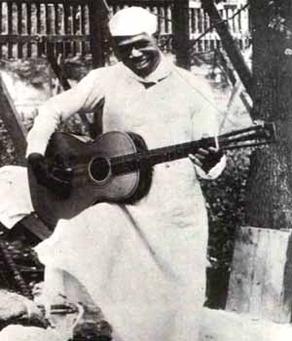
Photo at the top of the post shows James Jackson, AKA Bo Weavil Jackson, AKA Sam Butler
Why select this song as a focus? Well, for starters, the 1928 Ramblin’ Thomas version is one of my all-time favorite songs. But in addition to that, there’s a fair body of scholarship that considers “Poor Boy,” in some manifestation, to be one of the oldest blues songs—& I’ve found a dozen distinct versions on YouTube with release dates between 1926 & 2004. Now that covers some musical history, & will show off various ways that blues songs have been approached almost since the first days of commercial recordings. I believe the series will be fun & maybe even instructive. The different versions will post in chronological order by recording date.
The first recording of “Poor Boy” that we know about was made by Bo Weavil Jackson for Paramount Records in 1926. Paramount was a major “race records” label & is responsible for producing some big hits by major 1920s stars like Blind Lemon Jefferson & Ma Rainey. That’s the good news. The bad news is that Paramount was renowned for poor production & even poor materials, & the sound quality on the old Paramounts typically is poor. Marybeth Hamilton writes about this (& many other topics of interest) in her excellent In Search of the Blues (Basic Books.)
Bo Weavil Jackson was discovered as a street musician in Birmingham, Alabama & brought to Chicago to make the recordings (he also recorded some sides for Vocalion under the name Sam Butler.) These recordings were made thru an acoustic horn—not thru microphones!—& so the sound quality is poor. But—in addition to some excellent guitar playing that's not completely overshadowed by the audio quality—there are interesting things to note about Bo Weavil Jackson’s version of “Poor Boy.”
For example, it surprised me a bit that the chord changes of what became known as a typical 12-bar pattern are so clearly articulated. Some later versions of “Poor Boy” are much more one-chord modal pieces, & a fair number of early recorded blues slide songs follow that pattern. Some blues historians tend to draw an almost evolutionary development from the single chord song thru songs that contained both the tonic chord & the V chord (or sol chord) on thru to more & more "modern" sounding 12-bar patterns, which have at least three chords & sometimes add additional ones when the song "turns around" from one verse to the next.
But the more one reads of blues history the more one realizes assumptions & generalizations—even ones that have been accepted as “fact” among blues fans & even blues musicians for the past 50 years—are often gross over-simplifications, & sometimes simply manufactured out of whole cloth! In this case, even tho the chord changes are indicated by fragments, the 12-bar pattern is present on a version that pre-dates at least one famous modal version!
Hope you enjoy this, & please stay tuned for more “Poor Boy Long Ways From Home!”
Photo at the top of the post shows James Jackson, AKA Bo Weavil Jackson, AKA Sam Butler
Subscribe to:
Posts (Atom)