fremont st octet #2
one oak leaf rises on a gust then spirals
by lifts & falls by floats & dives to the street—
against a weathered fence the beautyberry’s
purple profusion & slender lilacs in
green leaf—three paperback maples in a row,
crimson foliage shuddering; the cypress
boughs sweep to east & to west in erratic
rhythm: lone crow on the wind past the gray house
◦ ◦ ◦
fremont st octet #3
black storefront seen through catalpa’s cordate leaves;
gone yellow today & sere despite hard rain—
bicycle tires slung over the gas service
pipes strapped down with an inner tube: hollow shells,
debilitated: black leather loveseat drips
under pine boughs, free scrawled large on white paper—
past a power pole transformer the rainbow’s
half arch splits clouds: a single crow wings toward me
Jack Hayes
© 2016
11/19/16-11/20/16
Wednesday, December 14, 2016


Tuesday, December 13, 2016
Two Octets from Albina Ave
albina ave octet #4
rose hips cluster orange under the stop sign;
the ornamental cherry, green leaves curling,
watches over anemone’s pale blossom
here where the avenue slopes to a curve—down
the street lily magnolia catkins gesture
quiescent in a standing meditation
catching morning light’s fragments—silver & gold
foil pinwheel spinning beside deadheaded roses
◦ ◦ ◦
albina ave octet #5
garden shed clad in Oregon license plates;
behind the wire fence dovetailed boxes tumbling
through weeds & trailing vines; no bus scheduled
for a quarter hour; the pale sun sinking &
rising from cloud currents—apples suspended
over the fence; on high boughs, white flesh exposed
by jays; on low, red gravity gathered for
the drop: all raw autumn all this letting go
Jack Hayes
© 2016
11/18/16
rose hips cluster orange under the stop sign;
the ornamental cherry, green leaves curling,
watches over anemone’s pale blossom
here where the avenue slopes to a curve—down
the street lily magnolia catkins gesture
quiescent in a standing meditation
catching morning light’s fragments—silver & gold
foil pinwheel spinning beside deadheaded roses
◦ ◦ ◦
albina ave octet #5
garden shed clad in Oregon license plates;
behind the wire fence dovetailed boxes tumbling
through weeds & trailing vines; no bus scheduled
for a quarter hour; the pale sun sinking &
rising from cloud currents—apples suspended
over the fence; on high boughs, white flesh exposed
by jays; on low, red gravity gathered for
the drop: all raw autumn all this letting go
Jack Hayes
© 2016
11/18/16
Monday, December 12, 2016
political octet #2
12/11/16
yellow leaves & crushed paper cups in curbside
puddles; under her red umbrella someone
waits on a bus; in a doorway someone leans
on his walker; black wheelchair exits the bus,
another boards: someone in dripping poncho;
rain follows gravity into the river;
cars follow the interstate’s contours, broken lines:
unweeping morning, invisible people
Jack Hayes
© 2016
yellow leaves & crushed paper cups in curbside
puddles; under her red umbrella someone
waits on a bus; in a doorway someone leans
on his walker; black wheelchair exits the bus,
another boards: someone in dripping poncho;
rain follows gravity into the river;
cars follow the interstate’s contours, broken lines:
unweeping morning, invisible people
Jack Hayes
© 2016
Sunday, December 11, 2016
Pièces Froides

This week’s Sunday Music is Satie’s Pièces Froides, composed in 1897 but not published until 1912. The composition is made up of two sets of three pieces, Airs à faire fuir & Danses de travers. They were written without either key or time signature. The recording is by pianist Reinbert de Leeuw.
For more information on Pièces Froides, please see the Wikipedia entry.
Image connects to its source on Wiki Commons:
House at 6 Rue Cortot, Montmartre, Paris, home of Erik Satie from 1890 to 1898
Photograph by Wiki user Muu-karhu, who publishes it under the following licenses:
the GNU Free Documentation License, Version 1.2 or any later version published by the Free Software Foundation
the Creative Commons Attribution 3.0 Unported license
Saturday, December 10, 2016
Ullambana on Portland: The Review - Part 4

[This is the fourth & final installment of Sheila Graham-Smith's review of my book Ullambana in Portland. I owe Sheila the deepest gratitude for this wonderful, close reading.]
PART 4
The penultimate poem in the collection, and the last of the sutra poems, is one the poet could have dedicated to the city of Portland, even though it never makes an appearance as the elusive you wandering through the pages of the book. The you in “walking sutra”, like the you almost everywhere else in the poems, is part of 10,000 phenomena, and exists as you only in the current instant of any given line. She is as radically dynamic as the phenomenal world she belongs to.
“walking sutra” opens with dozens of crows taking to the air. The poet crosses the street and “inexplicably… you aren’t there”. Who is it, you wonder, who isn’t there. Your mind might return to an earlier poem in which the poet says “because needless to say you weren’t/on any of the streetcars” and decide he’s speaking here to that woman, the one he imagines strolling hand in hand with, later in the same poem, “at the edge of a photograph”, and you may be right, at least insofar as that earlier woman was in fact one woman; lover, friend, muse, whoever. Half a dozen lines later the observation is repeated -
you aren’t here: though the one
hawthorn, those drooping brown-eyed
Susans, a handful of
cirrus skimming east above high-rises:
company of sorts—
and your mind follows those brown eyed Susans back to “weather report sutra”, to the lines about:
my first
memory walking with you through the
meadow beyond the Chinese
elms the black-eyed Susan
in bloom
And since you know those words, and those flowers belong to his mother, you wonder if it is in fact his mother he misses as he steps up on the curb on the other side of the street. The walker continues on his way and is struck for a moment, not by any particular, absent you but by “the many/materializing along the sidewalk”, and then, significantly, by a present particular representative of that flow of bodies passing –
& yes, I smile, walking south
& yes she smiles walking north—
A brief exchange that turns attention back to some aspect of the absent you, one who appears to remind him time is passing, and she still isn’t there, and we begin to suspect at least some part of the absent you represents “the one” (as in the Townes Van Zandt lyric quoted as an epigraph to Hayes’ “blue octets”: “you’re the only one I want and & I've never heard your name”) who is absent, and the long engagement between the one and the many takes on a slightly less philosophical face for a minute or two:
you’re right I’m not young:
in just a few minutes the planets will turn on,
scarlet phosphorescent metallic: a plane’s
just inches from colliding with Mars on high—&
magnolia’s cone fruit dangling above that
bus stop where
white blossoms once strewed the lawn &
you aren’t there as the southern
sky grays, the contrails blanch
wraith white in the west
before his attention turns again to a present someone - “though/at the market the woman weighs black/plums, calls me dear” - then back again to an absent you who still seems like a particular, absent you, one he’s actually speaking to, if only in his head, and not one of her more abstract manifestations.
& you aren’t there—back east
fireflies luminesce cold without ultraviolet before they
go extinct, here the ginkgo yellows ignoring the fact it’s
August & you aren’t here: still, tomorrow
two planets will coruscate incandescent love &
thunder over the park & plane trees’ leaves will
you say stretch out their big hands—
okay: across the street those colored lights, frayed
prayer flags on a string & of course the dark:
the next step is bound to happen next
Back and forth, back and forth, a potent layering of memory, longing, and direct observation of the moment as it passes. Jupiter and Venus may be about to come closer than at any other time in the year but they share the poet’s attention with the plane tree in the park, a string of frayed prayer flags across the street, with the descending dark, and with the conclusion to be drawn from the endless perambulation and observation - the next step is bound to happen next.


Portland, in this collection, carries an immense weight of emotion and personal association and is undoubtedly one of Hayes’ most significant muses but perhaps most importantly, it is the home of those 10,000 phenomena he can’t let go of in this life, and on the pages of Ullambana in Portland he has laid out what he has seen of them for our examination, so we too can appreciate what they have to offer. He may give fair air time to idea of unified one, but nowhere do we see something that might be mistaken for “The City of Portland”. We see the multitude of details that make it what it is, and the burden of meaning those details bear, and we come away thinking Hayes, in his heart or hearts, loves the concrete presence of the myriad parts over the abstract whole, if only because it’s the fragmented, partial, particular, many always accompanying us and showing us the way.
A couplet from “esplanade octet”, the poem that precedes “walking sutra” in the collection, comes to mind:
a fish breaks open the black water,
vanishes: such brief transit through light
Sheila Graham-Smith
© 2016
All photography © John Hayes
Friday, December 9, 2016
Ullambana in Portland: The Review - Part 3
[The third installment of Sheila Graham-Smith's review of my book Ullambana in Portland; the series will conclude tomorrow.]
PART 3
In the short biographical note included in the book the author calls himself, among other things, a flaneur. The word flâneur, with all its associations of wandering, observing, synthesising the city, is perfect. According to Baudelaire and Victor Fournel, the flâneur understood the city, and for Walter Benjamin his perambulations facilitated “a way through significant psychological and spiritual thresholds.” (1) Ullambana in Portland is built on the understanding gained through wandering, observing, and synthesising, but the poems in the second section especially find their various ways across those significant thresholds.
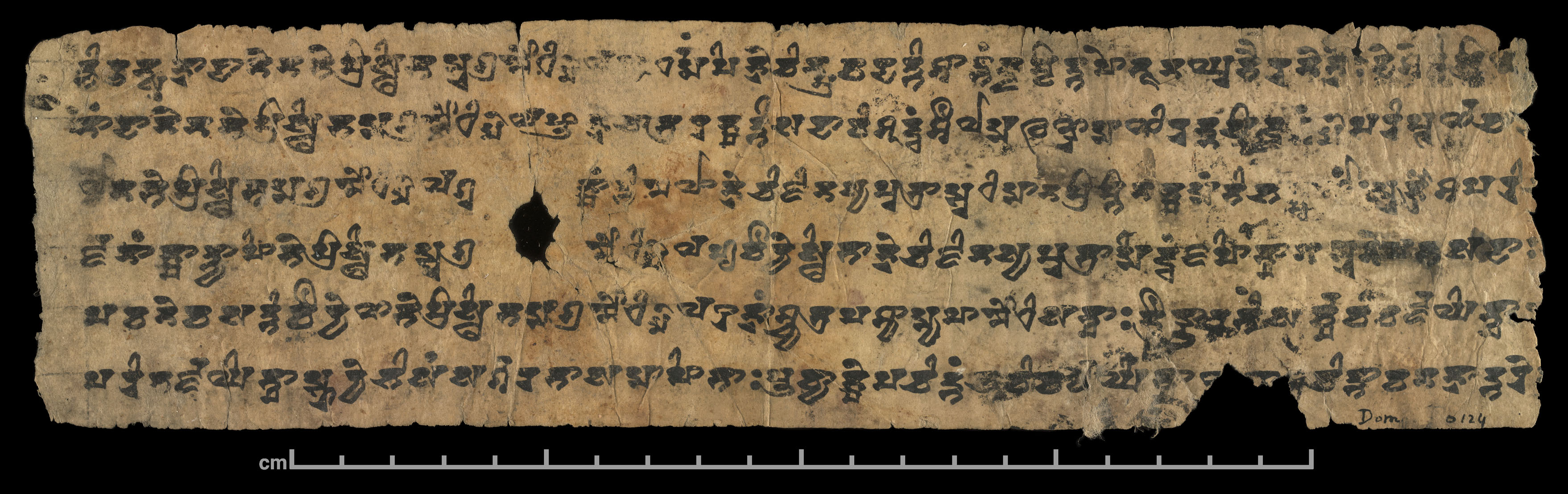
There are 16 poems called sutras in the collection, each of them dedicated to some particular person or persons, except the final one, “walking sutra”, which is the poet’s own. Sutra means, literally, string, or thread, from the root word siv, that which sews or hold things together. Wikipedia, quoting A History of Indian Literature, says “In the context of literature, sutra means a distilled collection of syllables and words, any form or manual of "aphorism, rule, direction" hanging together like threads with which the "teachings of ritual, philosophy, grammar or any field of knowledge" can be woven.” The definition is important as it points out the connecting role of the sutra poems, all of which explore, one way or another, themes related to the idea of tending, whether to people, to the world, to life, or to the ideas and thoughts that help in the struggle to make sense of any or all of this.
“cloudy day coffee sutra”, for instance, poses a series of questions that wrestle with the way language both opens and closes possibilities in the way we relate to people and the world.
what would you call that sky?
what would you call that tree?
what would you call those passersby?
what would you call that?
Why would someone ask such questions about the view from a coffee shop not far from their home? They sound as if they might be things asked by someone learning a new language, but that isn’t the case. The poet himself – plainly a more than adequate English speaker – is putting the questions to some unnamed you he is having coffee with, at the same time as he puts them to you, the reader.
what would you call that sky? dissolving to
mist unfit for paper birds all falling
ash-gray slate-gray nickel-gray falling in
counterpoint with yellow leaves—what
would you call that tree? gray limbs in taijiquan
gestures reaching & reaching—that low sky
can’t be grasped those folds upon folds of
clouds this massive origami not what it seems this
tonnage of ice & water as if the Pacific mirrored it
self in what some call heavens—
vapor rising from
two cups of coffee on this counter, trans
muted liquid: you know, language is like that
too paper birds afloat in the mind &
folded with no beginning no end the speech
of birds in an ash tree scissoring loose its
leaves, gray branches the lichen mottled cream
white milk-white what would you call those
passersby no two alike no two different all
looking for something not apparent you said
god is like that too the water droplet within the
ocean seeking the ocean -
that sky lowering, that
bird in silhouette that Chinese character’s
brushstrokes tracing black green blue in one
syllable what would you call that? quadrillion
raindrops paper birds imagined branches this
coffee steam rising up these people walking it
goes without saying all one all undiminished
A poem as intricate and complex as the origami birds it mentions, folded with no beginning or end, but one of its themes is caught in the vapour rising from two cups of coffee – “trans-/muted liquid: you know, language is like that/too”. Transmutation - the action of changing or the state of being changed into another form. “cloudy day coffee sutra” plays with this idea of change, both as it applies to the world and as it applies to the language we use to describe that world. Hayes is a self professed “dimestore Buddhist” and the poem reflects the idea that, as he puts it, “the phenomenal world is ever arising & ever renewed; just as the only actual time is ‘now’, so the only actual existence of the 10,000 phenomena is in the current instant. As such, the phenomenal world is radically dynamic, whereas the act of naming is radically static. It accounts for things in a sort of Platonic sense, but not in a dynamic sense of ‘becoming.’(2)
That ungraspable low sky, for example, a tonnage of ice and water shifting before our eyes, but captured, however imperfectly or momentarily, in “the folds upon folds of a massive origami, not what it seems, the Pacific mirroring itself in the heavens”. Not, notice, ‘as if the Pacific was mirrored in the heavens’, but ‘as if the Pacific mirrored itself in the heavens’. Lacan claimed the ‘real’ is un-representable and supersedes any attempt to give it a coherent and comprehensible form, including in language. (3) It can only be defined through paradox. According to Kierkegaard the ultimate paradox of thought is the desire to discover something that thought cannot think (4), and the “cloudy day coffee sutra” discussion of the interplay of language and reality is riddled with just that sort of thought – “the water droplet within the ocean seeking the ocean”, for instance, or “those passersby no two alike no two different”.
The tension here, is between the idea that the truth of things is inherent in their particularity, that the particularity itself is ultimate, and the idea that the truth of things is in their oneness; an issue not really resolved in the context of the poem - it couldn't possibly be – but suspended there, held up in delicate balance to be examined. Hayes has pointed out elsewhere that “as a poet one is also trying to conjure reality back into its real existence by naming it. So there is both the distancing of reality from the one, or…what is, but also the reconstruction of reality.” (5) In other words, “there are always these people walking it goes without saying all one all undiminished”.
The problem of the one and the many, reflected in the stream of images garnered from day to day life in the city, runs like another thread through much of the collection, nuancing thoughts about time and art, about memory and loss and love and desire and death, constantly challenging the reader to consider, and then to reconsider.

“new moon cello”, written after a Zoë Keating concert at the Aladdin Theatre in Portland, states its thesis in the opening line - Loss is constant across dimensions - and gives a series of beautiful examples supporting its claim –
loss is constant across the dimensions:
an entire Chinese bestiary achieving form & gone:
waning crescent moon melting to new moon’s
hollow, this improvisation soaring beyond &
beyond the vanishing point in this theater’s
sapphire light, that flock of
crows rising off a frozen pasture in March, grass
stubble ragged amidst corn snow: faces
taking form & gone—the helicopter blasting
cherry blossoms westward off
boughs in Waterfront Park that perfect
blue Thursday, sun a halo of
grief: now May, & ghostly
rhododendrons nod—notes swell
& fade & swell & fade, the sinews drawing
pangs travail transcendence across
four strings to that foursquare city built beyond time
“It’s in the nature of things”, as Ms Keating said after she played a beautiful improvisation to open the concert, only to discover the sound man hadn’t recorded it. Another loss, and if you know Zoe Keating’s work, you know it was a significant loss, however true her response may have been. Meanwhile, outside the theatre, in the wider city:
black Willamette
rolling past bridge lights, polyphony rolling past
stage lights now violet now emerald opal amber;
the heart’s daily shattering
There is a clear parallel between the way Keating’s music and Hayes’ poetry is constructed. Lou Fancher, in her article "In the Loop with Zoë Keating" uses the word ‘polydimensionality’ to describe the effect created through the layering of music saved and looped through a computer and the music being produced in any given instant of a performance, (6) and it applies perfectly to the way Hayes’ simultaneously produces and builds on a relentless flow of imagery. In a 2010 interview, he mentions that “if you have these very fluid & rarely ever end-stopped lines & you rely a great deal on sensory data (as opposed to abstract concept or pure language) to construct a poem, that sensory data may seem overwhelming”; but he also connects it explicitly to “the idea of poetic writing as improvisation” and the need “to start at a point & develop the idea in different directions”. (7)

There is meaning embedded in each image, in the juxtaposition of images, the layering of images, in the memories evoked by the images and the thoughts provoked by them, in the echoes, the trajectories of joy and the half life of pain, in the restless ghosts and the quiet ones. Analysis fails to do justice to either Hayes poetry or Keating music. Its significance is as much in the flow and shift as in the unified whole that emerges in the end.
“new moon cello” moves to a close with an allusion to another moment of personal loss, and then, significantly to the mention of two women bent over great pieces of art;
you absorbed in a poem where a butterfly disappears
within crimson blossoms: dark cello,
waxing crescent silver hair wave, eyes closed in unlit
night amongst such profusion of quavers our incarnations
brief & brief then brief again
Significantly, the lines of the Du Fu poem that absorb the poem’s you are left in the darkness at the margins of Hayes’ poem and Zoë Keating’s performance, but they comment beautifully on both the poetry’s and the music’s profusion of quavers and on their incarnations brief & brief then brief again.
the wind & light proclaim flow & shift as one:
why should we not enjoy time’s brief passage?
crooked river #2, Du Fu 曲江二首 (translation by Jack Hayes)
Sheila Graham-Smith
© 2016
1. Bobby Seal, “Baudelaire, Benjamin and the Birth of the Flâneur”, Psychogeographic Review - http://psychogeographicreview.com/baudelaire-benjamin-and-the-birth-of-the-flaneur/
2. Jack Hayes, private correspondence
3. Stephen Ross, “A Very Brief Introduction to Lacan”, University of Victoria. http://web.uvic.ca/~saross/lacan.html
4. Soren Kierkegaard, Philosophical Fragments Chapter 3 The Absolute Paradox - A Metaphysical Caprice
5. Jack Hayes, private correspondence
6. Lou Fancher, "In the Loop with Zoë Keating" - https://www.sfcv.org/events-calendar/artist-spotlight/in-the-loop-with-zoe-keating
7. Sheila Graham-Smith, “An Interview with John Hayes, Author of The Spring Ghazals”, Tangerine Tree Press and the Tangerine Tree Press Review. November 12, 2010. http://tangerinetreepress.blogspot.com/2010/11/interview-with-john-hayes-author-of.html
Please check back tomorrow for part 4 of Sheila Graham-Smith's review.
Information on the Images:
1. Steel Bridge & Chinese junk: photo © John Hayes
2. A Sanskrit manuscript page of Lotus Sutra (Buddhism) from South Turkestan in Brahmi script. Public domain. Image links to its source on Wiki Commons.
3. Aladdin Theater Sign: photo © John Hayes
4. Cherry blossoms at Waterfront Park: photo © John Hayes
Thursday, December 8, 2016
Ullambana in Portland: The Review - Part 2
[We're continuing with Sheila Graham-Smith's review of my recent book, Ullambana in Portland]
Part 2
An interlude translation of Li Shangyin’s “Ornate Zither” introduces the themes of transformation and the wanton heart, both integral to the eponymous Ullambana in Portland section of the book.
Master Zhuang was perplexed by his daybreak butterfly dream:
Emperor Wang’s wanton springtime heart entrusted to the cuckoo—
Time seems to have passed since the last raintown poem, and significantly, the view of the world has shifted.

“the camellia rag” opens with a strange image – a “spinet piano transmogrified to dormant tree” - which, oddly enough, is the city’s first appearance in the Ullambana poems, a reference to a spinet that sits outdoors in a courtyard on North Williams Ave. The spinet has been painted with the bottom of a bare tree and the rest of the tree is painted on a brick wall immediately behind the spinet. Two things change with the appearance of this image. The first is related to the dormant tree. Portland is famous for its trees. There are a quarter of a million of them lining the streets alone, and they show up in almost every one of the raintown poems. The narrator could identify some of them but one of the indicators of his isolation, his status as a stranger in a new place, was the remark —“it devastates me not to know the trees’ names”. This painted image of a leafless tree is the last reference to the anonymity of the flora. From here on in the poems pay intimate attention to everything that leafs out or blooms or goes to seed, or sheds its foliage, and they share all of it with the reader. The second change is related to the spinet the tree grows out of. The soundtrack of the raintown poems was synthesised from bird calls, snatches of overheard and reported conversation, the sound of rain and water, but the spinet in “the camellia rag” introduces the entire acoustic ecology of the city, and the music that grows out of it –
an A# diminished scale’s black & white keys
tumbling into this January sky—
there is nothing to resist:
hoarfrost on green lawns, a single camellia bloom
dangles in a welter of branches, a red quarter note—
exuberant felt hammers,
the song sparrows in their boxwood hedges—
the syncopation of breath & step & peripheral vision,
the many walks I’ve taken down this very street
with you, yes, you
There is music everywhere, accompanying “the many walks I’ve taken down this very street with you, yes, you”. And with that “you, yes, you!” comes a third change; the mysterious, mutable, interchangeable, multifaceted “you”, who will play such an important role in the remainder of the collection, appears, moving it, decisively into a more intimate relationship with the city at the same time as it reflects a much more intimate view of various personal relationships. Our poet is on foot, in contact with the pavement and everything and everyone on it.
The word Ullambana refers to the traditional Buddhist Hungry Ghost Festival, during which ghosts and spirits come up from the underworld to visit the living, but the spirits in this Ullambana are not necessarily those of the dead. In fact, for the most part the spirits are living people – friends, lovers, muses - from Hayes’ past and his present life.

The single exception to these living spirits is Hayes’ parents. His father, dead for several years, is beautifully met in “black ghost sutra”, amidst “aromas of Carter Hall pipe tobacco &/pine sawdust jumbled”. Memories of
a shop light’s fluorescent
quaver, shellac’s jagged odor, fly-tying vise
gripping a number 4 hook, yellow saddle
hackle & white maribou & peacock herl:
remnants of birds
move from the creation of the black ghost lure, to its apotheosis through swift water, and from there to a quiet glimpse of the poem’s second ghost.
the brook trout’s copper & gunmetal
flash where Cold River churned: above us white
birch with green moss veneer, below the riverbank
brambles: a cast into autumn waters beneath
floating golden leaves:
black ghost streamer darts: alien in-
animate visitor in a world of motion it mimics:
feathers in that current, spasmodic, darting at
the play of your wrist:
as you sit hunched
immobile in these small hours, briarwood
spent, you must require tending
That last line, with its image of the poet looking back at his father in his workshop, gestures obliquely at the Ullambana idea. The key word is “tending”, in its many meanings - to turn one's ear, give auditory attention, listen, hearken. To turn the mind, attention, or energies; to apply oneself. To attend to, mind. To apply oneself to the care and service of (a person); now esp. to watch over and wait upon, to minister to (the sick or helpless) To bestow attention upon.
The veneration of the dead is intrinsic to the ghost festival, and filial piety involves, and indeed requires tending the visiting spirits of one’s ancestors in all these ways. No words pass between the two of them:
by night you appear
aloof as though living yet: head bowed, bald pate
hemmed in by the usual crewcut, gray-faced,
wordless:
"lullaby in violet & green", on the other hand, is essentially one half of a conversation between the poet and an unknown person we can infer is his mother.
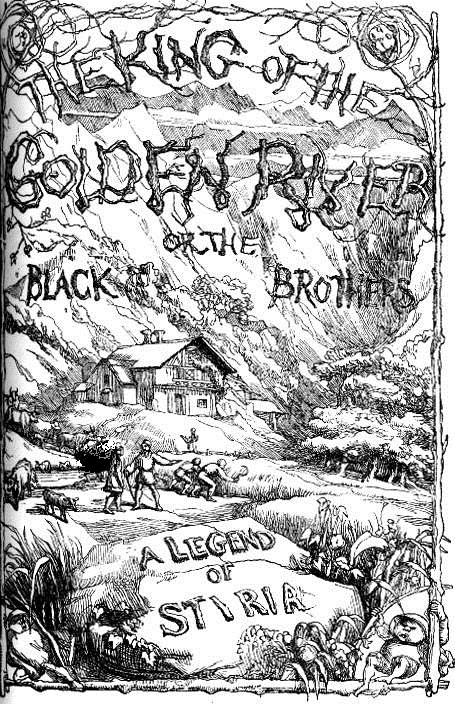
Immediately rooted in time – back in an indefinite personal past when there was still static snow on the television screen – and place – somewhere in Vermont, east of some unnamed hills – the poem opens with the white noise produced by disrupted signals.
static on a tv set broadcasting
weather from Poland Springs, that Vermont
horizon purple above the neighbors’ big
oak & the pine fringed hills to the west
And yet, the second stanza opens with a clear voice, not one that is transmitted over radio waves, but a reading voice in a room alive with the memory.
you reading aloud "The King of the Golden
River" at blue dusk in a bedroom with one
open dormer window, curtain floating
on the scent of lilacs blooming like twilight—
The poem has moved from the wider Vermont landscape to a bedroom, from the nonspecific past to blue dusk and early summer, from a context defined by “neighbours” to the intimacy of you reading aloud from a childhood fable of kindness and compassion, wrong righted and evil undone. Who is this you who reads? We have no idea, beyond what is given us by the shift we’ve made into relationship with the speaker, who lures us with the quiet reader, the scent of lilacs, the floating curtain, the blue dusk. We have moved in.
How far in?
can you sleep? can the train whistle sing in
harmony with the whip-poor-will in the green
night in a summer that existed once
beside a river & the brown-gray riprap?
Can you sleep? is a very intimate question, unless it’s your doctor asking. A question full of concern, and knowledge. Things have changed. The you who read aloud once upon a time in an attic bedroom is on the receiving end of concern, the summer is long gone and the tale of a valley flooded and destroyed by the river that made it rich has been replaced by a more ordinary but much safer river armoured and controlled by riprap. And where does that leave us? Have you ever entered a room and felt the charge of an unknown argument, or discussion or whispered confidence, that left you discomfited, unsure of whether you should advance or retreat? The poem feels like that, but here, you’re forestalled. Before you can act on your unease the speaker interferes – “but time doesn’t move in summer’s direction—though it does stop:”
He’s speaking to you, the reader, and also to that other you, the one who read aloud in the childhood bedroom, the one who does or does not sleep and is reminded of that long-ago summer. Time doesn’t go backward, but it does stop going forward. The voice shifts, we’re given what appears to be the speaker turning over his worries about the you who can or cannot sleep. We have moved, within the closed circle of the poem, from an evoked image of a child being read to in bed, to the bedside of the reader in old age.
at day’s end always so much
undone & where you are it’s snowing snowing
now because you have no winter blanket
It is winter, day’s end, both literally and metaphorically. The lullaby drifts from the realm of a childhood bedtime to a voice singing on the threshold between life and death, the falling snow provides the only necessary blanket for a final resting place, and the narrative voice is still attending.

Sheila Graham-Smith
© 2016
Please check back tomorrow for part 3 of Sheila Graham-Smith's Review.
Information on the images
1. Steel Bridge & Chinese junk: photo © John Hayes
2. Piano & wall art on N Williams Ave: photo © John Hayes
3. "Step One In Fly Tying -- Securing The Thread and Flash" by Mike Cline, who has released the image into the public domain. Image links to its source on Wiki Commons.
4. King of the Golden River - Title page. Public domain. Image links to its source on Wiki Commons.
5. "Chinese floating lotus lanterns on a pond." [from the Ghost Festival] by Mike, who makes it available under the Creative Commons Attribution 2.0 Generic license. Image links to its source on Wiki Commons.
Subscribe to:
Posts (Atom)